
(And How to Gently Reset It)
— Yoga947
Why Your Nervous System May Be Overloaded
🧡 Before We Begin
You’re not weak.
You’re not broken.
And you’re not “too sensitive.”
You may be overloaded.
Your nervous system is designed to protect you — constantly scanning for safety. It reads tone shifts, deadlines, notifications, conversations, facial expressions, and even your own thoughts.
But when stress becomes constant, your system doesn’t receive the signal that it’s safe to stand down.
Instead, it stays alert.
Or it shuts down.
And often, you don’t realise it’s happening until your body starts whispering — or shouting.
In this guide, we’ll gently explore seven common signs of nervous system overload — and simple, grounded ways to reset without pushing yourself harder.
Because regulation isn’t about doing more.
It’s about feeling safe enough to soften.
⚠️ Important Note
This article is for educational and wellness purposes only. It is not intended to diagnose, treat, or replace professional medical or psychological care. If you are experiencing severe or persistent symptoms, please consult a qualified healthcare professional.
FREE: Download the Nervous System Check-In Tracker to monitor your stress and emotional balance gently.
What Does “Nervous System Overload” Actually Mean?
Your nervous system is constantly scanning for safety or threat. This subconscious process is called neuroception, a term introduced by Dr. Stephen Porges in his development of Polyvagal Theory.
When stress becomes chronic, the body can become stuck in:
• Fight-or-flight (sympathetic activation)
• Freeze or shutdown (dorsal vagal response)
Over time, this persistent activation creates overload.
Your body adapts to survive — but it wasn’t designed to stay in survival mode indefinitely.
1. You Feel Wired but Tired
You’re exhausted — but you can’t relax.
Your body wants rest.
Your mind keeps racing.
Why This Happens
Stress hormones like cortisol remain elevated, keeping your system alert even when you’re safe.
Gentle Reset
• Try 4–6 breathing (inhale 4, exhale 6)
• Avoid screens 60 minutes before bed
• Take a warm shower to signal safety
2. Small Things Feel Overwhelming
Minor stressors feel disproportionately intense.
Your emotional response feels bigger than the situation.
Why
Your stress threshold has lowered due to ongoing activation.
Gentle Reset
• Place one hand on your chest
• Name 5 things you can see
• Slow your breath intentionally
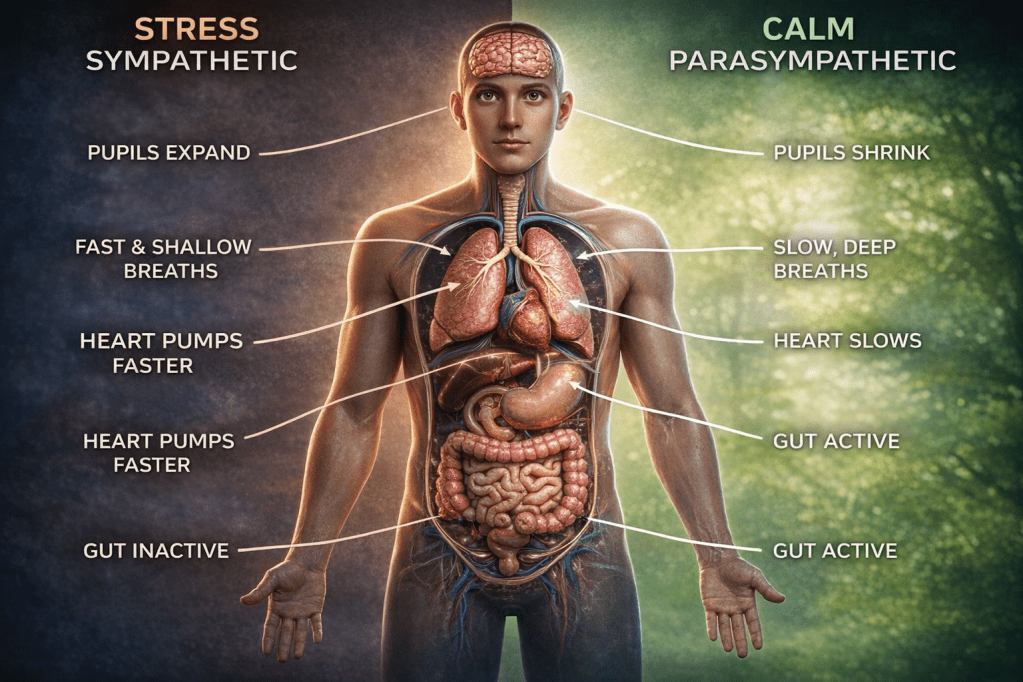
3. You Have Digestive Tension
The gut and nervous system are deeply connected.
When your body perceives a threat, digestion slows. Blood flow shifts away from the gut. Muscles tighten. Acid production changes.
Over time, this may show up as:
• Bloating
• Reflux
• Jaw tension
• Shoulder tightness
• Back discomfort
• Fatigue
Try tracking your nervous system patterns with this simple daily worksheet.
FREE: Download the Nervous System Check-In Tracker
Digestive stress can ripple throughout the body when the nervous system remains in survival mode.
Gentle Reset for Gut Tension
• Practice belly breathing (hands on lower ribs)
• Eat slowly without screens
• Choose warm, nourishing meals
• Take a 5-minute post-meal walk
Educational Disclaimer (Place Under Diagram)
This visual guide illustrates common stress-related patterns for educational awareness only. It is not intended to diagnose medical conditions. Please consult a healthcare professional for medical concerns.
4. You Struggle to Focus
You start tasks but cannot finish them.
Your mind feels scattered.
Why
The brain prioritises survival over concentration.
Gentle Reset
• Take a 90-second pause
• Stand up and shake out tension
• Focus on one task for 10 minutes
5. You Feel Emotionally Numb
Not anxious.
Not calm.
Just flat.
Why
Your nervous system may have shifted into freeze mode to conserve energy.
Gentle Reset
• Gentle movement (walk or stretch)
• Hold a warm mug of tea
• Play soft instrumental music
6. You’re Easily Irritated
You react before you can think.
Your fuse feels shorter than usual.
Why
Your system is primed for threat detection.
Gentle Reset
• Pause before responding
• Step outside briefly
• Make your exhale twice as long as your inhale
7. You Avoid People or Social Interaction
Withdrawal can be protection.
When overloaded, social engagement may feel draining.

Gentle Reset
• Text one safe person
• Sit near others without pressure to speak
• Step outside into nature for 5 minutes
How to Gently Reset Your Nervous System Daily
Here is a simple 3-step Yoga947 reset ritual:
- Notice the state (name it without judgment)
- Breathe longer on the exhale
- Move gently — even for two minutes
Consistency regulates.
Intensity overwhelms.
Free Resource for You
Use it daily to track: Download the Nervous System Check-In Tracker and begin building awareness today.
• Stress level
• Energy level
• Emotional tone
• Regulation tools used
This simple daily awareness tool helps you notice patterns without criticism.
When to Seek Professional Support
If symptoms are persistent, severe, or interfere with daily functioning, consider seeking support from:
• Your GP (UK primary care provider)
• A licensed therapist
• A trauma-informed practitioner
Seeking support is a sign of strength, not failure.
Closing Reflection
Your nervous system isn’t asking you to become someone new.
It’s asking for rhythm.
For pauses.
For safety.
For breath.
Overload doesn’t mean failure — it means your system has been carrying more than it was designed to hold without rest.
Small daily resets create powerful change over time.
If this article resonated with you, begin with awareness. Even a simple daily check-in can shift everything.
Download the free Yoga947 Nervous System Check-In Tracker below and begin noticing your patterns with kindness.
Regulation begins with recognition.
And you are already beginning.
“Peace begins within — one breath, one vibration at a time.”
— Yoga947
Frequently Asked Questions
Nervous System Overload & Gentle Reset Support
1. What does it mean when your nervous system is overloaded?
When your nervous system becomes overloaded, it means your body has been exposed to too much stress or stimulation for too long without enough recovery time.
Your nervous system may stay in a constant state of alert (fight-or-flight) or shutdown (freeze), making it harder to relax, think clearly, or feel emotionally balanced.
The good news is that the nervous system is highly adaptable and can learn to return to balance with supportive practices.
2. What are the most common signs of nervous system overload?
Common signs include:
- Feeling constantly tired or wired
- Difficulty concentrating
- Irritability or emotional sensitivity
- Digestive discomfort
- Sleep disturbances
- Feeling overwhelmed by small tasks
- Muscle tension or headaches
These signs are often your body’s way of asking for gentler pacing and support.
3. Can nervous system overload go away on its own?
Sometimes symptoms ease when stress levels reduce, but intentional regulation practices can speed up recovery.
Simple practices such as:
- breathing exercises
- grounding techniques
- journaling
- gentle movement
- mindful pauses
can help signal to your body that it is safe to soften again.
4. How long does it take to regulate the nervous system?
Every person is different. Some people notice improvements within a few days of consistent calming practices, while others may take weeks or longer depending on lifestyle, stress levels, and support systems.
The key is small, consistent habits rather than forcing quick results.
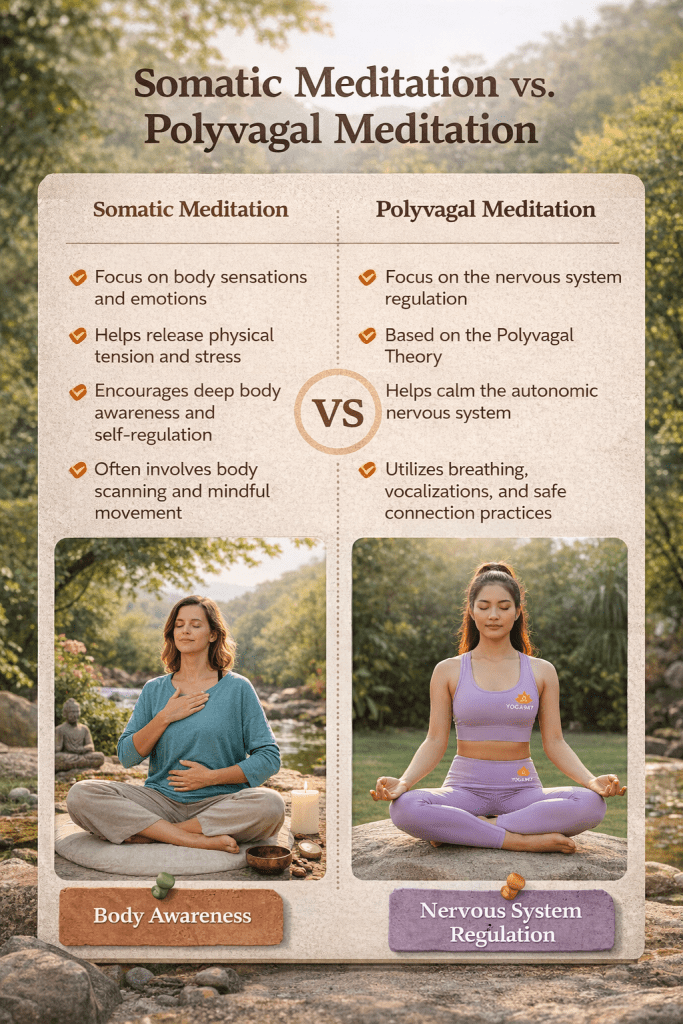
5. Can meditation really help calm the nervous system?
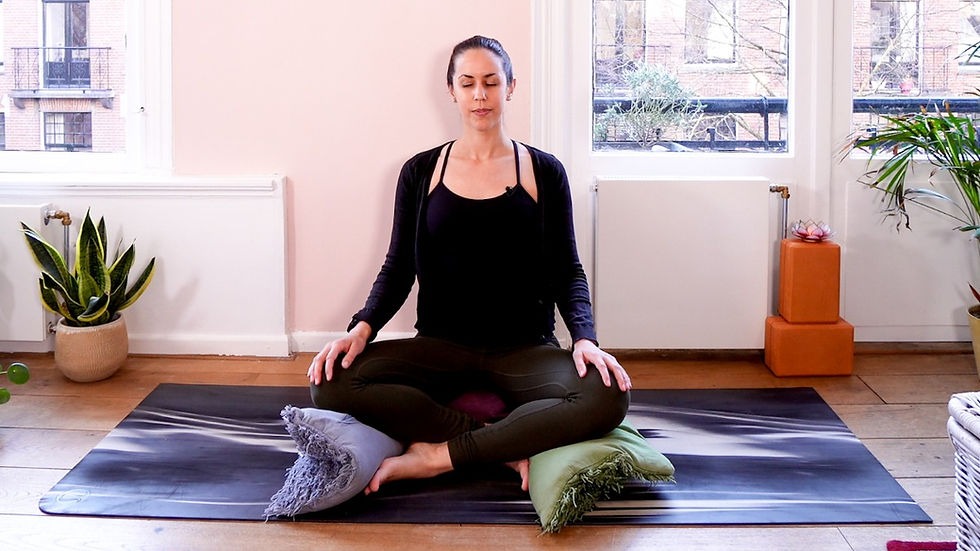
Yes. Many meditation and mindfulness practices are designed to activate the parasympathetic nervous system, which supports rest, digestion, healing, and emotional regulation.
Practices such as:
- breath awareness
- humming meditation
- grounding meditation
- gentle visualisation
can help the body move out of survival mode.
6. Why do small things suddenly feel overwhelming?
When the nervous system is overloaded, your stress tolerance window becomes smaller.
This means that tasks that once felt manageable—emails, decisions, conversations—can suddenly feel exhausting.
This isn’t a personal failure.
It’s often a biological signal that your system needs recovery time.
7. Can sleep problems be linked to nervous system overload?
Yes. When the nervous system is stuck in a state of alertness, the body may struggle to fully relax at night.
Common sleep challenges include:
- difficulty falling asleep
- waking during the night
- restless sleep
- waking up feeling tired
Gentle calming rituals before bed can help signal safety to the body.
8. What is the fastest way to calm the nervous system in the moment?
A few simple techniques can help within minutes:
- slow breathing (longer exhales)
- placing your hand on your chest or stomach
- stepping outside for fresh air
- gentle humming or vibration exercises
- focusing on physical sensations like your feet on the ground
These practices help bring the body back into the present moment.
9. Is nervous system overload the same as burnout?
They are closely related but slightly different.
Burnout often develops after long periods of emotional or work stress.
Nervous system overload refers more broadly to the body’s physiological response to ongoing stress or stimulation.
Many people experiencing burnout are also experiencing nervous system dysregulation.
10. When should someone seek professional support?
If symptoms feel persistent, overwhelming, or begin to impact daily functioning, it can be helpful to seek guidance from a qualified healthcare professional, therapist, or nervous-system-informed practitioner.
This article is designed for educational and wellness support only and is not a substitute for professional care.
A Gentle Next Step (Coming Soon)
Many readers have asked for simple ways to begin supporting their nervous system after recognising the signs of overload.
To help with this, Yoga947 is preparing a small companion guide designed to support your daily regulation practice.
The upcoming guide will include:
• A simple nervous system awareness tracker
• A gentle 7-day reset reflection page
• A short calming practice you can use anytime
• supportive affirmations for emotional balance
This resource is designed to be simple, supportive, and easy to use during stressful moments.
✨ The Yoga947 Nervous System Reset Companion will be available soon.




 yoga947com.blog