Why Scotland Is a Natural Sanctuary for Sensory-Rich Meditation

 (Especially for ADHD Minds)

When people imagine meditation, they often picture stillness, silence, and long periods of inward focus. While this traditional approach works well for some, it can feel inaccessible—or even uncomfortable—for those with ADHD. Fortunately, meditation does not have to mean sitting perfectly still with a quiet mind. In fact, one of the most effective forms of meditation for ADHD is grounding, sensory-rich practice. Few places in the world support this style of meditation as effortlessly and beautifully as Scotland.

The Power of Sensory-Grounded Meditation

ADHD brains are often wired for stimulation, novelty, and movement. Rather than fighting this natural tendency, grounding meditation works with it. Sensory-rich meditation anchors awareness in the body and environment—engaging the senses of sight, sound, touch, and even smell. This approach reduces cognitive overload by giving the mind something tangible to focus on, creating calm through presence rather than forced stillness.

Scotland’s landscapes are inherently grounding. The environment invites awareness without demanding it, offering a natural rhythm that makes meditation feel intuitive rather than effortful.

A Landscape That Supports Presence

From mist-covered Highlands to rugged coastlines and ancient forests, Scotland provides an abundance of sensory input that is soothing rather than overwhelming. The rolling terrain naturally slows movement and breath. Wide-open spaces encourage expansive thinking while simultaneously grounding the body through scale and perspective.

For those with ADHD, this balance is crucial. Scotland’s landscapes are rich, but not chaotic. The muted greens, greys, and blues typical of the Scottish environment are calming, offering visual interest without excessive stimulation.

Soundscapes That Calm Rather Than Distract

Sound is one of the most powerful tools in sensory grounding, and Scotland excels here. The rhythmic crash of waves along the coastline, wind moving through tall grass, rainfall on stone paths, distant calls of seabirds, or the steady flow of a river all create natural soundscapes that support meditative awareness.

Unlike silence—which can sometimes amplify internal noise—the layered sounds of nature provide gentle, external focus. This makes it easier for ADHD minds to remain present without drifting into overthinking.

Connection Through Movement

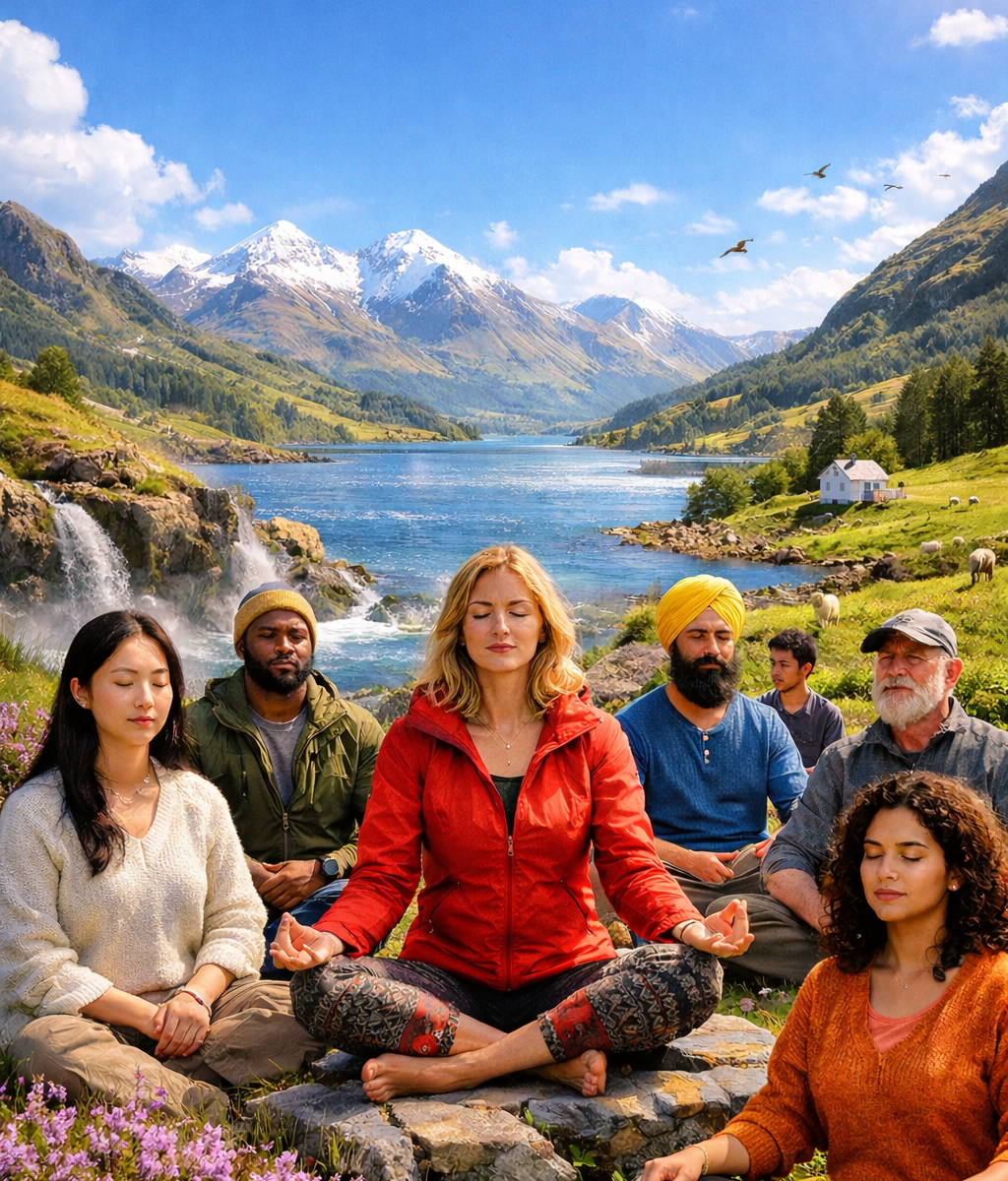
Meditation in Scotland often happens through movement rather than stillness. Walking meditations along lochs, mindful hikes through glens, or slow exploration of forest paths allow the body to participate fully in the meditative process.

This embodied approach is particularly beneficial for ADHD individuals who may struggle with traditional seated meditation. Walking across uneven terrain, feeling the ground beneath each step, noticing shifts in temperature and light—all naturally draw attention into the here and now.

Weather as a Teacher of Awareness

Scotland’s weather is famously dynamic, and this variability is a gift for mindfulness practice. Shifting clouds, changing light, sudden rain, and fresh wind invite constant sensory check-ins. Rather than resisting discomfort, practitioners learn to notice sensations without judgment—feeling cool air on the skin, damp earth underfoot, or warmth when the sun briefly appears.

This ongoing sensory engagement helps ADHD minds stay anchored in present-moment awareness while building emotional regulation and resilience.

Ancient Energy and Psychological Safety

Many people report a unique sense of grounding in Scotland that goes beyond sensory input. The land carries a deep sense of history—ancient stone circles, ruins, castles, and sacred sites are woven into the landscape. For grounding meditation, this can foster a feeling of psychological safety and continuity, helping individuals feel supported and held by something larger than themselves.

For ADHD minds, which can be prone to racing thoughts or emotional intensity, this sense of rootedness can be profoundly calming.

 A Place Where Meditation Feels Natural

Perhaps the greatest gift Scotland offers is permission. Permission to meditate without rigid rules. Permission to move, to observe, to feel, and to engage fully with the environment. Meditation here does not feel like an obligation or performance; it feels like a natural response to the land.

Whether standing quietly beside a loch, breathing in salt air on a coastal path, or walking mindfully through rain-soaked hills, Scotland invites a form of meditation that is alive, sensory, and accessible.

Frequently Asked Questions: Sensory-Rich Meditation & ADHD

1. Why is sensory-rich meditation often easier for people with ADHD?

ADHD minds tend to seek stimulation and novelty. Sensory-rich meditation works with this natural wiring by anchoring attention in sound, movement, texture, and environment rather than forcing sustained internal focus or silence.

2. Is this still considered “real” meditation?

Yes. Meditation is defined by present-moment awareness, not by posture or stillness. Walking, observing nature, and engaging the senses mindfully are all recognised forms of meditative practice.

3. Do I need to be in Scotland for this type of meditation to work?

Scotland offers an ideal environment, but the principles of sensory-rich meditation can be practised anywhere. The key elements are movement, sensory awareness, and environmental engagement—not a specific location.

4. How long should sensory-based meditation sessions last?

Short sessions are often most effective. Even 5–15 minutes of mindful walking or sensory awareness can provide regulation and calm, especially for ADHD minds.

5. What if I struggle with traditional seated or silent meditation?

That’s very common. Sensory-rich meditation is a supportive alternative that removes pressure to sit still or quiet the mind, making meditation feel accessible rather than frustrating.

6. Can sensory-rich meditation help with emotional regulation?

Yes. By grounding attention in physical sensation and environment, this approach supports nervous system regulation and can reduce overwhelm, restlessness, and emotional intensity over time.

7. Is movement-based meditation suitable for beginners?

Absolutely. Many beginners find this style more intuitive because it mirrors how attention naturally moves and responds to sensory input.

8. Can this type of meditation be practised indoors?

Yes. While nature is especially supportive, sensory-rich meditation can be adapted indoors using gentle sound, mindful movement, breath awareness, and tactile grounding.

9. Is sensory-rich meditation suitable for neurodivergent adults and children?

This approach is often particularly supportive for neurodivergent individuals because it respects individual sensory needs and attention patterns rather than enforcing rigid techniques.

10. How often should I practise sensory-rich meditation?

Consistency matters more than duration. Regular short practices—several times a week or even daily—can be more beneficial than occasional long sessions.

11. Do I need special equipment or tools?

No. Sensory-rich meditation begins with awareness, not equipment. Some people later choose simple supports for comfort or focus, but these are optional rather than required.

12. What mindset is most helpful when practising this type of meditation?

Gentleness and curiosity. The goal is not to control attention but to notice sensations as they arise, allowing the practice to feel supportive rather than effortful.

 Final Thoughts

For those with ADHD, meditation works best when it meets the mind where it is rather than asking it to change. Scotland, with its rich sensory landscapes and grounding presence, offers an ideal environment for this approach. It transforms meditation from something to “do” into something to experience—fully, openly, and without strain.

In Scotland, mindfulness is not confined to a cushion. It lives in the land itself.

This page exists to support comfort and regulation for those who find practical structure helpful.Yoga947 Resources
Free tools and gentle companions to support mindful living

🟢 

At Yoga947, meditation is not about perfection or pressure.
It is about meeting yourself where you are — with awareness, gentleness, and practical support.

This page gathers free Yoga947 resources designed to support grounding, calm, and nervous system regulation. Each tool is optional and can be used in your own way, at your own pace.


🟢 Sensory & ADHD-Friendly Meditation

Sensory-Rich Meditation Checklist

A gentle companion for grounding, movement, and calm — especially supportive for ADHD minds.

This free checklist supports sensory-based meditation through movement, sound awareness, and environmental grounding. Designed to reduce overwhelm and encourage presence without rigid rules.

👉 View the Sensory-Rich Meditation Checklist


🟢  Nature-Based & Movement Practices

More Yoga947 grounding tools and meditation companions will be added here.


🟢  How to Use These Resources

  • You do not need to use every resource
  • Short practices are enough
  • Tools are optional, not required
  • Consistency matters more than intensity

Choose what feels supportive today.

Yoga947.com
Grounded meditation • Gentle awareness • Practical calm
Purpose + Longevity Meditation

A Values‑Led Practice for Healthspan, Clarity & Sustainable Wellbeing

Introduction

As we move into 2026, the conversation around wellness is shifting. Longevity is no longer only about adding years to life — it is about healthspan: living longer with clarity, emotional balance, and energy that feels sustainable.

At the centre of this shift is purpose.

When daily habits are connected to what truly matters, they become easier to maintain. Purpose gives direction to choice‑making, supports resilience during stress, and helps prevent burnout from constant decision‑making.

This Purpose + Longevity Meditation is a gentle, practical practice designed to help you reconnect with your values, visualise a healthier future self, and anchor that insight into one small daily ritual you can realistically sustain.

What Is Purpose + Longevity Meditation?

Purpose + Longevity Meditation is a short, structured mindfulness practice that blends:

  • Values reflection — clarifying what truly matters right now
  • Guided visualisation — connecting with a future self living with greater vitality
  • One small daily ritual — a repeatable habit that supports long-term wellbeing

Rather than striving for perfection, this meditation helps you align meaning with consistency, which is where long-term change actually happens.

 Where This Practice Comes From (A Brief History)

This meditation style is a modern synthesis, inspired by three well-established traditions:

1. Mindfulness Meditation

Rooted in ancient contemplative practices and widely studied today, mindfulness supports awareness, emotional regulation, and stress resilience.

2. Values-Based Reflection (Psychology)

Values clarification is central to modern therapeutic approaches such as Acceptance & Commitment Therapy (ACT). Reflecting on values helps people make choices aligned with what they care about most — especially during periods of change or uncertainty.

3. Visualisation & Guided Imagery

Visualisation has long been used in mind-body practices to support motivation, calm, and behaviour change. Imagining future outcomes can help bridge intention with action.

Together, these elements form a purpose-anchored meditation that feels both reflective and practical — ideal for longevity-focused living.

 What Research Suggests (In Simple Terms)

While meditation is not a medical treatment, research consistently highlights supportive links between:

Purpose in life and improved health outcomes over time

Mindfulness practices and reduced stress, improved emotional well-being

Visualisation techniques and enhanced motivation, calm, and habit support

Small rituals and greater consistency, reduced anxiety, and meaning-making.


1) Purpose is associated with better health outcomes over time

Research literature links higher purpose in life with a range of favourable health outcomes in aging, and studies examine associations with mortality risk and other health markers.

Yoga947- friendly takeaway: Purpose doesn’t guarantee longevity—but it can be a powerful “health resource” that supports healthier choices and resilience.

2) Mindfulness supports psychological well-being and stress resilience

Mindfulness is consistently associated with psychological well-being and reduced stress, and intervention research continues to expand.

3) Visualization can support behaviour change + calm

Guided imagery / mental imagery interventions are used to support relaxation and can aid anxiety reduction and health behavior support in some contexts.

4) Small rituals help people stay consistent (and feel grounded)

Rituals can increase meaning and reduce anxiety by adding structure and intention—especially when life feels uncertain or busy. 

The key takeaway:

Longevity is supported not only by what we do — but by why we do it.


The 9‑Minute Purpose + Longevity Meditation (Guided Script)

Minute 0:00–1:00 — Arrive

Sit comfortably. Gently inhale through the nose… exhale slowly. Allow your shoulders to soften.

Silently say: “I am here. I am listening.”


Minute 1:00–3:00 — Values Reflection

Ask yourself slowly:

  • What matters most to me right now?
  • What kind of person am I practising becoming?
  • Which value needs more care in this season of my life?

Choose one value.

Repeat internally: “My life is guided by ______.”


Minute 3:00–6:30 — Future Self Visualisation

Imagine yourself one year from now, living with steadier energy and clearer priorities.

Visualise an ordinary day. Notice how you wake up, how you move through your day, and how you speak to yourself.

Ask your future self: “What small daily practice made the biggest difference?”

Allow one answer to surface.


Minute 6:30–8:30 — One Small Daily Ritual

Choose one ritual that takes under two minutes.

Examples include:

  • Slow breathing before coffee
  • A glass of water and morning light
  • One sentence of journaling
  • Gentle posture or shoulder release

Clarify: When will I do it? Where will I do it?

Repeat: “I choose consistency over intensity.”


Minute 8:30–9:00 — Close

Hand to heart. One slow breath in… and out.

Affirm: “One day at a time. One choice at a time.”


Download the Free Purpose + Longevity Ritual Tracker

To support this meditation, Yoga947 has created a free 7‑Day Purpose + Longevity Ritual Tracker.

This printable and digital guide helps you:

  • Clarify your values
  • Choose one sustainable daily ritual
  • Track consistency without pressure
  • Reflect gently and recommit with kindness

👉 Download the Free Purpose + Longevity Ritual Tracker

Instant PDF access

[ Download the Free Tracker ]


Want to Go Deeper? Purpose + Longevity Mini‑Kit

If you would like additional structure and guidance, the Purpose + Longevity Mini‑Kit expands this practice into a guided 14‑day experience.

The mini‑kit includes:

  • Extended reflection worksheets
  • Additional visualisation scripts
  • 14‑day ritual tracker
  • Values‑based decision clarity pages
  • Integration and recommitment prompts

This bundle is designed for those who want deeper consistency without overwhelm.

[Explore the Purpose + Longevity Mini‑Kit]


Frequently Asked Questions

1. Is this meditation suitable for beginners?
Yes. No prior meditation experience is required.

2. How often should I practise this meditation?
Daily or several times per week is ideal, but even occasional practice is beneficial.

3. Do I need the tracker to practise the meditation?
No, but the tracker helps turn reflection into daily action.

4. How long does the ritual need to be?
Under two minutes. Small rituals are easier to maintain.

5. What if I miss a day?
Simply return. There is no penalty or failure.

6. Is this meditation religious or spiritual?
It can be used in a secular or spiritual way, depending on personal preference.

7. Can this help with stress?
Many people find values‑based practices calming and grounding.

8. Is this a medical or therapeutic treatment?
No. It is a well-being support practice, not medical advice.

9. Can I use this alongside other meditation styles?
Yes. It complements mindfulness, journaling, and somatic practices.

10. Who is this practice most helpful for?
Anyone seeking clarity, sustainability, and gentler structure in daily life.


Conclusion

Purpose does not need to be grand. Longevity does not require perfection.

When meaning is paired with small, repeatable rituals, well-being becomes something you can live — one mindful choice at a time.

“Peace begins within — one breath, one vibration at a time.”

Yoga947

Decision Fatigue Clarity Meditation

How to reset your mind, reduce overwhelm, and make better choices—one breath at a time.

If you’ve ever reached the end of the day and felt mentally “done,” unable to choose what to eat, what to reply, or what to do next—you’ve met decision fatigue. It’s the mental wear-and-tear that builds after repeated choices, problem-solving, self-control, and constant input.

Decision Fatigue Clarity Meditation is a simple mindfulness-based practice designed to quiet mental noise, restore attention, and help you return to clear, grounded decision-making—especially when you feel overstimulated or rushed.

What is decision fatigue (and why it affects clarity)?

Decision fatigue describes the decline in decision quality after long stretches of choosing, evaluating, resisting impulses, and managing tasks. In research, it’s often discussed alongside ego depletion and resource-based models of self-control—where repeated mental effort can temporarily reduce capacity or willingness to keep exerting control.

Common signs include:

  • Overthinking small choices
  • Procrastination or “decision avoidance”
  • Impulse decisions (grabbing the easiest option)
  • Irritability, brain fog, and reduced patience
  • Feeling overwhelmed by options (even good ones)

Where this meditation “began” (history & roots)

While the phrase decision fatigue is modern and widely discussed in psychology/health literature, the meditation approach for restoring clarity draws on older, well-established traditions:

1) Ancient roots: attention training for mental steadiness

Many contemplative traditions—especially Buddhist mindfulness practices—train the mind to notice distraction, return to the breath, and see thoughts clearly rather than being pushed around by them. This “returning” skill is the foundation of clarity when the mind is overloaded.

2) Modern roots: mindfulness-based programs

In the late 20th century, mindfulness entered mainstream health settings through structured programs (often called Mindfulness-Based Interventions). These modern approaches helped researchers test what meditation changes in attention, emotion regulation, and cognitive functioning.

So, Decision Fatigue Clarity Meditation is best understood as a modern application of mindfulness to a modern problem: too many decisions, too much input, too little recovery.

What research suggests (evidence-based view)

Meditation is not a magic switch—but research does support several mechanisms that matter directly for decision fatigue:

Improved attention & executive functioning

Studies show mindfulness/meditation training can support attention and aspects of executive functioning (skills like inhibition, working memory, and self-regulation), which are closely related to making better choices under stress.

Reduced fatigue, anxiety, and mental overload

Brief mindfulness training has been linked with improvements in fatigue and anxiety, alongside cognitive performance outcomes in some studies.

Better emotion processing (less reactivity)

When decision fatigue is high, emotional reactivity often rises. Brief mindfulness meditation has been associated with changes in emotion processing and reduced intensity of emotional responses in controlled research settings.

Important note (honest science): Researchers also debate how decision fatigue and ego depletion work, and effects can vary by context, stress, sleep, task type, and individual differences. A practical takeaway is still solid: recovery breaks that restore attention and reduce arousal help you choose better—and mindfulness is one tool that may do that.

The benefits of Decision Fatigue Clarity Meditation

With consistent use (even 3–7 minutes), many people report:

  • Less “mental clutter” and rumination
  • Faster clarity on the next right step
  • Reduced impulsive decisions (less reactive clicking/scrolling/snacking)
  • Better emotional steadiness under pressure
  • Improved focus after task-switching
  • A calmer body state (which supports clearer thinking)

Decision Fatigue Clarity Meditation (7–10 minutes)

Use this at:

  • Midday (before important decisions)
  • After meetings and heavy screen time
  • Before responding to sensitive messages
  • Late afternoon when your brain starts “quitting”

Step 1: Set a tiny intention (20 seconds)

Silently say:
“Clarity over chaos. One step at a time.”

Step 2: Exhale to signal “reset” (60 seconds)

Inhale through the nose for 4…
Exhale slowly for 6…
Repeat 5 times.

(Longer exhales help shift your nervous system toward calm, which supports clearer thinking.)

Step 3: Label the mental load (60–90 seconds)

Gently name what’s happening—no judgment:

  • “Too many tabs.”
  • “Too many decisions.”
  • “Pressure.”
  • “Overwhelm.”

Labeling reduces the “fight” with your thoughts and helps you observe rather than spiral.

Step 4: The clarity focus (3–5 minutes)

Bring attention to the breath at the nostrils or chest.
When thoughts appear, use this simple cycle:

Notice → Name → Return

  • Notice: “Thinking.”
  • Name: “Planning / Worrying / Comparing.”
  • Return: back to breath.

You are training the brain’s return-to-focus muscle—the same muscle decision fatigue weakens.

Step 5: One-decision filter (60–90 seconds)

Ask yourself one question only:

“What is the next smallest decision I can make?”
Not the whole plan. Not everything today. Just the next smallest step.

Examples:

  • “Drink water, then reply to one email.”
  • “Write the first paragraph.”
  • “Choose option A and move forward.”

Step 6: Close with a clarity cue (20 seconds)

Hand to chest (optional):
“I choose calmly. I choose clearly.”

Feeling overloaded already?
Get your FREE Decision Fatigue Clarity Reset PDF — including a calming 7-minute guided meditation, your One-Decision Filter, and affirmations you can use today.

👉 Download the free clarity reset PDF now!

Practical tips to reduce decision fatigue daily

Pair the meditation with simple structure:

  • Decision batching: choose meals/clothes/plans in one block (not all day long)
  • Defaults: set 2–3 go-to options (breakfast, workout, work start routine)
  • Reduce open loops: write 3 tasks on paper; ignore the rest for now
  • Protect sleep: decision fatigue is amplified by poor sleep and high stress (your brain needs recovery)

Frequently Asked Questions

Is this a new “type” of meditation?
It’s best seen as a mindfulness-based clarity practice applied specifically to decision fatigue.

How fast does it work?
Some people feel calmer immediately; deeper changes come with repetition. Even brief mindfulness sessions have shown measurable effects in controlled studies, though results vary.

What if I can’t stop thinking?
You don’t need to stop thoughts. The practice is returning to the breath—again and again.

Should I use this before big decisions?
Yes—especially if you’re emotionally activated, overwhelmed, hungry, or sleep-deprived. Use it to get back to baseline first.

A Final Reflection

Clarity is not something you force—it’s something you allow.

By creating space between thoughts and actions, Decision Fatigue Clarity Meditation helps you reconnect with calm awareness and intentional choice.

When the mind rests, the path becomes clear.

Beginner’s Guide to Qigong Meditation

Awaken Your Inner Energy Flow Through Stillness and Breath

Introduction: The Art of Gentle Energy Cultivation

Qigong Meditation (氣功冥想)

Meaning:

  • “Qi” (氣) = life energy or vital breath
  • “Gong” (功) = skill, cultivation, or mastery
    So Qigong means “the skill of working with life energy.”

Purpose:
Qigong meditation focuses on balancing, gathering, and circulating Qi within the body to promote healing, longevity, and spiritual awareness.
It combines slow, flowing movements, breathing techniques, and visualizations to open the body’s meridians (energy pathways).

Qigong meditation (pronounced chee-gong) is an ancient Chinese practice that harmonizes mind, body, and energy. Often described as “moving meditation,” Qigong blends slow rhythmic movement, conscious breathing, and mindful awareness to restore balance and vitality from within.

While yoga focuses on prana — the life force that flows through every living being — Qigong focuses on qi (or chi), the same vital energy that animates the body and the universe. Both systems share a common goal: to awaken a deeper connection between the physical and spiritual self.


 The Roots of Qigong

The origins of Qigong reach back over 4,000 years to ancient China, where healers, monks, and martial artists developed it as a form of energy medicine and spiritual cultivation.

Early Daoist practitioners used Qigong to balance yin and yang — the natural opposites within the body. Over centuries, it evolved into multiple styles: medical Qigong for healing, martial Qigong for strength, and spiritual Qigong for enlightenment.

Today, Qigong is practiced worldwide and has been recognized by wellness experts and medical research institutions for its calming, restorative effects on the nervous system, mood, and overall vitality.
(Sources: Cleveland Clinic, Healthline, Taoist Sanctuary, YMAA Institute)


 The Purpose of Qigong Meditation

At its heart, Qigong meditation teaches us to return to the natural flow of energy within.

It encourages:

  • Relaxation of the body – releasing physical tension and blockages
  • Calmness of the mind – softening mental noise through gentle focus
  • Awareness of breath – connecting inner and outer rhythm
  • Cultivation of qi – restoring life force to all organs and cells

Practicing Qigong is like recharging your internal battery — you learn to gather energy, circulate it, and store it for healing and resilience.


 Benefits for Mind, Body & Spirit

Scientific and traditional teachings both highlight a wide range of benefits from Qigong meditation:

MindBodySpirit
Reduces anxiety and stressImproves balance and postureDeepens inner awareness
Enhances focus and clarityLowers blood pressureAwakens energetic sensitivity
Supports emotional stabilityBoosts immune functionCultivates peace and gratitude
Improves sleep qualityIncreases flexibilityConnects you with nature’s rhythm

Modern research (National Library of Medicine, Brown University 2023) confirms that regular Qigong practice improves emotional regulation, fatigue, and quality of life.


 Simple Beginner Practice: 5-Minute Qigong Meditation

Step 1: Ground Yourself
Stand with feet shoulder-width apart.
Keep your spine tall and knees slightly bent.
Relax your shoulders and jaw.

Step 2: Breathe Naturally
Close your eyes gently.
Take slow breaths — in through your nose, out through your mouth.
Feel your belly rise and fall with each breath.

Step 3: Gather Energy
Imagine a soft golden light above your head.
With each inhale, let it flow down through your body — head, shoulders, heart, belly, and legs — into the earth.

Step 4: Circulate and Calm
Now imagine this light returning upward with your exhale, completing a gentle loop through your body.
Smile softly and feel the warmth of inner balance.

Step 5: Close the Practice
Bring your hands together over your lower abdomen (the Dantian).
Take three slow breaths, silently thanking your body for its energy.
End with a gentle bow or smile.

 Practice daily for 5–10 minutes to feel a noticeable calm in your body and clarity in your mind.


 How Qigong Complements Yoga Practice

For the Yoga947 community, Qigong meditation beautifully complements yoga by:

  • Offering gentle movement on days when physical asanas feel intense
  • Enhancing energy awareness during breathwork and meditation
  • Supporting emotional grounding through still standing or seated postures
  • Providing a holistic balance between action (yang) and rest (yin)

Together, Yoga and Qigong create a complete cycle — one that nurtures vitality, peace, and presence.

Qigong Meditation – Frequently Asked Questions (FAQ)

By Yoga947

1. What is Qigong?

Qigong (pronounced “chee-gong”) is an ancient Chinese healing and movement practice that combines gentle physical postures, breathing techniques, and focused intention to cultivate Qi (life force energy). It’s designed to harmonize the body, mind, and spirit through mindful movement.


2. How does Qigong differ from Tai Chi?

Both Qigong and Tai Chi share similar roots in Chinese philosophy and energy medicine. Qigong focuses more on internal energy cultivation and can include standing, sitting, or moving meditations. Tai Chi, on the other hand, is a structured martial art form involving a set sequence of slow, graceful movements. Think of Qigong as the foundation from which Tai Chi evolved.


3. What are the main benefits of practicing Qigong?

Regular Qigong practice can help:

  • Reduce stress and anxiety
  • Boost immune function and circulation
  • Improve flexibility, balance, and coordination
  • Enhance focus and emotional stability
  • Support spiritual awareness and inner peace

Many practitioners describe it as a gentle yet powerful self-healing art.


4. Is Qigong suitable for beginners?

Absolutely! Qigong is accessible to all ages and fitness levels. Movements can be modified or performed seated, making it ideal for beginners or those recovering from illness or fatigue. You don’t need any special equipment — just a calm space and comfortable clothing.


5. How often should I practice Qigong?

Even 5–10 minutes daily can bring noticeable calm and balance. Over time, consistent practice helps you tune into your body’s natural rhythms and improve your overall energy flow.


6. Can Qigong help with emotional healing?

Yes. Qigong encourages a mind-body connection that allows stored emotions to gently release through breath and movement. Many practitioners use Qigong to cultivate emotional resilience, forgiveness, and self-compassion.


7. Is Qigong a spiritual practice?

Qigong can be purely physical, meditative, or deeply spiritual — depending on your intention. Traditionally, it integrates Taoist and Buddhist philosophies, focusing on unity with nature, mindfulness, and the cultivation of inner stillness.


8. Do I need a teacher to learn Qigong?

While self-practice videos and online guides are helpful, learning from a qualified Qigong instructor — even for a few sessions — can ensure correct posture, breathing, and energy awareness. Yoga947 also offers guided meditation resources to help you begin safely at home.


9. How soon will I feel results from Qigong?

Some people notice an immediate sense of calm and clarity after one session. With regular practice, deeper benefits such as increased vitality, better sleep, and improved focus develop gradually over weeks or months.


10. How can I start a Qigong meditation routine with Yoga947?

Visit Yoga947.com to explore our guided Qigong Meditation steps, complete with beginner-friendly scripts, soothing audios, and printable wellness tools to support your energy journey. 

Coming Soon!


 Final Reflection: Flow Where Energy Meets Awareness

Qigong meditation reminds us that healing begins within.
Each mindful breath restores harmony between the body and the natural world — a reminder that stillness is strength, and movement is meditation.

Whether you stand beneath the sky or sit in silent breath, your qi flows through all that you are.
Start today — just five minutes of Qigong can awaken a lifetime of inner calm.


References & Suggested Reading

  • Cleveland Clinic. What Are the Health Benefits of Qigong? (2023)
  • Peter Deadman. A Brief History of Qigong (2021)
  • Brown University Research. Qigong and Fatigue Reduction in Cancer Survivors (2023)
  • YMAA Publications. The Root of Chinese Qigong by Dr. Yang, Jwing-Ming
  • Taoist Sanctuary of San Diego. History of Qigong

National Center for Complementary and Integrative Health (NCCIH): Qigong Overview

Discover Acupuncture Meditation for Stress Relief

Introduction

It’s a modern umbrella term for pairing needle (or acupressure/ear seeds) sessions with a meditative state—breathwork, body-scan, mantra, or Daoist/Chan (Zen) styles. Historically, acupuncture and meditation evolved side-by-side in China; today, clinics often blend them to calm the nervous system, ease pain/anxiety, and deepen interoceptive awareness.

Across centuries, humans have searched for ways to calm the body and still the mind. In traditional Chinese medicine (TCM), two such paths developed side by side: acupuncture—the art of guiding qi (vital energy) through fine needles—and meditation, the practice of focusing awareness inward. Today, practitioners and researchers are re-discovering how these two traditions harmonize. The blend, sometimes called acupuncture meditation, pairs mindful awareness with the physiological reset of acupuncture or acupressure.


Where It All Began

  • Early Breath Training: Texts like the Neiye (4th–2nd c. BCE) describe how breath circulates qi to calm the mind. This laid the groundwork for meditative awareness in Chinese healing traditions.
  • Meridian Pathways: Excavated Han-era manuscripts (Mawangdui, ~168 BCE) outlined channels through which qi flows—precursors to today’s acupuncture meridians.
  • Huangdi Neijing (Inner Canon): By the 1st–2nd c. CE, the Lingshu chapter codified acupuncture points, techniques, and the role of shen (spirit/mind) in health.
  • Daoist & Buddhist Influence: From the 3rd–6th centuries CE, visualization and mindfulness practices deepened the physician’s view of body–mind integration. Acupuncture was never just “physical”; it was always linked to the spirit.

What Science Sees Today

  • Pain & Headaches: The UK’s NICE guidelines note acupuncture can be considered for chronic tension-type headaches and migraine prevention.
  • Anxiety & Sleep: Points such as Yintang (between the eyebrows) and HT7 (at the wrist) have been studied for reducing pre-operative anxiety and calming the nervous system.
  • Brain & Body Effects: fMRI scans and heart-rate variability studies show acupuncture can quiet the default-mode network and shift the body toward parasympathetic calm—the same physiological direction meditation moves us toward.
  • Emerging Synergy: Trials combining mindfulness with acupuncture or auricular acupressure report benefits for stress, PTSD, and weight management, though research is still developing.

The Synergy of Acupuncture and Meditation

Integrating acupuncture with meditation creates a synergistic effect that addresses both the body and mind. Acupuncture stimulates the body’s natural healing mechanisms, while meditation calms the mind, reduces stress, and enhances emotional well-being. Together, they promote a holistic sense of balance and health.


Scientific Insights into Acupuncture Meditation

Neurochemical Effects

Research indicates that acupuncture stimulates the release of neurochemicals such as endorphins, serotonin, and GABA, which play roles in pain relief, mood regulation, and relaxation. Meditation practices, particularly mindfulness, have been shown to reduce symptoms of anxiety and depression, improve mood, and enhance stress resilience.

Clinical Evidence

A 2018 clinical trial funded by the U.S. Department of Defense found that meditation was as effective as prolonged exposure therapy in reducing PTSD symptoms and depression among veterans. Similarly, acupuncture has been found to alleviate chronic pain conditions, such as low back pain and knee osteoarthritis.


Real-World Applications and Case Studies

Case Study 1: Stress and Anxiety Reduction

A 35-year-old marketing executive reported high levels of stress and anxiety. After combining acupuncture and Zen meditation, she experienced a significant reduction in stress and anxiety, along with improved mental clarity and focus.

Case Study 2: Chronic Pain Management

A 50-year-old woman with chronic back pain found significant relief after integrating acupuncture and meditation into her routine. She reported reduced pain levels and enhanced overall quality of life.

How to Try an “Acupuncture Meditation” Flow

(Can be done in a clinic, or at home with safe acupressure instead of needles)

Step 1 — Arrival (2 minutes): Sit or lie comfortably. Close your eyes. Take three slow breaths, lengthening each exhale.

Step 2 — Intention (1 minute): Whisper inwardly: “Soften, notice, allow.”

Step 3 — Gentle Acupressure (3–5 minutes):

  • Yintang (EX-HN3): Between the eyebrows — relieves restlessness.
  • HT7 (Shenmen): At the wrist crease on the little-finger side — soothes the spirit.
  • PC6 (Neiguan): Inner forearm, 3 fingerbreadths from the wrist — eases anxiety, steadies breath.
    Press gently with a fingertip for 60–90 seconds each, breathing slowly. Stop if sore or uncomfortable.

Step 4 — Meditation Anchor (5 minutes): Focus on breath or silently repeat a calming phrase. Notice sensations at the points without judgment.

Step 5 — Close (2 minutes): Place palms over your lower abdomen. Take five relaxed breaths. Open your eyes slowly, carrying the calm with you.


Safety Notes for Readers

  • In the UK, acupuncture is not statutorily regulated; choose practitioners registered with a PSA-accredited body (e.g., British Acupuncture Council).
  • Acupressure is generally safe, but avoid it if pregnant (unless guided), or if you have bleeding disorders, are on anticoagulants, or have implanted devices (with electro-acupuncture).
  • Side effects of acupuncture are usually mild (temporary soreness or bruising).

Key Takeaways

  • Meditation and acupuncture evolved together in Chinese culture.
  • Both calm the nervous system and guide awareness inward.
  • Modern studies suggest pairing them enhances relaxation and emotional balance.
  • Safe self-practice is possible with gentle acupressure, but professional guidance deepens the experience.

References & Further Reading

  • Huangdi Neijing (Inner Canon) — foundational acupuncture text.
  • Neiye (Inward Training) — early Chinese meditation manual.
  • NICE Guidance: Headaches in over 12s (UK).
  • NCCIH (US): Acupuncture and Integrative Practices Evidence Maps.
  • Academic reviews on acupuncture, brain networks, and meditation overlap (fMRI + HRV studies).

Conclusion

Acupuncture meditation represents a holistic approach to healing, addressing both physical ailments and mental well-being. By integrating these practices into daily life, individuals can cultivate a balanced and harmonious existence. Embarking on this journey requires dedication, openness, and a willingness to explore the interconnectedness of body and mind.


Affiliate Disclaimer

Yoga947 may contain affiliate links to products, services, or resources we personally find valuable in the areas of health, wellbeing, and lifestyle. This means that if you click on an affiliate link and make a purchase, we may receive a small commission at no extra cost to you.

Please note: The information shared on this blog is for educational and inspirational purposes only. It should not be taken as medical advice, diagnosis, or treatment. Every person’s body and circumstances are unique, and what works for one individual may not be suitable for another.

We strongly recommend that you consult with a qualified healthcare professional before making any decisions related to your health, diet, or wellbeing practices.

By using this site, you acknowledge and agree that Yoga947 is not responsible for any outcomes that may result from applying the information, resources, or products mentioned. Your health and safety always come first.

Embark on your journey to balance and healing with acupuncture meditation today. Whether you’re new to these practices or looking to deepen your experience, connect with experienced acupuncturists and meditation guides to begin your transformative journey. Ready to get started?

Start healing from within—your path to wellness begins now.

Explore the Benefits of Inner Child Meditation

Introduction to Inner Child Meditation

Inner Child Meditation is a profound and transformative mindfulness practice. It helps individuals reconnect with the childlike part of themselves. This part still holds joy, pain, vulnerability, curiosity, and unmet needs. This practice is based on the principles of psychotherapy and spiritual self-inquiry. It invites a gentle exploration of early emotional wounds. The goal is to cultivate healing, compassion, and self-love.

The term “inner child” gained popularity in the 20th century. This was notably due to the work of psychologist Carl Jung. He referred to it as the “Divine Child” archetype. The structured practice of Inner Child Meditation began to take shape in the 1980s and 1990s. This development was due to the work of therapists and spiritual teachers like John Bradshaw and Charles Whitfield. Since then, the practice has evolved, merging with mindfulness techniques, breathwork, guided imagery, and even somatic therapies.

A Brief History and Evolution

The psychological concept of the inner child has been around for nearly a century. However, the meditative approach to connecting with this inner part is relatively modern. In the 1980s, interest in childhood trauma and emotional neglect surged. This led to therapeutic models that emphasized the importance of re-parenting oneself. Inner Child Meditation was soon embraced by both psychological and spiritual communities as a method of self-healing.

Today, it is practiced worldwide by therapists, yoga practitioners, life coaches, and spiritual seekers. It often forms part of a broader journey of shadow work, trauma recovery, or personal growth.

Benefits of Inner Child Meditation

Engaging with the inner child can have profound emotional, psychological, and even physical benefits. Some of the most commonly reported benefits include:

  • Emotional Healing: Helps resolve feelings of abandonment, shame, or neglect from childhood.
  • Self-Compassion: Cultivates a gentler, more loving relationship with oneself.
  • Improved Relationships: By healing early attachment wounds, individuals often experience more fulfilling adult relationships.
  • Empowerment: Encourages the reclaiming of lost creativity, playfulness, and confidence.
  • Stress Reduction: Like many meditative practices, it promotes nervous system regulation and emotional grounding.

Case Studies

Case Study 1: Lucy’s Story – Reclaiming Joy

Lucy, a 34-year-old yoga teacher, began practicing Inner Child Meditation during a yoga teacher training retreat. She realized she had long suppressed her creativity after being ridiculed as a child for “being too much.” Through weekly guided meditations, she began visualizing and comforting her younger self. Over several months, she found herself more expressive, began painting again, and reported feeling more “whole” and emotionally free.

Case Study 2: Daniel’s Journey – Healing the Father Wound

Daniel, a 40-year-old engineer, struggled with feelings of unworthiness and emotional distance in relationships. His therapist introduced him to Inner Child Meditation as a way to explore his strained relationship with his father. Over six months, he practiced daily visualizations, journaling dialogues with his inner child, and breathwork. He eventually found forgiveness and a sense of inner safety, which led to improved communication with his own children.

Case Study 3: Jenny’s Practice – From Anxiety to Calm

Jenny, a trauma survivor, experienced chronic anxiety and insomnia. Traditional talk therapy helped. However, she noticed significant shifts only after adding Inner Child Meditation to her nightly routine. Through consistent practice, including soft music, affirmations, and self-holding techniques, her sleep improved, and her panic attacks lessened. She credits the practice with restoring a “lost sense of innocence and peace.”

Final Thoughts

Inner Child Meditation is not just a healing tool; it’s a journey of remembering. It’s a pathway back to the core of who we are before the world told us who to be. Whether practiced in silence or through visualization, journaling, or guided sessions, connecting with your inner child can awaken buried joy. It can also transform wounds into wisdom.

At Yoga947, we honor this sacred practice as part of the holistic journey toward emotional, spiritual, and physical wellness. If you haven’t explored Inner Child Meditation yet, this is your invitation to begin.

Try This: A Short Guided Inner Child Meditation

You may wish to find a quiet, safe space for this practice. Sit or lie down comfortably. Gently close your eyes and take a few deep breaths in through the nose… and out through the mouth.

Step 1: Grounding

“Feel the weight of your body supported by the earth. Let go of tension in your jaw, shoulders, and belly. Breathe deeply and gently.”

Step 2: Meet Your Inner Child

“Now, bring to mind an image of yourself as a child. You picture a specific age, or a time when you needed love and reassurance. What do they look like? How do they feel?”

Step 3: Connect with Compassion

“Approach this younger version of yourself with kindness. Let them know you are here now. Say something loving: ‘I see you. I hear you. I am here for you. You are safe with me.’

Step 4: Embrace

“Imagine giving your inner child a warm hug. Let them know they are never alone. Stay here for a few more breaths, letting this feeling of love and safety fill your heart.”

Step 5: Return

“Now gently bring your attention back to your breath… back to the present moment. Wiggle your fingers and toes, and when you’re ready, open your eyes.”

Take a few moments to journal or simply notice how you feel.


 Ready to Begin Your Inner Child Journey?

At Yoga947, we believe deep healing begins within. That’s why we offer meditations, resources, and support to help you explore practices like Inner Child Healing in a safe, nurturing space.


Additional Resources for Practicing Inner Child Meditation

To deepen your journey, explore the following:

Books:

  • “Homecoming: Reclaiming and Championing Your Inner Child” by John Bradshaw
  • “Healing the Child Within” by Charles L. Whitfield
  • “Recovery of Your Inner Child” by Lucia Capacchione

Apps & Audio:

  • Insight Timer – Offers free inner child meditations by various teachers
  • Calm and Headspace – Search for inner child or self-compassion meditations
  • YouTube Channels – Look for guided sessions by therapists like Lisa A. Romano or meditation teachers like Sarah Blondin

Key Takeaways: Inner Child Meditation at a Glance

  • Inner Child Meditation reconnects you with your past to heal your present.
  • Origins: Based on psychological theories, popularized in the 1980s.
  • Benefits: Emotional healing, stress relief, better relationships, greater self-love.
  • Practice: Guided meditations, journaling, and visualization techniques.
  • Real Impact: Case studies show transformative effects in just weeks or months.
  • Resources: Books, apps, and courses are widely available to support your journey.

Your inner child is always waiting for you to return. Will you listen? Begin your journey today with Yoga947.

Unlock Focus: The Power of Candle Gazing Meditation

Candle Gazing

Meditation comes in many forms, but few are as simple, striking, and effective as candle gazing meditation, known in Sanskrit as Trataka. This ancient technique has roots in traditional Hatha Yoga and has been practiced for centuries—long before smartphones and stress were part of everyday life. It’s one of the six Shatkarmas (purification techniques) detailed in classic yogic texts like the Hatha Yoga Pradipika.

While the exact origin date is hard to pin down, candle gazing has been used for over a thousand years, primarily by yogis in India seeking mental discipline, inner stillness, and spiritual awakening. Today, it remains just as relevant—offering modern minds a much-needed reset from screens, scattered attention, and mental fatigue.

So who benefits from this practice? Honestly, almost anyone. Whether you’re a seasoned yogi, a beginner looking to build concentration, or someone simply trying to quiet the mental noise, Trataka is a powerful tool. It sharpens focus, reduces eye strain, and can even improve sleep when done regularly. And it requires no fancy gear—just a candle and a few minutes of quiet.

What Is Candle Gazing Meditation?

Trataka involves fixing your gaze on a single point, usually the flame of a candle, without blinking, until the eyes naturally want to close. When they do, you shift your focus inward and visualize the flame in the mind’s eye. It’s a blend of physical discipline and mental training.

This dual action—external gazing and internal visualization—works on both the eyes and the mind. It helps clear visual and mental clutter, making it easier to focus during daily life and in deeper meditation sessions.

Who Can Benefit from Trataka?

Trataka is a versatile practice suitable for individuals across various walks of life:

  • Students and Professionals: Enhances concentration and memory, aiding in academic and work-related tasks.
  • Individuals with Sleep Disorders: Promotes relaxation and improves sleep quality.
  • Those Experiencing Anxiety or Stress: Induces a state of calmness, reducing mental turmoil.
  • Spiritual Seekers: Deepens meditation practices and fosters inner awareness.
  • People with Eye Strain: Strengthens eye muscles and alleviates fatigue, especially beneficial for those spending long hours on screens.

How to Practice Trataka: A Step-by-Step Guide

  1. Preparation:
    • Choose a quiet, dimly lit room free from disturbances.
    • Place a candle at eye level, about 2-3 feet away.
    • Sit comfortably with a straight spine, either on a chair or cross-legged on the floor.
  2. Gazing:
    • Light the candle and focus your gaze on the flame’s tip.
    • Keep your eyes steady and try not to blink.
    • Maintain this gaze until your eyes naturally begin to water.
  3. Internal Visualization:
    • Gently close your eyes and visualize the flame at the center of your forehead.
    • Hold this image as long as possible, bringing your focus back if it wavers.
  4. Conclusion:
    • Once the internal image fades, slowly open your eyes.
    • Repeat the process for 10-15 minutes, gradually increasing the duration with practice.

Note: It’s advisable to practice Trataka on an empty stomach, preferably in the early morning or before bedtime.


The Multifaceted Benefits of Trataka

1. Enhances Concentration and Cognitive Function

Regular practice of Trataka has been linked to improved concentration and cognitive abilities. A study published in the International Journal of Yoga found that participants who practiced candle gazing for a month exhibited better working memory and focused attention.

2. Reduces Stress and Anxiety

By directing focus to a single point, Trataka helps in calming the mind, reducing stress and anxiety levels. Practitioners often report a sense of inner peace and emotional stability after sessions.

3. Improves Sleep Quality

Engaging in Trataka before bedtime can lead to better sleep patterns. The practice promotes relaxation and helps in alleviating insomnia and other sleep-related issues.

4. Strengthens Eye Muscles and Vision

The act of focused gazing exercises the eye muscles, potentially improving vision and reducing eye strain. This is particularly beneficial for individuals who spend extended periods in front of screens.

5. Stimulates the Pineal Gland

Trataka is believed to activate the pineal gland, located in the brain’s center. This gland regulates melatonin production, influencing sleep cycles and mood. Activation of the pineal gland is also associated with heightened intuition and spiritual awareness.


Real-Life Case Studies: The Impact of Trataka

Case Study 1: Academic Performance Boost

A group of students incorporated Trataka into their daily routine for 20 minutes. After a month, they reported a significant improvement in concentration levels, leading to a notable increase in academic performance.

Case Study 2: Stress Reduction in Working Professionals

Employees at a corporate firm practiced Trataka during lunch breaks. Over six weeks, participants experienced a 35% reduction in self-reported stress levels, leading to enhanced productivity and job satisfaction.

Case Study 3: Enhanced Creativity Among Artists

Artists and writers who engaged in regular candle gazing sessions found a surge in creative ideas and innovative thinking. A survey revealed that 67% of creative professionals credited Trataka for boosting their creativity.


Integrating Trataka into Your Daily Life

  • Consistency is Key: Aim to practice Trataka daily, even if only for a few minutes.
  • Combine with Other Practices: Pair Trataka with breathing exercises or mindfulness meditation for enhanced benefits.
  • Monitor Your Progress: Keep a journal to note changes in concentration, mood, and overall well-being.

Conclusion: Embracing the Light Within

Trataka, or candle gazing meditation, is more than just a technique; it’s a journey inward, illuminating the path to self-awareness and inner tranquility. In a world filled with distractions, this ancient practice offers a sanctuary of stillness and clarity.

Trataka offers something rare—stillness, focus, and clarity. It’s a deceptively simple practice with deep impact. You don’t need fancy equipment, hours of free time, or a perfect setting. Just you, a candle, and a willingness to be present.

By integrating candle gazing into your daily life, you’re not just sharpening your focus—you’re building a mental space that’s calmer, clearer, and more resilient. Whether your goal is spiritual depth, better sleep, or a clearer mind, this ancient practice is surprisingly modern in its relevance.

At Yoga947, we invite you to embrace Trataka, allowing the gentle flicker of the candle flame to guide you towards a more focused, peaceful, and enlightened state of being.

🧠 Quick Quiz: Are You Ready for Trataka?

1. Can you sit still and undisturbed for 10 minutes?

  • Yes
  • Not yet, but I’m working on it

2. Are your eyes generally healthy, with no serious medical conditions?

  • Yes
  • No / Unsure (consult a specialist before starting)

3. Are you willing to reduce distractions (like phone use) during the practice?

  • Yes
  • I might struggle

4. Do you understand the basic steps of Trataka (gazing, visualization, stillness)?

  • Yes
  • Not yet, I’d like a refresher

5. Are you open to daily or regular practice to feel the benefits over time?

  • Yes
  • I’m not sure I can stay consistent

If you answered “Yes” to at least 3 questions, you’re more than ready to start. Just begin, and let the flame guide you.

Exploring candle gazing meditation (Trataka) can be both enriching and transformative. Here are some valuable resources and avenues for assistance to deepen your practice:​

Guided Audio and Video Sessions

  • Fragrant Heart’s Candle Gazing Meditation: An audio-guided session that helps you focus and relax through candle gazing. fragrantheart.com
  • White Plains Hospital’s Mindfulness Moment: A video guide led by Senior Staff Chaplain Mary Beth Schmidt, offering a simple mindfulness exercise using a candle. YouTube
  • Trataka Guided Meditation on YouTube: A visual guide to practicing Trataka, helping you maintain focus on the candle flame. YouTube

📚 Books and Manuals

  • “Dharana Darshan” by Swami Niranjanananda Saraswati: A comprehensive text from the Bihar School of Yoga that delves into concentration techniques, including Trataka.​
  • “Manual of a Mystic” (Yogāvacara’s Manual): A Theravada Buddhist meditation manual that includes candle meditation practices. Wikipedia

Unlocking Heart-Centered Meditation Benefits

Introduction: The Ancient Roots of Heart-Centered Meditation.

Heart-centered meditation is a profound practice that has been used for centuries to cultivate love, compassion, and emotional healing. Rooted in various ancient traditions, this meditation technique is found in Buddhism, Hinduism, Taoism, and even indigenous spiritual practices. Some of the earliest references to heart-based meditation are found in Buddhist Metta (loving-kindness) meditation. This practice dates back over 2,500 years. Similarly, yogic traditions have long emphasized the heart chakra (Anahata) as a center of love and spiritual growth.

Heart-centered meditation is embraced by individuals from all walks of life, including monks, spiritual seekers, psychologists, and even medical professionals. It has gained mainstream recognition for its ability to improve emotional well-being. It is known to reduce stress. It also promotes a deep sense of inter-connectedness. Today, more people seek solace from the stresses of modern living. Heart-centered meditation has become a sanctuary for many. It offers a path toward inner peace, self-love, and universal compassion.

Understanding Heart-Centered Meditation

At its core, heart-centered meditation is about directing awareness toward the heart space, often visualized as a radiant energy center. Unlike other forms of meditation that focus on breath control or mindfulness, this practice emphasizes cultivating feelings of love. It also focuses on gratitude and kindness. By tuning into these emotions, practitioners can experience a profound shift in their state of consciousness. This leads to greater harmony within themselves. It also fosters a connection with the world around them.

The practice of heart-centered meditation typically involves:

  • Deep breathing to center the mind and relax the body.
  • Focusing on the heart space to generate warmth and openness.
  • Visualizing loving energy radiating from the heart.
  • Repeating affirmations such as “I am love” or “May I be filled with kindness.”
  • Expanding this love outward to include others, from loved ones to strangers and eventually all beings.

The Science Behind Heart-Centered Meditation

Modern science has validated what ancient wisdom has long suggested. The heart is more than just a physical organ. It is an energetic and emotional powerhouse. The HeartMath Institute has conducted extensive research on the role of heart coherence. Heart coherence refers to the harmonious interaction between the heart, mind, and nervous system. Studies show that when individuals practice heart-focused meditation, their heart rate variability (HRV) improves. This leads to reduced stress. It also enhances emotional stability and increases cognitive function.

Neuroscientific studies have revealed that heart-centered meditation activates the parasympathetic nervous system. It promotes relaxation and reduces the production of stress hormones like cortisol. Additionally, it stimulates the release of oxytocin. This hormone is often referred to as the “love hormone.” It fosters feelings of connection and well-being.

The Benefits of Heart-Centered Meditation

Heart-centered meditation offers a wealth of benefits for the mind, body, and spirit. Some of the most profound include:

1. Emotional Healing and Stress Reduction

Practicing this meditation regularly helps to dissolve emotional blockages and past traumas. By cultivating compassion and self-love, individuals can release negative emotions and embrace a more peaceful state of being.

2. Enhanced Relationships and Compassion

When we connect with our heart space, we naturally develop greater empathy and understanding. This leads to deeper, more authentic relationships, as we become more patient, forgiving, and kind.

3. Improved Physical Health

Stress significantly contributes to various health conditions. Reducing stress through heart-centered meditation can lead to tangible health benefits. These benefits include lower blood pressure, improved immune function, and reduced inflammation.

4. Greater Mental Clarity and Focus

Heart-centered meditation enhances brain function by reducing over activity in the amygdala. The amygdala is the brain’s fear center. It also increases activity in the prefrontal cortex. The prefrontal cortex is associated with rational thinking and decision-making.

5. Spiritual Awakening and Connection

Many practitioners report experiencing heightened states of awareness. They feel a deeper connection to their true self. There is also a sense of oneness with the universe. This can be a transformative experience, leading to a greater sense of purpose and fulfillment.

Real-Life Testimonials: The Transformative Power of Heart-Centered Meditation

Many individuals have experienced profound changes in their lives through heart-centered meditation. Here are a few real-life stories:

Laura, 42 – A Journey from Anxiety to Inner Peace: “For years, I struggled with anxiety and self-doubt. Heart-centered meditation changed my life. By focusing on love and gratitude, I found a deep sense of peace that I never thought possible. My relationships improved, and I now approach life with more compassion and confidence.”

James, 55 – Healing After Loss: “After losing my wife, I felt lost and disconnected. A friend introduced me to heart-centered meditation, and it became my lifeline. It helped me process my grief and rediscover joy in the present moment. I feel my wife’s love with me, and that has been my greatest healing.”

Elena, 30 – Overcoming Self-Doubt: “I used to be my own worst critic, but heart-centered meditation helped me cultivate self-love. I no longer dwell on my imperfections; instead, I embrace my journey with kindness and patience.”

How to Practice Heart-Centered Meditation: A Step-by-Step Guide

If you’re new to this practice or want to refine your approach, follow this simple yet powerful technique:

Step 1: Find a Quiet Space

Choose a peaceful environment where you won’t be disturbed. Sit comfortably with your spine straight, either on a cushion or chair.

Step 2: Breathe Deeply

Close your eyes and take slow, deep breaths. Inhale through your nose, allowing your belly to expand, and exhale gently through your mouth. Let go of any tension.

Step 3: Focus on Your Heart

Bring your awareness to the center of your chest. You may place a hand over your heart to enhance the connection.

Step 4: Generate Loving Emotions

Recall a moment of deep love, gratitude, or joy. This could be a memory of a loved one, a pet, or a moment in nature. Allow this feeling to expand in your heart.

Step 5: Radiate Love

Imagine this love growing into a warm, radiant light, filling your entire being. With each breath, let it expand outward, sending love to family, friends, and eventually to all living beings.

Step 6: Stay Present and Absorb the Energy

Remain in this state for as long as you feel comfortable, soaking in the warmth and peace of the moment.

Step 7: Gently Return

When you’re ready, slowly bring your awareness back to your body. Open your eyes and take a few moments to reflect on the experience.

Additional Resources for Heart-Centered Meditation

If you’d like to deepen your practice, consider these resources:

  • Books: “The HeartMath Solution” by Doc Childre & Howard Martin, “Lovingkindness” by Sharon Salzberg
  • Apps: Insight Timer, Calm, Headspace (with specific heart-centered meditation guides)
  • Online Courses: HeartMath Institute, Gaia, Udemy meditation courses
  • YouTube Channels: Yoga947, HeartMath Institute, The Honest Guys

Conclusion: Embracing the Journey of the Heart

Heart-centered meditation is more than just a relaxation technique—it is a way of life. By integrating this practice into your daily routine, you can transform your own well-being. You can also change the energy you bring into the world. Love, after all, is the most powerful force in existence. When we cultivate it within ourselves, we naturally radiate it outward, creating a ripple effect of healing, connection, and peace.

Final thoughts:

Have you tried heart-centered meditation before? Share your experiences in the comments below! If you’re new to this practice, start today and witness the incredible transformation it can bring to your life. Let’s cultivate love and light together!

Art Meditation Techniques for Emotional Healing

Introduction

Meditation has long been recognized as a powerful tool for mental clarity, emotional balance, and spiritual growth. Traditional meditation practices often focus on breath control. They also emphasize mindfulness or chanting. Art meditation offers a unique and immersive path to inner peace. By blending creativity with mindfulness, art meditation invites individuals to unlock their imagination while fostering relaxation and self-discovery. This blog delves into the rich history of art meditation. It also explains practical techniques and explores its profound benefits. This provides insights for anyone looking to enrich their well-being through artistic expression.

Part 1: The History of Art Meditation

1. Ancient Roots and Cultural Practices Art meditation has ancient roots. It dates back thousands of years. Various cultures combined artistic expression with spiritual growth.

  • In Buddhist traditions, monks created intricate mandalas—detailed geometric patterns designed to promote focus and mindfulness. These meditative creations were not only spiritual tools but also exercises in patience and presence.
  • Indigenous tribes in North and South America used symbolic paintings, carvings, and body art. They did this to connect with nature, ancestors, and inner wisdom. Their use of colors, patterns, and symbols reflected spiritual beliefs and facilitated meditative states.
  • In Japan, the practice of Zen calligraphy (shodō) merges art with mindfulness. It requires calmness and intentional brushwork to cultivate mental clarity.
  • In various African cultures, particularly in Ghana and Nigeria, artistic meditation flourished through the creation of Adinkra symbols. Artists applied these intricate designs to textiles and pottery. Each design represents deep philosophical meanings. This practice guides mindfulness, emotional grounding, and reflection.
  • In African-American quilting traditions, enslaved individuals combined creativity with storytelling and symbolism to express resilience, identity, and emotional healing. The quilt-making process itself became a meditative act, offering comfort and mental clarity in times of hardship.

2. Renaissance and Artistic Reflection During the Renaissance, artists like Leonardo da Vinci and Michelangelo practiced artistic reflection. It was a means of connecting to deeper consciousness. Drawing and painting not only created masterpieces. They also served as meditative practices to explore inner emotions, perspective, and vision.

3. Modern Revival of Art Meditation In the 20th century, art therapy emerged as a recognized field. It encourages creative expression as a method of improving mental health. Figures like Carl Jung introduced mandala drawings. They aimed to promote self-discovery. Modern wellness trends have integrated mindful art practices. These are used to manage stress and enhance creativity.

Part 2: Understanding Art Meditation as a Practice

1. Defining Art Meditation Art meditation is a mindful practice that blends creative expression with meditation principles. Unlike traditional art forms that focus on producing a final product, art meditation emphasizes the process itself. It embraces imperfections. It allows emotions to flow freely onto the canvas or page.

2. Techniques for Practicing Art Meditation

  • Mandala Drawing and Colouring: Creating intricate, circular patterns encourages focus and helps calm the mind.
  • Free-form Sketching and Doodling: Spontaneous drawing provides a release for emotions, thoughts, and creative energy.
  • Painting with Mindful Intention: Using color, brushwork, and texture as a meditative tool encourages presence in the moment.
  • Collage and Mixed-Media Exploration: Combining cutouts, textures, and colours invites intuition and creative spontaneity.

3. Creating an Ideal Environment

  • Choose a calming space free from distractions.
  • Use materials that feel inspiring yet simple—pencils, markers, paints, or clay.
  • Before starting, take a few deep breaths to clear your mind and set a peaceful intention.

Part 3: The Benefits of Art Meditation

1. Mental and Emotional Well-being

  • Engaging in art meditation helps reduce anxiety by grounding the mind in creative flow.
  • The process encourages emotional expression, offering a safe space to release stress and negative feelings.
  • Creating art mindfully enhances self-awareness and nurtures a sense of inner calm.

2. Cognitive and Creative Growth

  • Practicing art meditation enhances focus by training the mind to stay present during creative exploration.
  • The freedom to experiment with colours, patterns, and shapes sparks innovation and creative thinking.

3. Physical and Physiological Benefits

  • Art meditation helps lower blood pressure and heart rate through its calming effects.
  • Deep breathing and relaxed movement while creating art stimulate the parasympathetic nervous system, promoting relaxation.

4. Social and Community Benefits

  • Group art meditation sessions provide a shared creative experience, strengthening bonds and fostering empathy.
  • Creative collaboration encourages trust, open communication, and meaningful connections.

Part 4: Practical Tips and Guided Exercises

1. Starting Small: Beginner-Friendly Projects

  • Try mindful colouring books filled with intricate patterns designed to enhance focus.
  • Experiment with doodling as a simple yet effective way to relax the mind.

2. Developing a Routine

  • Incorporate short art meditation sessions into your daily routine—10 to 15 minutes can provide a positive mental reset.
  • Create achievable goals, such as sketching each morning or spending a quiet evening painting.

3. Overcoming Creative Blocks

  • Embrace mistakes and imperfections as part of the mindful process.
  • Explore natural surroundings, music, or emotions as sources of inspiration.

Part 5: Inspiring Stories and Case Studies

1. Personal Transformations through Art Meditation

  • A grieving individual turned to painting as a meditative practice. They used colours and brushstrokes to express emotions of loss, reflection, and eventual hope.
  • An individual recovering from illness practiced quilting as a calming and reflective process. They created vibrant works that symbolized their healing journey.
  • Stories of individuals overcoming anxiety, grief, or burnout through creative practices highlight the transformative power of mindful art.

2. The Role of Art Meditation in Therapy

  • Therapists have increasingly integrated mindful art techniques to support trauma recovery, depression management, and emotional healing.
  • Guided creative exercises offer individuals a safe space to process emotions and rebuild resilience.

Part 6: Finding Support and Resources for Art Meditation

1. Local and National Resources

  • American Art Therapy Association (AATA) provides certified therapists, resources, and support for individuals seeking guidance in creative meditation.
  • British Association of Art Therapists (BAAT) offers workshops, events, and professional guidance.

2. International Resources

  • International Expressive Arts Therapy Association (IEATA) promotes creative practices for healing worldwide.
  • Art Therapy Without Borders connects individuals to global programs focused on mindfulness, creativity, and emotional well-being.
  • Creative Wellbeing Workshops provides resources to support mindfulness through art practices internationally.

3. Recommended Books and Guides

  • “The Creative Cure” by Jacob Nordby
  • “Drawing on the Right Side of the Brain” by Betty Edwards
  • “The Artist’s Way” by Julia Cameron
  • “Meditative Mandala Coloring Book” by Adult Coloring World
  • “Mindful Drawing: Discover the Joy of Creative Expression” by Wendy Ann Greenhalgh

4. Online Learning Platforms

  • Websites like Skillshare, Udemy, and Coursera offer specialized courses in art meditation techniques.
  • Meditation apps such as Insight Timer, Calm, and Headspace often feature guided art meditation exercises.

Conclusion

Art meditation offers a powerful blend of mindfulness and creative exploration that benefits mind, body, and soul. Whether through drawing, painting, or collage, the practice encourages individuals to slow down. It helps them focus inward. They find peace in the act of creation. By embracing art meditation, you unlock a world of self-expression, relaxation, and inspiration—one brushstroke at a time.

What’s holding you back from finding your true self?

Remember it is important to focus on what brings you joy. Move forward with a clear mind and attract all things that are good in your life. Listen to your heart’s desires.

Make each moment of your life count and stay tuned  for more content HERE at Yoga947.com

Discovering Self-Inquiry Meditation Techniques

Introduction

In the fast-paced world we live in, people are constantly searching for peace, clarity, and purpose. While various meditation techniques promise to calm the mind, self-inquiry meditation goes a step further. It doesn’t just calm the surface of the mind; it dives deep into the essence of who we truly are. Rooted in the teachings of Ramana Maharshi, self-inquiry meditation is an introspective practice. It leads one beyond thought, beyond identity, and into the truth of being. But what exactly is self-inquiry meditation? How does one practice it, and what are its benefits? This blog will explore this profound practice thoroughly. It will provide insights into how you can embark on a transformative journey of self-discovery.

Understanding Self-Inquiry Meditation

Self-inquiry, or Atma Vichara, is a meditation technique that involves turning inward to question the nature of the self. Other meditative practices focus on the breath, a mantra, or external objects. However, self-inquiry asks the fundamental question: Who am I?

At its core, self-inquiry is not about arriving at an intellectual answer. Instead, it involves peeling away layers of false identification with the body, mind, and emotions. This unveils the true essence of being—pure awareness. The process is not about seeking knowledge externally but recognizing the presence that has always been within.

The Origins of Self-Inquiry Meditation

Self-inquiry meditation originates from Advaita Vedanta. This is a non-dualistic school of Hindu philosophy. It emphasizes the unity of all existence. This method of self-exploration dates back thousands of years. It is closely linked to ancient Upanishadic teachings. These teachings emphasize direct self-examination as the key to understanding one’s true nature.

One of the earliest references to self-inquiry is in the Mandukya Upanishad. It discusses consciousness beyond waking, dreaming, and deep sleep states. This leads to ultimate self-realization. Sri Ramana Maharshi was a revered Indian sage of the 20th century. He brought self-inquiry into the modern spiritual landscape.

At the age of sixteen, Ramana Maharshi experienced a profound spiritual awakening when he faced an intense fear of death. Instead of succumbing to panic, he turned his awareness inward, asking himself, Who am I? In doing so, he transcended his identification with the body and mind, realizing his true nature as pure awareness. From then on, he dedicated his life to teaching self-inquiry as the most direct path to self-realization.

Unlike many traditional spiritual practices that involve rituals, dogmas, or lengthy philosophical discourses, Ramana Maharshi emphasized simplicity. He insisted that one could break free from egoic illusions by persistently inquiring into the nature of the self. This enables a direct experience of the infinite awareness that underlies all existence. His teachings continue to inspire seekers worldwide, influencing both Eastern and Western spiritual traditions.

How to Practice Self-Inquiry Meditation

Practicing self-inquiry meditation requires sincerity, patience, and a willingness to question deeply held beliefs about oneself. Here’s a step-by-step guide to getting started:

1. Find a Quiet Space

Choose a place where you can sit undisturbed. A quiet environment minimizes distractions and allows you to turn inward more easily.

2. Settle into Stillness

Sit comfortably, either on a cushion or chair, with your spine erect. Close your eyes and take a few deep breaths to relax your body and mind.

3. Ask the Question: Who Am I?

Gently bring your attention to the question: Who am I? Observe where this question leads you. It is not about finding a verbal answer but about turning awareness inward.

4. Notice Thoughts and Feelings

As thoughts arise, inquire, “To whom do these thoughts arise?” The answer will always be, “To me.” Then, ask, “Who am I?” This process helps dissolve identification with transient thoughts and emotions.

5. Rest in Awareness

As inquiry deepens, the mind begins to dissolve into silent awareness. Stay present with this stillness. The more you rest in pure awareness, the more the illusion of the separate self dissolves.

6. Repeat the Process

Whenever distractions arise, gently return to self-inquiry. Over time, the practice shifts from an intellectual exercise to an experiential recognition of your true nature.

The Benefits of Self-Inquiry Meditation

Self-inquiry meditation offers profound benefits for the mind, body, and spirit. Some of these include:

1. Inner Peace and Stillness

By disidentifying from thoughts and emotions, self-inquiry helps cultivate deep inner peace. The incessant mental chatter diminishes, revealing a state of natural stillness.

2. Freedom from Egoic Suffering

The root of suffering lies in the false identification with the ego. Self-inquiry dismantles the ego’s illusions, leading to a sense of freedom and clarity.

3. Heightened Awareness

As one deepens in self-inquiry, awareness expands. There is a shift from being lost in thoughts to being the silent witness of all experiences.

4. Increased Presence and Mindfulness

Self-inquiry naturally enhances mindfulness. Instead of reacting habitually, one begins to respond from a place of awareness and wisdom.

5. Realization of True Self

The ultimate goal of self-inquiry is self-realization. This means directly recognizing that one is not the mind, body, or personality. Instead, one is the unchanging presence of awareness.

Common Challenges in Self-Inquiry and How to Overcome Them

Self-inquiry meditation, though simple in its approach, can present challenges. Here’s how to navigate them:

1. Mental Resistance

The mind often resists inquiry by distracting itself with thoughts, doubts, and emotions. When resistance arises, simply observe it and return to the question, Who am I?

2. Seeking Intellectual Answers

It is easy to fall into the trap of trying to “think” your way to an answer. Remember, self-inquiry is not about concepts but about direct experience.

3. Impatience

Transformation through self-inquiry is not always immediate. Be patient with the process and trust that each moment of inquiry brings you closer to self-realization.

4. Fear of Losing Identity

The ego may resist because self-inquiry threatens its existence. Recognize that what is being “lost” is an illusion, and what remains is your true, infinite self.

Integrating Self-Inquiry into Daily Life

Self-inquiry does not have to be limited to meditation sessions. Here’s how to incorporate it into daily life:

  • During Conversations: When emotions arise, pause and ask, Who is feeling this?
  • In Challenging Situations: Instead of reacting impulsively, inquire, Who is experiencing this difficulty?
  • Throughout the Day: Remind yourself periodically, Am I aware of my presence right now?

Conclusion

Self-inquiry meditation is a direct and profound path to self-discovery. By consistently questioning the nature of the self, one can move beyond the illusions of the mind. This process allows one to experience the boundless peace of pure awareness. This practice is not just about understanding who we are—it is about being who we truly are. Whether you are a beginner or an experienced meditator, self-inquiry offers a transformative journey into the depths of consciousness. The key is persistence, sincerity, and openness to the truth beyond the mind. Begin today, and step into the infinite presence that has always been within you.

Are you ready to embark on your journey of self-discovery? Start your self-inquiry meditation practice today! Set aside a few minutes each day to ask, Who am I? and observe where the inquiry takes you. Share your experiences and insights in the comments below—we’d love to hear about your journey toward inner awakening!


Embarking on the journey of self-inquiry meditation can be profoundly transformative. To support and deepen your practice, consider exploring the following resources:

1. Online Meditation Platforms

  • Insight Timer: This free meditation app offers a variety of guided meditations. These meditations focus on self-inquiry. They allow you to explore different approaches and techniques.
    insighttimer.com

2. Articles and Guides

  • “Discover Your True Nature: Self-Inquiry Meditation” by Yoga Journal: This article provides insights into the practice of turning inward. It describes embarking on the path of self-inquiry. The article offers a simple yet powerful method of meditation.
    yogajournal.com
  • “The Practice of Self-Inquiry – ‘Who Am I?'” by Ram Dass: This piece delves into understanding self-inquiry. It discusses the mind’s activities and how to not take them too seriously. The piece also provides guidance on the practice.
    ramdass.org

3. Guided Meditations

  • “Self-Inquiry — I AM (Guided Meditation)”: This YouTube video offers a guided meditation session. It helps you connect with your true self through the practice of self-inquiry.
    youtube.com

4. Community Discussions

  • Reddit’s r/nonduality: Engage with a community of practitioners discussing self-inquiry techniques, challenges, and experiences. Participating in such forums can provide diverse perspectives and support.
    reddit.com

5. Local Resources in London

  • Meditatio Centre London: Offers resources and courses on meditation practices, including self-inquiry. Exploring their offerings can provide structured guidance and community support.
  • Mindfulness Contacts by Mind: Provides useful contacts and resources related to mindfulness practices, which can complement your self-inquiry journey.

6. Books

“The Path of Sri Ramana Part One” by Sri Sadhu Om: This book delves into the practice of self-inquiry. It is as taught by Ramana Maharshi. It provides practical guidance for aspirants.

“Be As You Are: The Teachings of Sri Ramana Maharshi” by David Godman: This compilation presents dialogues with Ramana Maharshi. It offers profound insights into self-inquiry and realization.