Beginner’s Guide to Qigong Meditation

Awaken Your Inner Energy Flow Through Stillness and Breath

Introduction: The Art of Gentle Energy Cultivation

Qigong Meditation (氣功冥想)

Meaning:

  • “Qi” (氣) = life energy or vital breath
  • “Gong” (功) = skill, cultivation, or mastery
    So Qigong means “the skill of working with life energy.”

Purpose:
Qigong meditation focuses on balancing, gathering, and circulating Qi within the body to promote healing, longevity, and spiritual awareness.
It combines slow, flowing movements, breathing techniques, and visualizations to open the body’s meridians (energy pathways).

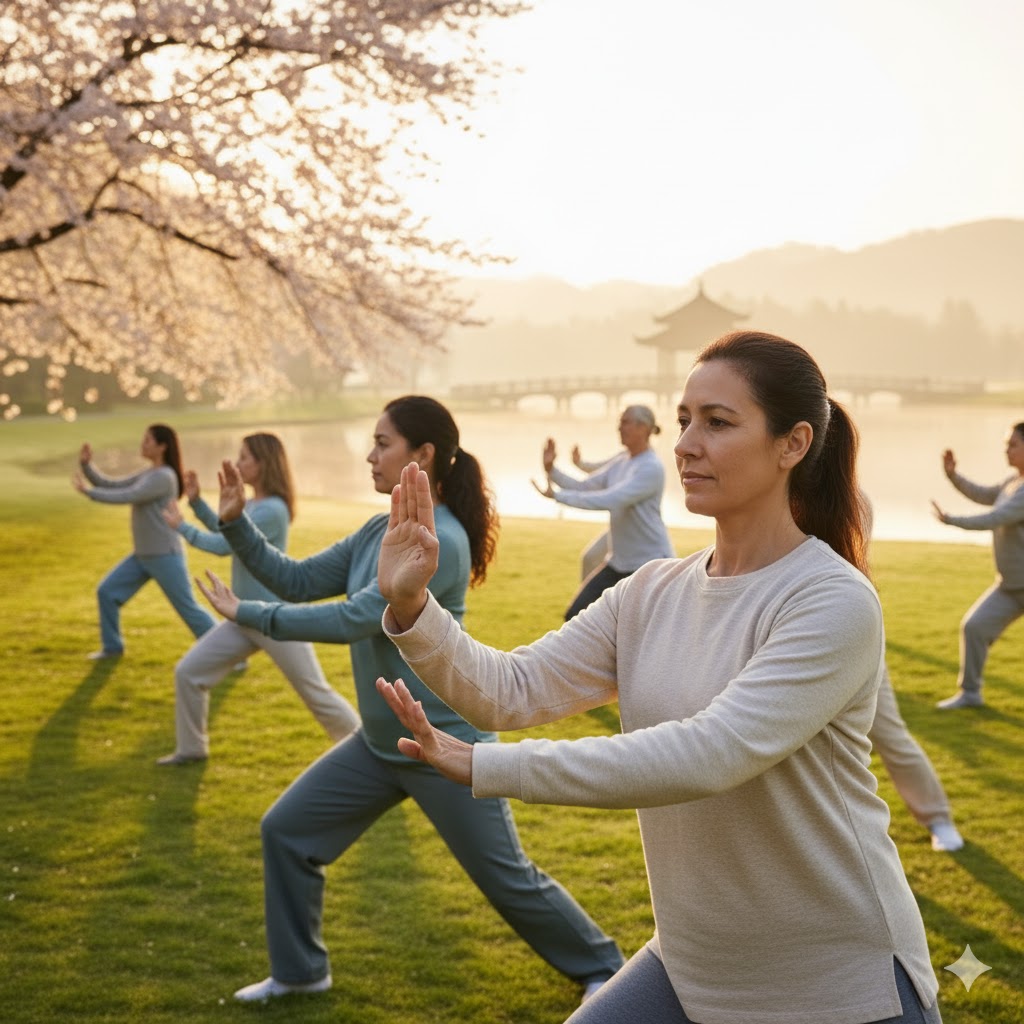
Qigong meditation (pronounced chee-gong) is an ancient Chinese practice that harmonizes mind, body, and energy. Often described as “moving meditation,” Qigong blends slow rhythmic movement, conscious breathing, and mindful awareness to restore balance and vitality from within.

While yoga focuses on prana — the life force that flows through every living being — Qigong focuses on qi (or chi), the same vital energy that animates the body and the universe. Both systems share a common goal: to awaken a deeper connection between the physical and spiritual self.


 The Roots of Qigong

The origins of Qigong reach back over 4,000 years to ancient China, where healers, monks, and martial artists developed it as a form of energy medicine and spiritual cultivation.

Early Daoist practitioners used Qigong to balance yin and yang — the natural opposites within the body. Over centuries, it evolved into multiple styles: medical Qigong for healing, martial Qigong for strength, and spiritual Qigong for enlightenment.

Today, Qigong is practiced worldwide and has been recognized by wellness experts and medical research institutions for its calming, restorative effects on the nervous system, mood, and overall vitality.
(Sources: Cleveland Clinic, Healthline, Taoist Sanctuary, YMAA Institute)


 The Purpose of Qigong Meditation

At its heart, Qigong meditation teaches us to return to the natural flow of energy within.

It encourages:

  • Relaxation of the body – releasing physical tension and blockages
  • Calmness of the mind – softening mental noise through gentle focus
  • Awareness of breath – connecting inner and outer rhythm
  • Cultivation of qi – restoring life force to all organs and cells

Practicing Qigong is like recharging your internal battery — you learn to gather energy, circulate it, and store it for healing and resilience.


 Benefits for Mind, Body & Spirit

Scientific and traditional teachings both highlight a wide range of benefits from Qigong meditation:

MindBodySpirit
Reduces anxiety and stressImproves balance and postureDeepens inner awareness
Enhances focus and clarityLowers blood pressureAwakens energetic sensitivity
Supports emotional stabilityBoosts immune functionCultivates peace and gratitude
Improves sleep qualityIncreases flexibilityConnects you with nature’s rhythm

Modern research (National Library of Medicine, Brown University 2023) confirms that regular Qigong practice improves emotional regulation, fatigue, and quality of life.


 Simple Beginner Practice: 5-Minute Qigong Meditation

Step 1: Ground Yourself
Stand with feet shoulder-width apart.
Keep your spine tall and knees slightly bent.
Relax your shoulders and jaw.

Step 2: Breathe Naturally
Close your eyes gently.
Take slow breaths — in through your nose, out through your mouth.
Feel your belly rise and fall with each breath.

Step 3: Gather Energy
Imagine a soft golden light above your head.
With each inhale, let it flow down through your body — head, shoulders, heart, belly, and legs — into the earth.

Step 4: Circulate and Calm
Now imagine this light returning upward with your exhale, completing a gentle loop through your body.
Smile softly and feel the warmth of inner balance.

Step 5: Close the Practice
Bring your hands together over your lower abdomen (the Dantian).
Take three slow breaths, silently thanking your body for its energy.
End with a gentle bow or smile.

 Practice daily for 5–10 minutes to feel a noticeable calm in your body and clarity in your mind.


 How Qigong Complements Yoga Practice

For the Yoga947 community, Qigong meditation beautifully complements yoga by:

  • Offering gentle movement on days when physical asanas feel intense
  • Enhancing energy awareness during breathwork and meditation
  • Supporting emotional grounding through still standing or seated postures
  • Providing a holistic balance between action (yang) and rest (yin)

Together, Yoga and Qigong create a complete cycle — one that nurtures vitality, peace, and presence.

Qigong Meditation – Frequently Asked Questions (FAQ)

By Yoga947

1. What is Qigong?

Qigong (pronounced “chee-gong”) is an ancient Chinese healing and movement practice that combines gentle physical postures, breathing techniques, and focused intention to cultivate Qi (life force energy). It’s designed to harmonize the body, mind, and spirit through mindful movement.


2. How does Qigong differ from Tai Chi?

Both Qigong and Tai Chi share similar roots in Chinese philosophy and energy medicine. Qigong focuses more on internal energy cultivation and can include standing, sitting, or moving meditations. Tai Chi, on the other hand, is a structured martial art form involving a set sequence of slow, graceful movements. Think of Qigong as the foundation from which Tai Chi evolved.


3. What are the main benefits of practicing Qigong?

Regular Qigong practice can help:

  • Reduce stress and anxiety
  • Boost immune function and circulation
  • Improve flexibility, balance, and coordination
  • Enhance focus and emotional stability
  • Support spiritual awareness and inner peace

Many practitioners describe it as a gentle yet powerful self-healing art.


4. Is Qigong suitable for beginners?

Absolutely! Qigong is accessible to all ages and fitness levels. Movements can be modified or performed seated, making it ideal for beginners or those recovering from illness or fatigue. You don’t need any special equipment — just a calm space and comfortable clothing.


5. How often should I practice Qigong?

Even 5–10 minutes daily can bring noticeable calm and balance. Over time, consistent practice helps you tune into your body’s natural rhythms and improve your overall energy flow.


6. Can Qigong help with emotional healing?

Yes. Qigong encourages a mind-body connection that allows stored emotions to gently release through breath and movement. Many practitioners use Qigong to cultivate emotional resilience, forgiveness, and self-compassion.


7. Is Qigong a spiritual practice?

Qigong can be purely physical, meditative, or deeply spiritual — depending on your intention. Traditionally, it integrates Taoist and Buddhist philosophies, focusing on unity with nature, mindfulness, and the cultivation of inner stillness.


8. Do I need a teacher to learn Qigong?

While self-practice videos and online guides are helpful, learning from a qualified Qigong instructor — even for a few sessions — can ensure correct posture, breathing, and energy awareness. Yoga947 also offers guided meditation resources to help you begin safely at home.


9. How soon will I feel results from Qigong?

Some people notice an immediate sense of calm and clarity after one session. With regular practice, deeper benefits such as increased vitality, better sleep, and improved focus develop gradually over weeks or months.


10. How can I start a Qigong meditation routine with Yoga947?

Visit Yoga947.com to explore our guided Qigong Meditation steps, complete with beginner-friendly scripts, soothing audios, and printable wellness tools to support your energy journey. 

Coming Soon!


 Final Reflection: Flow Where Energy Meets Awareness

Qigong meditation reminds us that healing begins within.
Each mindful breath restores harmony between the body and the natural world — a reminder that stillness is strength, and movement is meditation.

Whether you stand beneath the sky or sit in silent breath, your qi flows through all that you are.
Start today — just five minutes of Qigong can awaken a lifetime of inner calm.


References & Suggested Reading

  • Cleveland Clinic. What Are the Health Benefits of Qigong? (2023)
  • Peter Deadman. A Brief History of Qigong (2021)
  • Brown University Research. Qigong and Fatigue Reduction in Cancer Survivors (2023)
  • YMAA Publications. The Root of Chinese Qigong by Dr. Yang, Jwing-Ming
  • Taoist Sanctuary of San Diego. History of Qigong

National Center for Complementary and Integrative Health (NCCIH): Qigong Overview

Discover Acupuncture Meditation for Stress Relief

Introduction

It’s a modern umbrella term for pairing needle (or acupressure/ear seeds) sessions with a meditative state—breathwork, body-scan, mantra, or Daoist/Chan (Zen) styles. Historically, acupuncture and meditation evolved side-by-side in China; today, clinics often blend them to calm the nervous system, ease pain/anxiety, and deepen interoceptive awareness.

Across centuries, humans have searched for ways to calm the body and still the mind. In traditional Chinese medicine (TCM), two such paths developed side by side: acupuncture—the art of guiding qi (vital energy) through fine needles—and meditation, the practice of focusing awareness inward. Today, practitioners and researchers are re-discovering how these two traditions harmonize. The blend, sometimes called acupuncture meditation, pairs mindful awareness with the physiological reset of acupuncture or acupressure.


Where It All Began

  • Early Breath Training: Texts like the Neiye (4th–2nd c. BCE) describe how breath circulates qi to calm the mind. This laid the groundwork for meditative awareness in Chinese healing traditions.
  • Meridian Pathways: Excavated Han-era manuscripts (Mawangdui, ~168 BCE) outlined channels through which qi flows—precursors to today’s acupuncture meridians.
  • Huangdi Neijing (Inner Canon): By the 1st–2nd c. CE, the Lingshu chapter codified acupuncture points, techniques, and the role of shen (spirit/mind) in health.
  • Daoist & Buddhist Influence: From the 3rd–6th centuries CE, visualization and mindfulness practices deepened the physician’s view of body–mind integration. Acupuncture was never just “physical”; it was always linked to the spirit.

What Science Sees Today

  • Pain & Headaches: The UK’s NICE guidelines note acupuncture can be considered for chronic tension-type headaches and migraine prevention.
  • Anxiety & Sleep: Points such as Yintang (between the eyebrows) and HT7 (at the wrist) have been studied for reducing pre-operative anxiety and calming the nervous system.
  • Brain & Body Effects: fMRI scans and heart-rate variability studies show acupuncture can quiet the default-mode network and shift the body toward parasympathetic calm—the same physiological direction meditation moves us toward.
  • Emerging Synergy: Trials combining mindfulness with acupuncture or auricular acupressure report benefits for stress, PTSD, and weight management, though research is still developing.

The Synergy of Acupuncture and Meditation

Integrating acupuncture with meditation creates a synergistic effect that addresses both the body and mind. Acupuncture stimulates the body’s natural healing mechanisms, while meditation calms the mind, reduces stress, and enhances emotional well-being. Together, they promote a holistic sense of balance and health.


Scientific Insights into Acupuncture Meditation

Neurochemical Effects

Research indicates that acupuncture stimulates the release of neurochemicals such as endorphins, serotonin, and GABA, which play roles in pain relief, mood regulation, and relaxation. Meditation practices, particularly mindfulness, have been shown to reduce symptoms of anxiety and depression, improve mood, and enhance stress resilience.

Clinical Evidence

A 2018 clinical trial funded by the U.S. Department of Defense found that meditation was as effective as prolonged exposure therapy in reducing PTSD symptoms and depression among veterans. Similarly, acupuncture has been found to alleviate chronic pain conditions, such as low back pain and knee osteoarthritis.


Real-World Applications and Case Studies

Case Study 1: Stress and Anxiety Reduction

A 35-year-old marketing executive reported high levels of stress and anxiety. After combining acupuncture and Zen meditation, she experienced a significant reduction in stress and anxiety, along with improved mental clarity and focus.

Case Study 2: Chronic Pain Management

A 50-year-old woman with chronic back pain found significant relief after integrating acupuncture and meditation into her routine. She reported reduced pain levels and enhanced overall quality of life.

How to Try an “Acupuncture Meditation” Flow

(Can be done in a clinic, or at home with safe acupressure instead of needles)

Step 1 — Arrival (2 minutes): Sit or lie comfortably. Close your eyes. Take three slow breaths, lengthening each exhale.

Step 2 — Intention (1 minute): Whisper inwardly: “Soften, notice, allow.”

Step 3 — Gentle Acupressure (3–5 minutes):

  • Yintang (EX-HN3): Between the eyebrows — relieves restlessness.
  • HT7 (Shenmen): At the wrist crease on the little-finger side — soothes the spirit.
  • PC6 (Neiguan): Inner forearm, 3 fingerbreadths from the wrist — eases anxiety, steadies breath.
    Press gently with a fingertip for 60–90 seconds each, breathing slowly. Stop if sore or uncomfortable.

Step 4 — Meditation Anchor (5 minutes): Focus on breath or silently repeat a calming phrase. Notice sensations at the points without judgment.

Step 5 — Close (2 minutes): Place palms over your lower abdomen. Take five relaxed breaths. Open your eyes slowly, carrying the calm with you.


Safety Notes for Readers

  • In the UK, acupuncture is not statutorily regulated; choose practitioners registered with a PSA-accredited body (e.g., British Acupuncture Council).
  • Acupressure is generally safe, but avoid it if pregnant (unless guided), or if you have bleeding disorders, are on anticoagulants, or have implanted devices (with electro-acupuncture).
  • Side effects of acupuncture are usually mild (temporary soreness or bruising).

Key Takeaways

  • Meditation and acupuncture evolved together in Chinese culture.
  • Both calm the nervous system and guide awareness inward.
  • Modern studies suggest pairing them enhances relaxation and emotional balance.
  • Safe self-practice is possible with gentle acupressure, but professional guidance deepens the experience.

References & Further Reading

  • Huangdi Neijing (Inner Canon) — foundational acupuncture text.
  • Neiye (Inward Training) — early Chinese meditation manual.
  • NICE Guidance: Headaches in over 12s (UK).
  • NCCIH (US): Acupuncture and Integrative Practices Evidence Maps.
  • Academic reviews on acupuncture, brain networks, and meditation overlap (fMRI + HRV studies).

Conclusion

Acupuncture meditation represents a holistic approach to healing, addressing both physical ailments and mental well-being. By integrating these practices into daily life, individuals can cultivate a balanced and harmonious existence. Embarking on this journey requires dedication, openness, and a willingness to explore the interconnectedness of body and mind.


Affiliate Disclaimer

Yoga947 may contain affiliate links to products, services, or resources we personally find valuable in the areas of health, wellbeing, and lifestyle. This means that if you click on an affiliate link and make a purchase, we may receive a small commission at no extra cost to you.

Please note: The information shared on this blog is for educational and inspirational purposes only. It should not be taken as medical advice, diagnosis, or treatment. Every person’s body and circumstances are unique, and what works for one individual may not be suitable for another.

We strongly recommend that you consult with a qualified healthcare professional before making any decisions related to your health, diet, or wellbeing practices.

By using this site, you acknowledge and agree that Yoga947 is not responsible for any outcomes that may result from applying the information, resources, or products mentioned. Your health and safety always come first.

Embark on your journey to balance and healing with acupuncture meditation today. Whether you’re new to these practices or looking to deepen your experience, connect with experienced acupuncturists and meditation guides to begin your transformative journey. Ready to get started?

Start healing from within—your path to wellness begins now.

About Yoga947.com

About Yoga947

Welcome to Yoga947, your sanctuary for holistic healing, spiritual growth, and mental well-being engagement. Our mission is to help you achieve balance, clarity, and abundance. We do this through the power of meditation, sound healing, and digital growth via our online platform.

Who We Are

Yoga947 was created with the vision of providing a space. It allows individuals to explore the transformative power of meditation, crystals, and healing frequencies. Yoga947 was founded by a dedicated online mentor and content creator. It serves as a guiding light for those seeking inner peace, mental well-being, and freedom. It also helps in achieving a deeper connection to themselves.

What We Offer & How It Benefits You

At Yoga947, we provide:

  • Crystal Meditation & Healing: Experience the soothing power of crystals to reduce stress, enhance focus, and promote emotional balance. Unlock a sense of inner peace and clarity in your daily life.
  • Sound Meditation & Frequencies: Immerse yourself in sound healing to elevate your mood, relieve anxiety, and improve sleep. Feel more connected and aligned with your true self.
  • Educational Content & Resources: Access valuable insights through our blog, videos, and ebooks. Gain knowledge and tools to create a lifestyle of peace, prosperity, and purpose.

Why Yoga947?

In a world filled with stress, uncertainty, and financial struggles, Yoga947 was born. It emerged from the need for a space that merges personal well-being with financial empowerment. By incorporating meditation into your routine, you can achieve a calmer mind. Holistic healing will help you have a healthier body. These practices contribute to a more abundant life. Our online Meditation practice helps you overcome financial limitations. It enables you to create a future of mental independence and time freedom.

Join Our Community

We invite you to explore our content. Engage with our growing community. Take the first step toward a more balanced, peaceful, and prosperous life.

Tap into our frequency here at Yoga947.com and embark on your journey to clarity, healing, and mental well-being  today!

Exploring the Mystical Power of Crystals

Crystals have been revered for centuries across different cultures and civilizations for their mystical, spiritual, and healing properties. These natural gemstones were used by the ancient Egyptians, Chinese, Greeks, and Romans for protection. They also served for energy balancing and overall well-being. Today, crystals continue to be an essential part of meditation, alternative healing, and personal growth.

Introduction: The Enduring Legacy of Crystals

Crystals are more than just beautiful stones. People believe they hold unique vibrations and energy. These can influence our well-being. Their significance spans across history, from ancient civilizations to modern spiritual practices. Throughout time, cultures worldwide have harnessed the power of crystals for healing, protection, and spiritual enlightenment. People have believed in their transformative abilities for ages. This belief makes them a fascinating and essential part of holistic living today.

Gain immediate access to your FREE Crystals for Beginners content: Download Here

The History of Crystals

Crystals date back thousands of years and have played significant roles in various traditions:

  • Ancient Egypt: Crystals like lapis lazuli and carnelian were used in amulets and burial rituals. People believed these crystals provided protection and guidance in the afterlife. The Egyptians adorned themselves with these stones and placed them in tombs to ensure a safe journey to the afterlife. They also used malachite for its healing properties and turquoise for protection against negative energies.
  • Ancient China: Jade was considered a stone of purity and was often used in medicine and ceremonial objects. The Chinese believed that jade promotes longevity and good health. It was carved into intricate sculptures, worn as jewelry, and even ground into powder for medicinal purposes.
  • Greek and Roman Cultures: Crystals were worn as talismans for protection in battle and healing purposes. The word ‘crystal’ comes from the Greek word ‘krystallos,’ meaning frozen light. The Romans used crystals like hematite to boost courage and garnet for strength and vitality. Greek scholars also believed amethyst prevents intoxication and enhance mental clarity.
  • Indian and Ayurvedic Traditions: Crystals were incorporated into healing practices to balance chakras and energy flow. Ayurvedic healers used crystals to align the body’s energies. They used clear quartz to enhance spiritual connection. Rose quartz was for emotional healing.
  • Indigenous Cultures: Many indigenous tribes, including Native Americans and Australian Aboriginals, used crystals for ceremonial and healing purposes. They believed that stones like obsidian and turquoise carried the power of the Earth and could provide guidance and protection.

The Purpose of Crystals

Crystals are believed to store, amplify, and transmit energy. Their purpose varies from person to person, but common uses include:

  • Healing and Balance: Many use crystals to balance their emotional, physical, and spiritual well-being. Each crystal is thought to have unique vibrations that can interact with a person’s energy field to promote healing.
  • Meditation and Mindfulness: Crystals enhance focus, deepen meditation, and encourage self-awareness. Meditating with a crystal can help one tap into higher consciousness and achieve inner peace.
  • Energy Protection: Some crystals act as shields against negative energy, creating a safe and harmonious environment. Black tourmaline, for example, is known for its protective properties and is often used to ward off negativity.
  • Manifestation and Attraction: Crystals help attract positivity, love, abundance, and success into one’s life. Many people carry citrine to attract wealth or amethyst to enhance their intuition and spiritual growth.
  • Chakra Balancing: Different crystals are associated with different chakras in the body, helping to restore balance and harmony. For example, turquoise is linked to the throat chakra. It aids in communication. Garnet is connected to the root chakra. It provides stability and grounding.

The Benefits of Crystals

Crystals offer a wide range of benefits, including:

  • Emotional Healing: They help release negative emotions, promote self-love, and encourage forgiveness. Rose quartz is particularly known for fostering love and emotional healing.
  • Spiritual Growth: Many people use crystals to enhance their spiritual connection, intuition, and awareness. Labradorite is often used for strengthening intuition and psychic abilities.
  • Physical Well-being: Some crystals are believed to aid in physical healing by promoting circulation, reducing inflammation, and supporting overall health. For example, hematite is used to improve blood circulation, while amethyst is known for reducing stress and tension.
  • Stress Reduction: Holding or meditating with crystals like amethyst and selenite can help alleviate stress and promote relaxation.
  • Enhanced Creativity and Focus: Crystals like carnelian and fluorite help clear mental fog. They inspire creative thinking. This makes them popular among artists and writers.
  • Protection and Grounding: Certain stones, such as obsidian and black tourmaline, help create a protective barrier against negative energies. They also provide a sense of security.

Conclusion

Crystals hold a deep historical significance and continue to impact many people’s lives today. You can seek emotional healing by incorporating crystals into your daily routine. They also support spiritual growth and offer energy protection. This practice can bring balance and harmony. Explore the world of crystals and harness their powerful energy for a more mindful and positive life!

Gain immediate access to your FREE Crystals for Beginners content: Download Here

Here are some specific meditation techniques using crystals, tailored for different needs:


1. Guided Crystal Meditation for Relaxation & Stress Relief

  • Crystal to Use: Amethyst (calming), Lepidolite (stress relief), Selenite (cleansing)
  • How to Meditate:
    1. Hold an amethyst in your left hand (receiving energy) and place a selenite on your chest.
    2. Take deep breaths, visualizing a soft violet light surrounding you.
    3. Repeat the affirmation: I am calm, centered, and at peace.
    4. Listen to “Crystal Healing Meditation” on Insight Timer or YouTube (The Honest Guys).

2. Chakra Balancing Crystal Meditation

  • Crystals to Use: Clear Quartz (crown), Amethyst (third eye), Lapis Lazuli (throat), Rose Quartz (heart), Citrine (solar plexus), Carnelian (sacral), Red Jasper (root)
  • How to Meditate:
    1. Lay down and place each crystal on its corresponding chakra.
    2. Inhale deeply, visualizing energy flowing up and down your body.
    3. Chant “OM” or play “7 Chakra Healing Frequencies” on Meditative Mind (YouTube).
    4. After 10-15 minutes, remove the stones and ground yourself with black tourmaline.

3. Manifestation Meditation with Crystals

  • Crystal to Use: Citrine (wealth & success), Green Aventurine (luck), Pyrite (abundance)
  • How to Meditate:
    1. Hold a citrine in your dominant hand and visualize golden light surrounding you.
    2. Set an intention (e.g., “I am open to receiving abundance in all forms”).
    3. Play “Solfeggio Frequency 528 Hz” for manifestation (YouTube).
    4. Keep the citrine in your workspace or wallet after meditating.

4. Protection & Grounding Meditation

  • Crystals to Use: Black Tourmaline, Obsidian, Smoky Quartz
  • How to Meditate:
    1. Sit in a quiet space and place black tourmaline at your feet.
    2. Breathe deeply and visualize roots growing from your body into the Earth.
    3. Say the affirmation: I am safe, grounded, and protected.
    4. Play “Earth Grounding Frequency 432 Hz” (Insight Timer/YouTube).

5. Third Eye & Intuition Meditation

  • Crystals to Use: Labradorite, Amethyst, Lapis Lazuli
  • How to Meditate:
    1. Hold a labradorite over your third eye (forehead).
    2. Close your eyes and visualize a bright indigo light.
    3. Listen to “Third Eye Awakening Meditation” on Gaia or Insight Timer.
    4. Journal any intuitive messages after your session.

“Ancient Echoes: Meditative Wisdom Across Africa”

Introduction

Africa, a continent renowned for its kaleidoscope of cultures, landscapes, and histories, stands as a testament to human diversity and resilience. Home to over 50 countries and a multitude of ethnic groups, Africa’s rich tapestry weaves together ancient traditions, customs, and spiritual practices, many of which include the art of meditation. Today, we embark on a journey to explore the roots, evolution, and contemporary significance of meditation in the diverse mosaic of African cultures.

Origins and Spread of Meditation in Africa

Meditation in Africa dates back to ancient times, deeply entwined within the cultural fabric of numerous indigenous communities. These practices, manifested through rhythmic movements, chants, communal rituals, and contemplative techniques, have been integral to the spiritual and cultural heritage of various African tribes. Their origins, although often passed down through oral traditions, hold a significant place in the historical narrative of the continent.

Tribes, Locations, and Their Meditation Practices

A myriad of African tribes and communities have historically engaged in meditation or similar contemplative practices:

  • The San People (Bushmen): Indigenous to Southern Africa, the San people have a long-standing tradition of spiritual practices involving trance states induced by rhythmic drumming, dances, and healing rituals. This practice is believed to promote healing and connect participants with their spiritual world (Reference: Studies by cultural anthropologists like Bradford Keeney and others who have observed the San People’s healing rituals).
  • Case Study Illustration: Dr. Rachel Parker, an anthropologist, lived with the San People for a year to study their healing practices. She observed a ritual where a community member, experiencing illness, participated in a healing dance. The rhythmic drumming and chants created a trance-like state, believed to connect the individual with ancestral spirits for healing. The person emerged from the ritual expressing a sense of relief and reported improved well-being over time.
  • The Maasai: Found primarily in East Africa, the Maasai integrate meditation into their daily lives through ritualistic dances, chanting, and a deep connection to their spiritual beliefs and the natural world, offering a form of meditation. (Reference: Ethnographic accounts from researchers like Joseph Thompson or Maasai elders’ narratives)
  • Case Study Illustration: Dr. James Anderson, a researcher, lived among the Maasai to study their traditional practices. He documented the experience of young Maasai warriors engaging in a ritual dance, performed as part of a community celebration. The repetitive, rhythmic movements and chants created a meditative atmosphere, strengthening the warriors’ bond with their heritage. The participants reported feeling a deep connection with their ancestors and a renewed sense of cultural identity.
  • The Yoruba: Hailing from West Africa, the Yoruba have a rich cultural and spiritual heritage that encompasses diverse contemplative practices, often involving communal ceremonies, music, and rhythmic rituals, often involving repetitive movements, chants, and rhythmic beats. This practice is aimed at spiritual connection and communal healing. (Reference: Works by scholars like Robert Farris Thompson who have studied African dance and music traditions)
  • Case Study Illustration: Dr. Fatima Olatunji conducted fieldwork among the Yoruba people, focusing on their traditional ceremonies. She documented a community event where a dance ritual was performed to honor ancestral spirits. The rhythmic drumming and synchronized movements induced a sense of unity and collective consciousness among participants. Individuals reported feeling spiritually uplifted and emotionally connected to their community after the ritual.

These tribes represent a fraction of the many communities across Africa with unique meditation practices, each reflecting the diversity and cultural richness of the continent.

Benefits of Meditation in Africa in 2023

In the contemporary landscape of Africa, meditation holds profound significance and offers a range of benefits:

  • Mental Health and Well-being: Meditation serves as a tool for stress reduction, providing mental health support and emotional balance in the face of the modern-day challenges.
  • Cultural Connection and Identity: For many Africans, meditation acts as a means to connect with their cultural roots, fostering a sense of identity and preserving heritage in a rapidly changing world.
  • Community Resilience and Healing: It continues to play a pivotal role in communal healing, offering solace and resilience amidst social and personal challenges.
  • benefits of meditation in Africa are extensive and extend to men, women, and children across various aspects of their lives.
  • Benefits For Men:
  • Mental Health and Stress Reduction:
  • Meditation offers men a tool for managing stress, promoting mental clarity, and enhancing emotional well-being. In African societies, where men often face multiple pressures related to work, family, and societal expectations, meditation can provide a space for inner calm and resilience.
  • Emotional Balance:
  • Engaging in meditative practices allows men to develop emotional balance and self-awareness. This is particularly valuable in cultures where traditional masculinity norms might discourage open expressions of emotions, providing a private space for self-reflection and emotional regulation.
  • Community Leadership and Resilience:
  • In many African communities, men often play leadership roles within their families and communities. Meditation can empower them with a clearer mindset, enhanced decision-making abilities, and a deeper sense of empathy, contributing to more effective leadership and community resilience.
  • Benefits For Women:
  • Emotional Well-being and Empowerment:
  • Meditation provides a space for women to navigate the stresses of daily life, offering a tool for managing emotional well-being. In many African cultures, where women might face various societal and familial pressures, meditation offers a sense of empowerment and inner strength.
  • Coping with Societal Expectations:
  • Women in African societies often juggle various roles within their families and communities. Meditation can serve as a sanctuary, allowing them to find a moment of peace, self-reflection, and strength amidst societal expectations.
  • Self-care and Mental Health:
  • Engaging in meditative practices allows women to prioritize their mental health and well-being, fostering a sense of balance and resilience. It can also offer a space for self-care, helping them navigate the challenges of daily life.
  • Benefits For Children:
  • Emotional Regulation and Well-being:
  • Meditation provides children with tools for emotional regulation, helping them cope with stress and anxiety. It cultivates a sense of calm, focus, and emotional resilience, which is particularly beneficial for children facing academic or social pressures.
  • Improved Concentration and Academic Performance:
  • Practicing meditation at a young age can improve a child’s ability to concentrate, leading to potential benefits in academic performance. It can enhance cognitive skills and facilitate better learning abilities.
  • Cultivation of Empathy and Compassion:
  • Through meditation, children can develop a sense of empathy and compassion, promoting a positive attitude towards others and nurturing a more harmonious social environment within their families and communities.
  • In African contexts, the benefits of meditation for men, women, and children are multifaceted, offering tools for mental well-being, emotional regulation, and resilience, while also contributing to healthier family dynamics and communities.

In 2023, the practice of meditation in Africa transcends mere historical and cultural boundaries, providing both practical benefits and a link between tradition and the modern world.

This comprehensive overview sets the stage for a deeper exploration into the historical legacy and contemporary relevance of meditation across diverse African cultures, shedding light on its cultural, spiritual, and practical significance in the lives of individuals and communities.

For future research on African meditation, there are various resources and avenues you can explore to delve deeper into this topic. Here are some suggestions:

  1. Books and Academic Journals:
    • Look for books written by scholars, anthropologists, and historians specializing in African culture, spirituality, and anthropology. Titles like “African Spirituality” by Jacob K. Olupona or “African Religions & Philosophy” by John S. Mbiti might offer insights into meditation practices.
    • Academic journals focusing on African studies, anthropology, or cultural history often contain research articles exploring indigenous practices, including meditation, in different African regions.
  2. Museums and Cultural Institutions:
    • Visit museums or cultural institutions with collections or exhibitions on African culture. Many of these places offer valuable insights into traditional practices, including meditation, through artifacts, historical displays, and expert commentary.
  3. Online Databases and Academic Platforms:
    • Access academic databases like JSTOR, Google Scholar, or Project MUSE. These platforms contain scholarly articles, research papers, and publications discussing African history, spirituality, and indigenous practices, including meditation.
  4. Consult Local Experts or Organizations:
    • Reach out to experts in African studies, anthropology, or cultural heritage preservation. Professors, researchers, or non-profit organizations working in African cultural preservation might offer guidance or access to resources.
  5. Documentaries and Films:
    • Documentaries that explore African cultures, traditions, and spiritual practices often provide visual insights and interviews with practitioners. Titles such as “The Story of Africa” or “African Renaissance: When Art Meets Power” might touch on these topics.
  6. Online Courses and Webinars:
    • Enroll in online courses or attend webinars related to African studies, anthropology, or cultural history. Platforms like Coursera, edX, or even specialized institutions sometimes offer courses on African culture and spirituality.
  7. Fieldwork and Interviews:
    • Consider conducting fieldwork or interviews with experts, practitioners, or communities who have firsthand knowledge of African meditation practices. This method might offer unique insights and perspectives.
  8. Publications by African Authors:
    • Look for publications, essays, or writings by African authors or practitioners who discuss their cultural heritage, traditional practices, and the significance of meditation in their communities.

When researching African meditation, a multidisciplinary approach involving history, anthropology, cultural studies, and spirituality will provide a comprehensive understanding. Be sure to critically evaluate sources, consider multiple perspectives, and verify information from reliable and credible sources for a well-rounded exploration of this fascinating topic.

The Enduring Legacy of Meditation Across Africa

The tapestry of meditation throughout Africa is woven with threads of cultural richness, spiritual depth, and historical significance. Across the diverse landscapes and traditions of this vast continent, meditation has played a pivotal role in shaping communities, providing solace, and fostering spiritual connections.

From the ancient practices of the San People’s healing rituals, where rhythmic movements and trance states connect individuals with their spiritual world, to the Maasai warrior dance, facilitating a deep bond with their cultural heritage, and the Yoruba’s ceremonial drumming and dance rituals aimed at communal healing—each instance illuminates the diverse manifestations of meditative practices deeply rooted in the African soil.

In 2023, the benefits of meditation continue to resonate, offering men, women, and children tools for stress reduction, emotional balance, and resilience. Meditation serves as a sanctuary, enabling individuals to find peace amid the daily pressures, fostering cultural connection, and nurturing mental well-being.

The silent yet profound impact of meditation in African societies transcends mere stress reduction—it is a cultural bridge connecting the past with the present, offering a beacon of resilience and a path to inner peace. From the rhythms of the San People to the ceremonial traditions of the Yoruba and Maasai, these practices speak to the enduring legacy of meditation within the hearts and minds of diverse African communities.

As Africa moves forward, embracing the contemporary world while honoring its cultural heritage, the echoes of meditation persist, guiding, healing, and resonating across the continent, ensuring that this ancient practice remains an integral part of the vibrant tapestry of African history and life.

Advertise Free