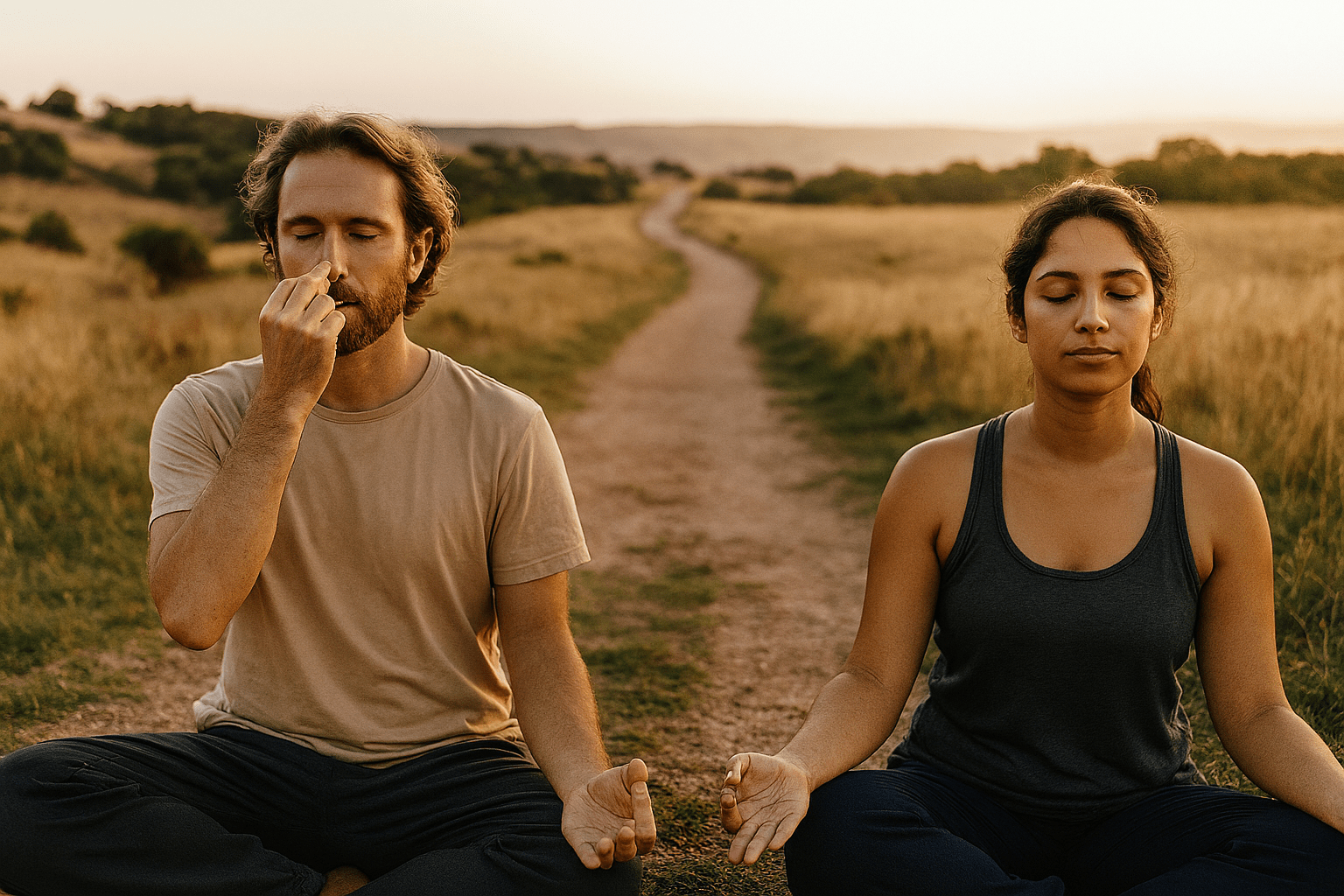
Breathwork vs. Meditation: Which Path Leads You Home?

Discovering the bridge between breath, awareness, and inner peace.

Introduction

In a world that moves faster than our hearts can keep up with, the search for stillness becomes an act of self-love. Many people find their way to meditation seeking calm, while others begin with breathwork to find balance. Both paths lead toward the same destination — the moment you truly meet yourself.

Whether you call it mindfulness, pranayama, or stillness practice, each moment of awareness invites healing. Understanding the difference between breathwork and meditation, and how they support each other, can transform the way you approach your inner wellness journey.


What Is Breathwork?

Breathwork is the conscious control and awareness of your breathing.
Through gentle rhythmic breathing, you shift your body’s chemistry — easing the nervous system, increasing oxygen, and bringing clarity to the mind.

In yogic tradition, this is called Pranayama, the art of directing “prana,” or life force energy, through the body. Modern variations, such as box breathing, holotropic breathwork, or coherent breathing, have found a place in therapy, performance training, and even trauma recovery.

The power of breathwork lies in its immediacy.
It brings the body back to safety, slowing the heart rate and signaling to the mind: “You are safe to be still.”

Common Benefits:

  • Instant stress relief
  • Emotional release and regulation
  • Increased focus and vitality
  • Improved sleep and circulation
  • Deeper connection to the present moment

What Is Meditation?

Meditation is the art of awareness — a quiet meeting with your own consciousness.
Rather than changing the breath or body, it invites you to observe them.

Ancient traditions like Vipassana, Zazen, or Mindfulness Meditation encourage us to watch thoughts, emotions, and sensations as they rise and fall — teaching us that peace already exists within.

The essence of meditation isn’t about escaping reality but seeing it clearly without reaction. Over time, it refines the mind like still water reflects the sky — calm, clear, and aware.

Common Benefits:

  • Emotional stability and compassion
  • Improved concentration and creativity
  • Reduced anxiety and depression
  • Greater spiritual insight and self-awareness
  • Sense of inner freedom

Breathwork vs. Meditation — Understanding the Difference

AspectBreathworkMeditation
Primary FocusRegulation of the breath to influence body and mindAwareness of thoughts, sensations, and consciousness
Core MechanismPhysical and energetic control (activates the parasympathetic system)Observation without control (calms mental fluctuations)
Immediate ResultsQuick relief from stress and tensionLong-term clarity, emotional balance, and insight
Ideal ForBeginners needing grounding or energy releasePractitioners seeking stillness, awareness, or spiritual depth
InterconnectionPrepares the body for meditationDeepens the awareness achieved through breathwork

🌸 Yoga947 Insight:
“Breath anchors the body — awareness steadies the soul.”
When the two merge, you move from doing to simply being.


Why People Are Drawn to These Practices

Most individuals arrive at meditation or breathwork not through curiosity, but through necessity — the need for peace, healing, or reconnection.
Some of the most common reasons include:

  • Overwhelming stress and burnout
  • Desire for emotional balance and clarity
  • Healing from grief or trauma
  • Curiosity about self-growth or spiritual awareness
  • A wish to live with intention and presence

The truth is: both breathwork and meditation are natural to us — they are our return to wholeness.


How to Begin Your Practice (Yoga947 Beginner Routine)

  1. Find a quiet space. Sit comfortably or lie down.
  2. Start with breath awareness. Gently inhale through the nose, exhale through the mouth.
  3. Count your breaths. Inhale for 4, hold for 2, exhale for 6. Repeat for 2–3 minutes.
  4. Transition into observation. Allow your breath to return to normal. Observe sensations, thoughts, or sounds without judgment.
  5. End with gratitude. Whisper silently: “I am calm, I am aware, I am home.”

This gentle five-minute practice can be the foundation for both breathwork and meditation, blending the body’s rhythm with the mind’s stillness.


Final Thoughts

Breathwork and meditation are not rivals — they are two halves of the same circle.
Breath brings you into the body. Meditation brings you into awareness. Together, they return you to your natural state of peace.

When practiced with consistency, these tools don’t just quiet the mind — they awaken the heart.

“The breath teaches you how to live. Meditation teaches you how to be.” — Yoga947

Vipassana Meditation: Seeing Life as It Truly Is

Discover how an ancient practice helps modern minds find clarity, healing, and emotional balance.


The Stillness Beneath the Noise

In a world filled with endless noise, silence becomes a rare luxury. Centuries ago, a simple yet profound path emerged — Vipassana Meditation, a timeless method of self-understanding and liberation.

This practice invites us to observe the flow of sensations, emotions, and thoughts with pure awareness — revealing the truth beneath mental chaos.


The Origins of Vipassana Meditation

The term Vipassana comes from the ancient Pali language, meaning “clear seeing.” Over 2,500 years ago, Gautama Buddha rediscovered this practice as the heart of mindfulness — the art of observing reality exactly as it is.

A Journey Through Time

  • India (5th Century BCE):
    Vipassana formed the foundation of the Buddha’s path to enlightenment — understanding impermanence (anicca), suffering (dukkha), and non-self (anatta).
  • Sri Lanka & Southeast Asia:
    Preserved within monastic communities in Burma, Thailand, and Sri Lanka, the technique continued to thrive for centuries.
  • The Modern Revival:
    In the 1950s, Sayagyi U Ba Khin began teaching Vipassana to everyday people. His student, S.N. Goenka, would later expand the teachings worldwide — founding non-commercial retreat centers open to all.
  • Global Presence:
    Today, Vipassana centers operate on every continent, offering insight meditation to millions as a universal human practice — beyond religion, belief, or background.

At its core, Vipassana is not about religion or belief, but about cultivating wisdom through direct experience — learning to see impermanence (anicca), suffering (dukkha), and non-self (anatta).How Vipassana Differs from Other Meditation Styles

StyleFocusKey Technique
VipassanaObservation & awarenessMindful scanning of sensations
MindfulnessPresent moment focusAnchoring awareness to breath/thoughts
TranscendentalMantra repetitionSound vibration to transcend thought
ChakraEnergy alignmentVisualization & sound
Heart-CenteredCompassion & emotionLoving-kindness (Metta)


The Practice: Seeing Without Reaction

Unlike guided visualizations or mantra repetition, Vipassana focuses on direct observation.

The Three Core Steps:

  1. Breath Awareness (Anapana):
    Focus on the natural breath to sharpen the mind.
  2. Body Scanning:
    Move attention systematically through bodily sensations without labeling them as good or bad.
  3. Understanding Impermanence:
    Realize that sensations, thoughts, and emotions constantly rise and pass — teaching balance and equanimity.

Through regular practice, we begin to respond to life rather than react — cultivating deep emotional stability.


Modern Research & Case Studies

Science continues to affirm what ancient practitioners already knew: Vipassana changes the brain.

  • Improved Emotional Regulation:
    A 2019 Mindfulness study revealed that Vipassana reduces overactivity in the amygdala (the fear center), helping practitioners manage emotions calmly.
  • Greater Compassion and Self-Awareness:
    A Journal of Humanistic Psychology study found long-term practitioners display higher empathy and interpersonal understanding.
  • Stress and Sleep Improvements:
    Research from the University of Massachusetts showed that a 10-day Vipassana retreat lowers cortisol and enhances overall well-being.

Real-life stories mirror these findings: participants describe inner peace, renewed purpose, and emotional healing after completing a retreat.


Integrating Vipassana Into Daily Life

You don’t need a monastery to begin. Here’s how to bring insight into your everyday rhythm:

  1. Start with 10 minutes of mindful breathing each morning.
  2. Observe sensations — warmth, tingling, or tightness — without reacting.
  3. Pause before responding in conversations or stress moments.
  4. Reflect in a mindfulness journal:
    “What did I notice today that I usually overlook?”

Small, consistent practices plant deep roots of awareness.


Recommended Reading

Enhance your understanding with these timeless resources:

  • The Art of LivingS.N. Goenka
  • In the Buddha’s WordsBhikkhu Bodhi
  • Mindfulness in Plain EnglishBhante Henepola Gunaratana
  • Old Path White CloudsThich Nhat Hanh

These texts blend philosophy with practical mindfulness for all levels.


🕉️ International Vipassana Retreats

Experience authentic Vipassana at globally recognized centers — open to beginners and experienced meditators alike:

Each retreat runs entirely on donations — emphasizing equality, mindfulness, and generosity.


Final Reflections

Vipassana teaches us that peace isn’t found through escape, but through observation and understanding.
When we learn to witness sensations without reaction, we begin to live with greater freedom and compassion.

“When you see the truth directly, the mind becomes still — and that stillness is freedom.”

✨ Continue your journey with Yoga947:
🎧 Listen to the Guided Body Scan Meditation Audio
📘 Download your Free 3-Day Vipassana Reflection Journal

COMING SOON!

Find peace through awareness — one breath at a time.