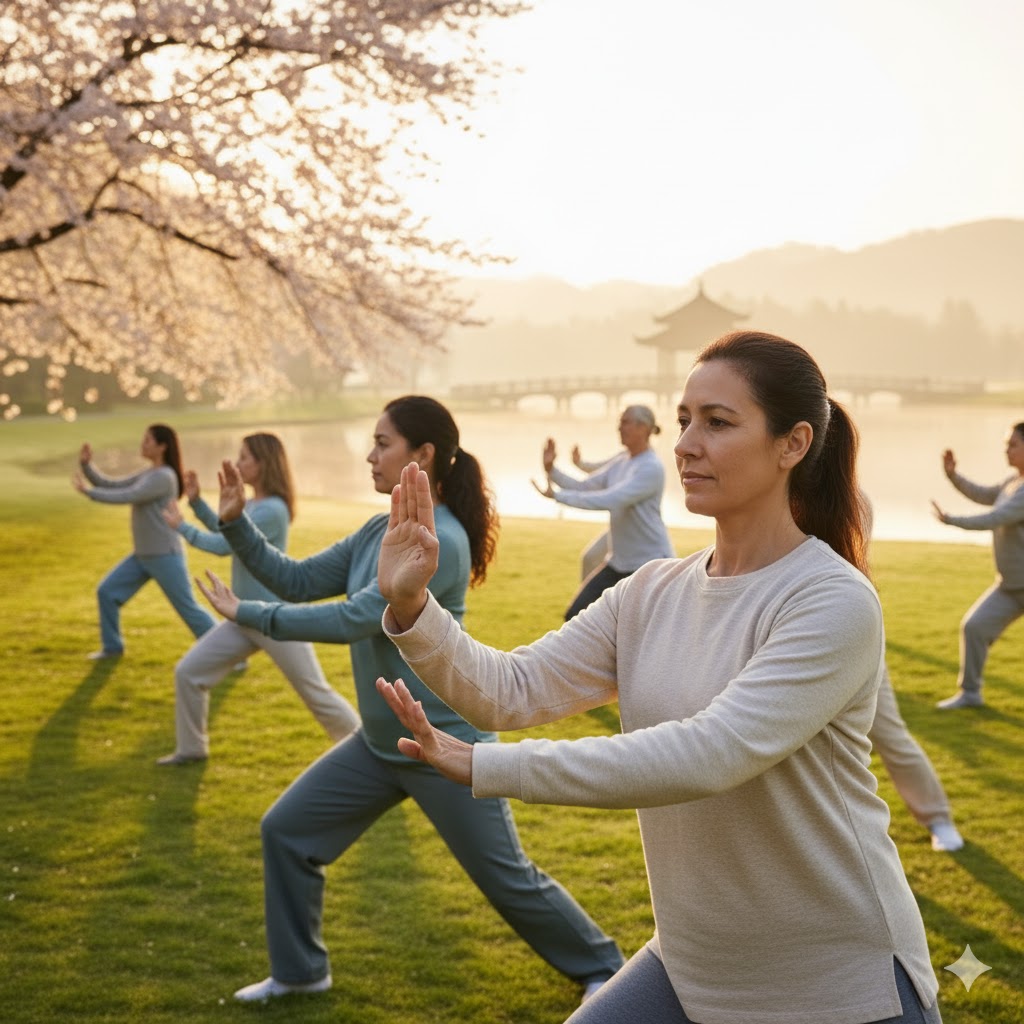
Beginner’s Guide to Qigong Meditation

Awaken Your Inner Energy Flow Through Stillness and Breath

Introduction: The Art of Gentle Energy Cultivation

Qigong Meditation (氣功冥想)

Meaning:

  • “Qi” (氣) = life energy or vital breath
  • “Gong” (功) = skill, cultivation, or mastery
    So Qigong means “the skill of working with life energy.”

Purpose:
Qigong meditation focuses on balancing, gathering, and circulating Qi within the body to promote healing, longevity, and spiritual awareness.
It combines slow, flowing movements, breathing techniques, and visualizations to open the body’s meridians (energy pathways).

Qigong meditation (pronounced chee-gong) is an ancient Chinese practice that harmonizes mind, body, and energy. Often described as “moving meditation,” Qigong blends slow rhythmic movement, conscious breathing, and mindful awareness to restore balance and vitality from within.

While yoga focuses on prana — the life force that flows through every living being — Qigong focuses on qi (or chi), the same vital energy that animates the body and the universe. Both systems share a common goal: to awaken a deeper connection between the physical and spiritual self.


 The Roots of Qigong

The origins of Qigong reach back over 4,000 years to ancient China, where healers, monks, and martial artists developed it as a form of energy medicine and spiritual cultivation.

Early Daoist practitioners used Qigong to balance yin and yang — the natural opposites within the body. Over centuries, it evolved into multiple styles: medical Qigong for healing, martial Qigong for strength, and spiritual Qigong for enlightenment.

Today, Qigong is practiced worldwide and has been recognized by wellness experts and medical research institutions for its calming, restorative effects on the nervous system, mood, and overall vitality.
(Sources: Cleveland Clinic, Healthline, Taoist Sanctuary, YMAA Institute)


 The Purpose of Qigong Meditation

At its heart, Qigong meditation teaches us to return to the natural flow of energy within.

It encourages:

  • Relaxation of the body – releasing physical tension and blockages
  • Calmness of the mind – softening mental noise through gentle focus
  • Awareness of breath – connecting inner and outer rhythm
  • Cultivation of qi – restoring life force to all organs and cells

Practicing Qigong is like recharging your internal battery — you learn to gather energy, circulate it, and store it for healing and resilience.


 Benefits for Mind, Body & Spirit

Scientific and traditional teachings both highlight a wide range of benefits from Qigong meditation:

MindBodySpirit
Reduces anxiety and stressImproves balance and postureDeepens inner awareness
Enhances focus and clarityLowers blood pressureAwakens energetic sensitivity
Supports emotional stabilityBoosts immune functionCultivates peace and gratitude
Improves sleep qualityIncreases flexibilityConnects you with nature’s rhythm

Modern research (National Library of Medicine, Brown University 2023) confirms that regular Qigong practice improves emotional regulation, fatigue, and quality of life.


 Simple Beginner Practice: 5-Minute Qigong Meditation

Step 1: Ground Yourself
Stand with feet shoulder-width apart.
Keep your spine tall and knees slightly bent.
Relax your shoulders and jaw.

Step 2: Breathe Naturally
Close your eyes gently.
Take slow breaths — in through your nose, out through your mouth.
Feel your belly rise and fall with each breath.

Step 3: Gather Energy
Imagine a soft golden light above your head.
With each inhale, let it flow down through your body — head, shoulders, heart, belly, and legs — into the earth.

Step 4: Circulate and Calm
Now imagine this light returning upward with your exhale, completing a gentle loop through your body.
Smile softly and feel the warmth of inner balance.

Step 5: Close the Practice
Bring your hands together over your lower abdomen (the Dantian).
Take three slow breaths, silently thanking your body for its energy.
End with a gentle bow or smile.

 Practice daily for 5–10 minutes to feel a noticeable calm in your body and clarity in your mind.


 How Qigong Complements Yoga Practice

For the Yoga947 community, Qigong meditation beautifully complements yoga by:

  • Offering gentle movement on days when physical asanas feel intense
  • Enhancing energy awareness during breathwork and meditation
  • Supporting emotional grounding through still standing or seated postures
  • Providing a holistic balance between action (yang) and rest (yin)

Together, Yoga and Qigong create a complete cycle — one that nurtures vitality, peace, and presence.

Qigong Meditation – Frequently Asked Questions (FAQ)

By Yoga947

1. What is Qigong?

Qigong (pronounced “chee-gong”) is an ancient Chinese healing and movement practice that combines gentle physical postures, breathing techniques, and focused intention to cultivate Qi (life force energy). It’s designed to harmonize the body, mind, and spirit through mindful movement.


2. How does Qigong differ from Tai Chi?

Both Qigong and Tai Chi share similar roots in Chinese philosophy and energy medicine. Qigong focuses more on internal energy cultivation and can include standing, sitting, or moving meditations. Tai Chi, on the other hand, is a structured martial art form involving a set sequence of slow, graceful movements. Think of Qigong as the foundation from which Tai Chi evolved.


3. What are the main benefits of practicing Qigong?

Regular Qigong practice can help:

  • Reduce stress and anxiety
  • Boost immune function and circulation
  • Improve flexibility, balance, and coordination
  • Enhance focus and emotional stability
  • Support spiritual awareness and inner peace

Many practitioners describe it as a gentle yet powerful self-healing art.


4. Is Qigong suitable for beginners?

Absolutely! Qigong is accessible to all ages and fitness levels. Movements can be modified or performed seated, making it ideal for beginners or those recovering from illness or fatigue. You don’t need any special equipment — just a calm space and comfortable clothing.


5. How often should I practice Qigong?

Even 5–10 minutes daily can bring noticeable calm and balance. Over time, consistent practice helps you tune into your body’s natural rhythms and improve your overall energy flow.


6. Can Qigong help with emotional healing?

Yes. Qigong encourages a mind-body connection that allows stored emotions to gently release through breath and movement. Many practitioners use Qigong to cultivate emotional resilience, forgiveness, and self-compassion.


7. Is Qigong a spiritual practice?

Qigong can be purely physical, meditative, or deeply spiritual — depending on your intention. Traditionally, it integrates Taoist and Buddhist philosophies, focusing on unity with nature, mindfulness, and the cultivation of inner stillness.


8. Do I need a teacher to learn Qigong?

While self-practice videos and online guides are helpful, learning from a qualified Qigong instructor — even for a few sessions — can ensure correct posture, breathing, and energy awareness. Yoga947 also offers guided meditation resources to help you begin safely at home.


9. How soon will I feel results from Qigong?

Some people notice an immediate sense of calm and clarity after one session. With regular practice, deeper benefits such as increased vitality, better sleep, and improved focus develop gradually over weeks or months.


10. How can I start a Qigong meditation routine with Yoga947?

Visit Yoga947.com to explore our guided Qigong Meditation steps, complete with beginner-friendly scripts, soothing audios, and printable wellness tools to support your energy journey. 

Coming Soon!


 Final Reflection: Flow Where Energy Meets Awareness

Qigong meditation reminds us that healing begins within.
Each mindful breath restores harmony between the body and the natural world — a reminder that stillness is strength, and movement is meditation.

Whether you stand beneath the sky or sit in silent breath, your qi flows through all that you are.
Start today — just five minutes of Qigong can awaken a lifetime of inner calm.


References & Suggested Reading

  • Cleveland Clinic. What Are the Health Benefits of Qigong? (2023)
  • Peter Deadman. A Brief History of Qigong (2021)
  • Brown University Research. Qigong and Fatigue Reduction in Cancer Survivors (2023)
  • YMAA Publications. The Root of Chinese Qigong by Dr. Yang, Jwing-Ming
  • Taoist Sanctuary of San Diego. History of Qigong

National Center for Complementary and Integrative Health (NCCIH): Qigong Overview

Unlock Inner Peace with Chakra Meditation

In today’s fast-paced world, stress, anxiety, and emotional imbalance have become common challenges. Many people seek ways to restore their inner peace. They want to realign their energy. One of the most powerful methods to achieve this is Chakra Meditation. Rooted in ancient spiritual traditions, Chakra Meditation is a transformative practice. It helps harmonize the body, mind, and spirit. This is achieved by balancing the seven major energy centers within us.

Each chakra governs different aspects of our physical, emotional, and spiritual well-being. When these energy centers are blocked or misaligned, it can lead to feelings of stagnation, fatigue, or even physical discomfort. We can cleanse and activate our chakras through guided meditation. Breathwork and visualization techniques help in this process. This allows energy to flow freely, enhancing our overall well-being.

Introduction

 Finding balance, peace, and a sense of purpose can seem elusive. Amid the chaos, ancient wisdom offers a path to inner harmony through chakra meditation. This profound practice, rooted in centuries-old traditions, aligns the body, mind, and spirit, fostering holistic well-being.

Chakra meditation is more than a spiritual tool; it’s a road map to self-discovery, healing, and transformation. In this comprehensive guide, we’ll explore its origins, benefits, and the symbolic meanings behind the seven chakras and their colours. Whether you’re a beginner or seeking to deepen your practice, this post will serve as your ultimate resource.


The History and Origins of Chakra Meditation

The concept of chakras originated in ancient India, dating back over 2,000 years. The term “chakra” comes from the Sanskrit word meaning “wheel” or “disk,” symbolizing the spinning energy centers within the body. These energy hubs were first detailed in the Vedas, the earliest Hindu scriptures. They were later expanded upon in Tantric and Yoga traditions.

Chakra meditation is a practice that integrates the body’s subtle energy system into meditation techniques. It became popular in the West during the 20th century. This was due to the broader adoption of yoga and holistic health practices. Today, it continues to bridge cultural divides, helping individuals around the world achieve balance and harmony.


The Benefits of Chakra Meditation

Chakra meditation offers a host of physical, emotional, and spiritual benefits, making it a transformative practice for many. Here’s what you can expect:

  • Improved Energy Flow: Balancing chakras unblocks stagnant energy, ensuring optimal physical and emotional functioning.
  • Stress Reduction: The focused breathing and visualization techniques calm the mind, reducing anxiety and promoting relaxation.
  • Enhanced Emotional Stability: Chakra alignment helps manage overwhelming emotions and fosters self-awareness.
  • Physical Healing: Certain chakras, when balanced, are believed to alleviate specific ailments (e.g., throat chakra for communication issues).
  • Spiritual Growth: Activating higher chakras deepens your connection to the universe, fostering a sense of purpose.

The Seven Chakras and Their True Meanings

Chakras are traditionally depicted as spinning wheels of energy. They run along the spine and each resonate with a specific colour and purpose. Let’s delve into the meaning behind each chakra and its associated colour:

1. Root Chakra (Muladhara) – Red

  • Location: Base of the spine
  • Meaning: Stability, security, and survival
  • True Essence: The root chakra is your foundation, governing basic needs like shelter, food, and safety. Its vibrant red symbolizes grounding and vitality.
  • Signs of Imbalance: Anxiety, fear, or feeling “unfounded.”

2. Sacral Chakra (Svadhisthana) – Orange

  • Location: Below the navel
  • Meaning: Creativity, passion, and sexuality
  • True Essence: This chakra radiates joy, spontaneity, and the ability to connect deeply with others. Orange represents warmth, creativity, and emotion.
  • Signs of Imbalance: Lack of motivation, intimacy issues, or creative blocks.

3. Solar Plexus Chakra (Manipura) – Yellow

  • Location: Upper abdomen
  • Meaning: Personal power, confidence, and willpower
  • True Essence: The solar plexus chakra is the seat of your self-esteem and determination. Yellow symbolizes energy, intellect, and confidence.
  • Signs of Imbalance: Low self-worth, digestive problems, or feelings of powerlessness.

4. Heart Chakra (Anahata) – Green

  • Location: Center of the chest
  • Meaning: Love, compassion, and forgiveness
  • True Essence: The heart chakra connects physical and spiritual energies. Green represents growth, healing, and unconditional love.
  • Signs of Imbalance: Difficulty in relationships, bitterness, or lack of empathy.

5. Throat Chakra (Vishuddha) – Blue

  • Location: Throat
  • Meaning: Communication, truth, and self-expression
  • True Essence: The throat chakra empowers honest communication and authenticity. Blue symbolizes clarity, trust, and calmness.
  • Signs of Imbalance: Difficulty expressing yourself or throat-related ailments.

6. Third Eye Chakra (Ajna) – Indigo

  • Location: Forehead between the eyes
  • Meaning: Intuition, insight, and imagination
  • True Essence: The third eye chakra governs inner wisdom and vision. Indigo represents depth, clarity, and intuition.
  • Signs of Imbalance: Overthinking, lack of clarity, or disconnection from inner guidance.

7. Crown Chakra (Sahasrara) – Violet/White

  • Location: Top of the head
  • Meaning: Spirituality, enlightenment, and connection to the divine
  • True Essence: The crown chakra is your portal to higher consciousness. Violet or white represents purity, unity, and transcendent wisdom.
  • Signs of Imbalance: Feelings of isolation or lack of purpose.

How to Practice Chakra Meditation

  1. Prepare Your Space: Choose a quiet, comfortable place where you won’t be disturbed. Use candles or crystals to enhance the atmosphere.
  2. Adopt a Comfortable Position: Sit or lie down with your spine straight.
  3. Focus on Each Chakra: Starting from the root chakra, visualize its colour and energy spinning harmoniously. Move upwards, chakra by chakra.
  4. Incorporate Breathwork: Use deep, rhythmic breathing to enhance focus and relaxation.
  5. Repeat Affirmations: Use affirmations specific to each chakra (e.g., “I am safe” for the root chakra).

The Role of Crystals in Chakra Meditation

Crystals amplify the energy of chakras and can be placed on corresponding points during meditation. For example:

  • Root Chakra: Red Jasper
  • Heart Chakra: Rose Quartz or Green Aventurine
  • Crown Chakra: Amethyst or Clear Quartz

Why You Should Start Chakra Meditation Today

The benefits of chakra meditation extend far beyond stress relief. It’s a journey of personal transformation that empowers you to live a balanced, purposeful life.


Zone into mediation

Ready to unlock the power of your chakras? Start your journey today with Yoga947 free chakra meditation guide! Visit yoga947.com for guided meditations, crystal recommendations, and exclusive resources to elevate your practice.

Balance your energy, ignite your creativity, and embrace your true self – your journey begins here!

Here are some trusted resources, tools, and books to support your chakra meditation journey:


Books on Chakra Meditation

  • “Wheels of Life” by Anodea Judith
    • A comprehensive guide to the chakra system, ideal for both beginners and advanced practitioners.
    • Covers the spiritual, physical, and psychological aspects of each chakra.
  • “Eastern Body, Western Mind” by Anodea Judith
    • Combines chakra systems with modern psychology.
    • Explores how chakra imbalances relate to personal and emotional challenges.
  • “The Book of Chakra Healing” by Liz Simpson
    • A beginner-friendly guide with illustrations and practical exercises.
    • Explores chakra balancing with meditation, crystals, and aromatherapy.
  • “Chakra Healing: A Beginner’s Guide to Self-Healing Techniques that Balance the Chakras” by Margarita Alcantara
    • Includes step-by-step meditation techniques, yoga poses, and tips for using crystals and essential oils.
  • “The Chakra Bible: The Definitive Guide to Chakra Energy” by Patricia Mercier
    • A compact reference covering the history, practices, and healing techniques of the chakra system.

Online Resources and Websites

  • Yoga947.com
    • Leverage this space to provide your audience with guided meditations, chakra-specific resources, and blog posts.
  • Chopra Center
    • Offers a variety of articles and guided meditations for chakra healing. Visit: chopra.com
  • Gaia.com
    • An excellent streaming service with yoga, meditation, and chakra alignment video tutorials.
  • Insight Timer App
    • A meditation app featuring guided sessions tailored to chakra healing and balancing.

Courses and Workshops

  • Chakra Healing Certification by The Academy of Energy Healing
    • A professional course for those looking to dive deep into chakra studies and guide others.
  • Kundalini Yoga Classes
    • Kundalini yoga integrates breathing techniques, mantras, and meditations for chakra activation.
  • Udemy and Coursera
    • Platforms with beginner and advanced chakra courses, including practical meditation techniques.

Crystals and Tools for Chakra Meditation

  • Crystal Sets for Chakra Balancing
    • Purchase from trusted stores like Energy Muse Look for specific crystals like Amethyst, Carnelian, and Citrine.
  • Singing Bowls and Sound Healing
    • Tibetan singing bowls tuned to chakra frequencies are powerful tools for energy alignment. Available Shanti Bowl or Amazon.
  • Aromatherapy Oils
    • Essential oils like lavender (crown chakra), sandalwood (root chakra), and peppermint (throat chakra) are excellent aids for meditation.

Frequently Asked Questions About Chakra Meditation

1. What are the seven chakras, and what do they represent?
The seven chakras are:

  • Root Chakra (Muladhara) – Grounding, security, and stability.
  • Sacral Chakra (Svadhisthana) – Creativity, pleasure, and emotional balance.
  • Solar Plexus Chakra (Manipura) – Confidence, willpower, and personal strength.
  • Heart Chakra (Anahata) – Love, compassion, and emotional healing.
  • Throat Chakra (Vishuddha) – Communication, self-expression, and truth.
  • Third Eye Chakra (Ajna) – Intuition, insight, and spiritual awareness.
  • Crown Chakra (Sahasrara) – Connection to higher consciousness and enlightenment.

2. How do I know if my chakras are blocked?
Blocked chakras may manifest as physical discomfort, emotional instability, or mental fog. For example, an imbalanced throat chakra may lead to difficulty in expressing yourself. A blocked heart chakra might cause emotional detachment.

3. How can I align my chakras through meditation?
Chakra alignment involves breathwork, visualization, affirmations, and sound healing. Focusing on each chakra during meditation and using specific mantras or colors associated with them can help restore balance.

4. Can I focus on more than one chakra at a time?
Yes! While you can meditate on individual chakras, a full-body chakra meditation helps ensure balanced energy flow throughout all seven chakras.

5. How often should I practice Chakra Meditation?
Consistency is key. Practicing chakra meditation a few times a week can lead to noticeable improvements in energy levels, mood, and overall well-being.

Conclusion

Embarking on the journey of Chakra Meditation is a profound step toward self-discovery and holistic healing. Whether you’re a beginner or seeking to deepen your practice, aligning your chakras can bring peace. It can also enhance clarity and vitality in your life.

Are you ready to unlock your full potential and experience true balance? Explore more insights, guided meditations, and in-depth chakra practices on Yoga947.com. Start your transformation today and embrace the harmony within!

Our Website contains affiliate links this means if you click and make a purchase we may receive a small commission. “Don’t worry there is no extra cost to you. It’s a simple way you can support our mission to bring you quality content.