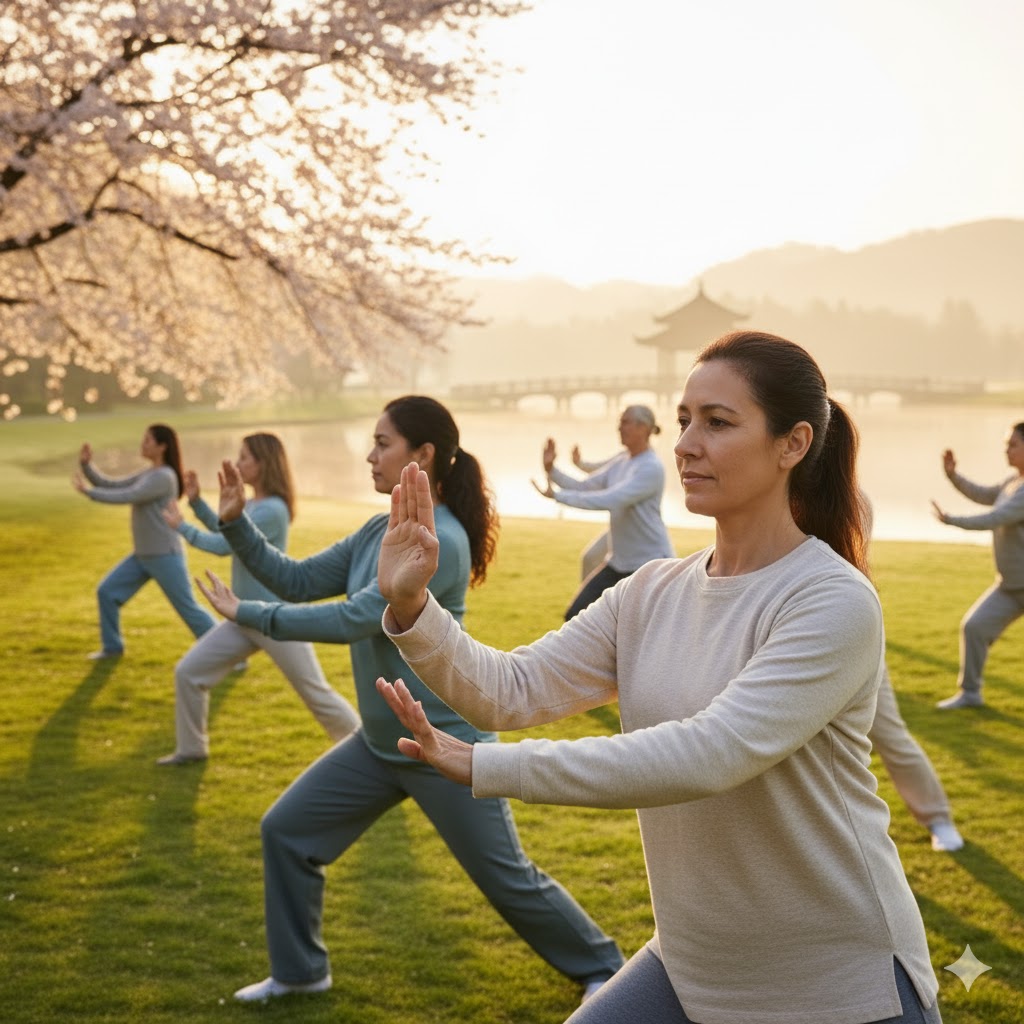
Beginner’s Guide to Qigong Meditation

Awaken Your Inner Energy Flow Through Stillness and Breath

Introduction: The Art of Gentle Energy Cultivation

Qigong Meditation (氣功冥想)

Meaning:

  • “Qi” (氣) = life energy or vital breath
  • “Gong” (功) = skill, cultivation, or mastery
    So Qigong means “the skill of working with life energy.”

Purpose:
Qigong meditation focuses on balancing, gathering, and circulating Qi within the body to promote healing, longevity, and spiritual awareness.
It combines slow, flowing movements, breathing techniques, and visualizations to open the body’s meridians (energy pathways).

Qigong meditation (pronounced chee-gong) is an ancient Chinese practice that harmonizes mind, body, and energy. Often described as “moving meditation,” Qigong blends slow rhythmic movement, conscious breathing, and mindful awareness to restore balance and vitality from within.

While yoga focuses on prana — the life force that flows through every living being — Qigong focuses on qi (or chi), the same vital energy that animates the body and the universe. Both systems share a common goal: to awaken a deeper connection between the physical and spiritual self.


 The Roots of Qigong

The origins of Qigong reach back over 4,000 years to ancient China, where healers, monks, and martial artists developed it as a form of energy medicine and spiritual cultivation.

Early Daoist practitioners used Qigong to balance yin and yang — the natural opposites within the body. Over centuries, it evolved into multiple styles: medical Qigong for healing, martial Qigong for strength, and spiritual Qigong for enlightenment.

Today, Qigong is practiced worldwide and has been recognized by wellness experts and medical research institutions for its calming, restorative effects on the nervous system, mood, and overall vitality.
(Sources: Cleveland Clinic, Healthline, Taoist Sanctuary, YMAA Institute)


 The Purpose of Qigong Meditation

At its heart, Qigong meditation teaches us to return to the natural flow of energy within.

It encourages:

  • Relaxation of the body – releasing physical tension and blockages
  • Calmness of the mind – softening mental noise through gentle focus
  • Awareness of breath – connecting inner and outer rhythm
  • Cultivation of qi – restoring life force to all organs and cells

Practicing Qigong is like recharging your internal battery — you learn to gather energy, circulate it, and store it for healing and resilience.


 Benefits for Mind, Body & Spirit

Scientific and traditional teachings both highlight a wide range of benefits from Qigong meditation:

MindBodySpirit
Reduces anxiety and stressImproves balance and postureDeepens inner awareness
Enhances focus and clarityLowers blood pressureAwakens energetic sensitivity
Supports emotional stabilityBoosts immune functionCultivates peace and gratitude
Improves sleep qualityIncreases flexibilityConnects you with nature’s rhythm

Modern research (National Library of Medicine, Brown University 2023) confirms that regular Qigong practice improves emotional regulation, fatigue, and quality of life.


 Simple Beginner Practice: 5-Minute Qigong Meditation

Step 1: Ground Yourself
Stand with feet shoulder-width apart.
Keep your spine tall and knees slightly bent.
Relax your shoulders and jaw.

Step 2: Breathe Naturally
Close your eyes gently.
Take slow breaths — in through your nose, out through your mouth.
Feel your belly rise and fall with each breath.

Step 3: Gather Energy
Imagine a soft golden light above your head.
With each inhale, let it flow down through your body — head, shoulders, heart, belly, and legs — into the earth.

Step 4: Circulate and Calm
Now imagine this light returning upward with your exhale, completing a gentle loop through your body.
Smile softly and feel the warmth of inner balance.

Step 5: Close the Practice
Bring your hands together over your lower abdomen (the Dantian).
Take three slow breaths, silently thanking your body for its energy.
End with a gentle bow or smile.

 Practice daily for 5–10 minutes to feel a noticeable calm in your body and clarity in your mind.


 How Qigong Complements Yoga Practice

For the Yoga947 community, Qigong meditation beautifully complements yoga by:

  • Offering gentle movement on days when physical asanas feel intense
  • Enhancing energy awareness during breathwork and meditation
  • Supporting emotional grounding through still standing or seated postures
  • Providing a holistic balance between action (yang) and rest (yin)

Together, Yoga and Qigong create a complete cycle — one that nurtures vitality, peace, and presence.

Qigong Meditation – Frequently Asked Questions (FAQ)

By Yoga947

1. What is Qigong?

Qigong (pronounced “chee-gong”) is an ancient Chinese healing and movement practice that combines gentle physical postures, breathing techniques, and focused intention to cultivate Qi (life force energy). It’s designed to harmonize the body, mind, and spirit through mindful movement.


2. How does Qigong differ from Tai Chi?

Both Qigong and Tai Chi share similar roots in Chinese philosophy and energy medicine. Qigong focuses more on internal energy cultivation and can include standing, sitting, or moving meditations. Tai Chi, on the other hand, is a structured martial art form involving a set sequence of slow, graceful movements. Think of Qigong as the foundation from which Tai Chi evolved.


3. What are the main benefits of practicing Qigong?

Regular Qigong practice can help:

  • Reduce stress and anxiety
  • Boost immune function and circulation
  • Improve flexibility, balance, and coordination
  • Enhance focus and emotional stability
  • Support spiritual awareness and inner peace

Many practitioners describe it as a gentle yet powerful self-healing art.


4. Is Qigong suitable for beginners?

Absolutely! Qigong is accessible to all ages and fitness levels. Movements can be modified or performed seated, making it ideal for beginners or those recovering from illness or fatigue. You don’t need any special equipment — just a calm space and comfortable clothing.


5. How often should I practice Qigong?

Even 5–10 minutes daily can bring noticeable calm and balance. Over time, consistent practice helps you tune into your body’s natural rhythms and improve your overall energy flow.


6. Can Qigong help with emotional healing?

Yes. Qigong encourages a mind-body connection that allows stored emotions to gently release through breath and movement. Many practitioners use Qigong to cultivate emotional resilience, forgiveness, and self-compassion.


7. Is Qigong a spiritual practice?

Qigong can be purely physical, meditative, or deeply spiritual — depending on your intention. Traditionally, it integrates Taoist and Buddhist philosophies, focusing on unity with nature, mindfulness, and the cultivation of inner stillness.


8. Do I need a teacher to learn Qigong?

While self-practice videos and online guides are helpful, learning from a qualified Qigong instructor — even for a few sessions — can ensure correct posture, breathing, and energy awareness. Yoga947 also offers guided meditation resources to help you begin safely at home.


9. How soon will I feel results from Qigong?

Some people notice an immediate sense of calm and clarity after one session. With regular practice, deeper benefits such as increased vitality, better sleep, and improved focus develop gradually over weeks or months.


10. How can I start a Qigong meditation routine with Yoga947?

Visit Yoga947.com to explore our guided Qigong Meditation steps, complete with beginner-friendly scripts, soothing audios, and printable wellness tools to support your energy journey. 

Coming Soon!


 Final Reflection: Flow Where Energy Meets Awareness

Qigong meditation reminds us that healing begins within.
Each mindful breath restores harmony between the body and the natural world — a reminder that stillness is strength, and movement is meditation.

Whether you stand beneath the sky or sit in silent breath, your qi flows through all that you are.
Start today — just five minutes of Qigong can awaken a lifetime of inner calm.


References & Suggested Reading

  • Cleveland Clinic. What Are the Health Benefits of Qigong? (2023)
  • Peter Deadman. A Brief History of Qigong (2021)
  • Brown University Research. Qigong and Fatigue Reduction in Cancer Survivors (2023)
  • YMAA Publications. The Root of Chinese Qigong by Dr. Yang, Jwing-Ming
  • Taoist Sanctuary of San Diego. History of Qigong

National Center for Complementary and Integrative Health (NCCIH): Qigong Overview

Unlocking Heart-Centered Meditation Benefits

Introduction: The Ancient Roots of Heart-Centered Meditation.

Heart-centered meditation is a profound practice that has been used for centuries to cultivate love, compassion, and emotional healing. Rooted in various ancient traditions, this meditation technique is found in Buddhism, Hinduism, Taoism, and even indigenous spiritual practices. Some of the earliest references to heart-based meditation are found in Buddhist Metta (loving-kindness) meditation. This practice dates back over 2,500 years. Similarly, yogic traditions have long emphasized the heart chakra (Anahata) as a center of love and spiritual growth.

Heart-centered meditation is embraced by individuals from all walks of life, including monks, spiritual seekers, psychologists, and even medical professionals. It has gained mainstream recognition for its ability to improve emotional well-being. It is known to reduce stress. It also promotes a deep sense of inter-connectedness. Today, more people seek solace from the stresses of modern living. Heart-centered meditation has become a sanctuary for many. It offers a path toward inner peace, self-love, and universal compassion.

Understanding Heart-Centered Meditation

At its core, heart-centered meditation is about directing awareness toward the heart space, often visualized as a radiant energy center. Unlike other forms of meditation that focus on breath control or mindfulness, this practice emphasizes cultivating feelings of love. It also focuses on gratitude and kindness. By tuning into these emotions, practitioners can experience a profound shift in their state of consciousness. This leads to greater harmony within themselves. It also fosters a connection with the world around them.

The practice of heart-centered meditation typically involves:

  • Deep breathing to center the mind and relax the body.
  • Focusing on the heart space to generate warmth and openness.
  • Visualizing loving energy radiating from the heart.
  • Repeating affirmations such as “I am love” or “May I be filled with kindness.”
  • Expanding this love outward to include others, from loved ones to strangers and eventually all beings.

The Science Behind Heart-Centered Meditation

Modern science has validated what ancient wisdom has long suggested. The heart is more than just a physical organ. It is an energetic and emotional powerhouse. The HeartMath Institute has conducted extensive research on the role of heart coherence. Heart coherence refers to the harmonious interaction between the heart, mind, and nervous system. Studies show that when individuals practice heart-focused meditation, their heart rate variability (HRV) improves. This leads to reduced stress. It also enhances emotional stability and increases cognitive function.

Neuroscientific studies have revealed that heart-centered meditation activates the parasympathetic nervous system. It promotes relaxation and reduces the production of stress hormones like cortisol. Additionally, it stimulates the release of oxytocin. This hormone is often referred to as the “love hormone.” It fosters feelings of connection and well-being.

The Benefits of Heart-Centered Meditation

Heart-centered meditation offers a wealth of benefits for the mind, body, and spirit. Some of the most profound include:

1. Emotional Healing and Stress Reduction

Practicing this meditation regularly helps to dissolve emotional blockages and past traumas. By cultivating compassion and self-love, individuals can release negative emotions and embrace a more peaceful state of being.

2. Enhanced Relationships and Compassion

When we connect with our heart space, we naturally develop greater empathy and understanding. This leads to deeper, more authentic relationships, as we become more patient, forgiving, and kind.

3. Improved Physical Health

Stress significantly contributes to various health conditions. Reducing stress through heart-centered meditation can lead to tangible health benefits. These benefits include lower blood pressure, improved immune function, and reduced inflammation.

4. Greater Mental Clarity and Focus

Heart-centered meditation enhances brain function by reducing over activity in the amygdala. The amygdala is the brain’s fear center. It also increases activity in the prefrontal cortex. The prefrontal cortex is associated with rational thinking and decision-making.

5. Spiritual Awakening and Connection

Many practitioners report experiencing heightened states of awareness. They feel a deeper connection to their true self. There is also a sense of oneness with the universe. This can be a transformative experience, leading to a greater sense of purpose and fulfillment.

Real-Life Testimonials: The Transformative Power of Heart-Centered Meditation

Many individuals have experienced profound changes in their lives through heart-centered meditation. Here are a few real-life stories:

Laura, 42 – A Journey from Anxiety to Inner Peace: “For years, I struggled with anxiety and self-doubt. Heart-centered meditation changed my life. By focusing on love and gratitude, I found a deep sense of peace that I never thought possible. My relationships improved, and I now approach life with more compassion and confidence.”

James, 55 – Healing After Loss: “After losing my wife, I felt lost and disconnected. A friend introduced me to heart-centered meditation, and it became my lifeline. It helped me process my grief and rediscover joy in the present moment. I feel my wife’s love with me, and that has been my greatest healing.”

Elena, 30 – Overcoming Self-Doubt: “I used to be my own worst critic, but heart-centered meditation helped me cultivate self-love. I no longer dwell on my imperfections; instead, I embrace my journey with kindness and patience.”

How to Practice Heart-Centered Meditation: A Step-by-Step Guide

If you’re new to this practice or want to refine your approach, follow this simple yet powerful technique:

Step 1: Find a Quiet Space

Choose a peaceful environment where you won’t be disturbed. Sit comfortably with your spine straight, either on a cushion or chair.

Step 2: Breathe Deeply

Close your eyes and take slow, deep breaths. Inhale through your nose, allowing your belly to expand, and exhale gently through your mouth. Let go of any tension.

Step 3: Focus on Your Heart

Bring your awareness to the center of your chest. You may place a hand over your heart to enhance the connection.

Step 4: Generate Loving Emotions

Recall a moment of deep love, gratitude, or joy. This could be a memory of a loved one, a pet, or a moment in nature. Allow this feeling to expand in your heart.

Step 5: Radiate Love

Imagine this love growing into a warm, radiant light, filling your entire being. With each breath, let it expand outward, sending love to family, friends, and eventually to all living beings.

Step 6: Stay Present and Absorb the Energy

Remain in this state for as long as you feel comfortable, soaking in the warmth and peace of the moment.

Step 7: Gently Return

When you’re ready, slowly bring your awareness back to your body. Open your eyes and take a few moments to reflect on the experience.

Additional Resources for Heart-Centered Meditation

If you’d like to deepen your practice, consider these resources:

  • Books: “The HeartMath Solution” by Doc Childre & Howard Martin, “Lovingkindness” by Sharon Salzberg
  • Apps: Insight Timer, Calm, Headspace (with specific heart-centered meditation guides)
  • Online Courses: HeartMath Institute, Gaia, Udemy meditation courses
  • YouTube Channels: Yoga947, HeartMath Institute, The Honest Guys

Conclusion: Embracing the Journey of the Heart

Heart-centered meditation is more than just a relaxation technique—it is a way of life. By integrating this practice into your daily routine, you can transform your own well-being. You can also change the energy you bring into the world. Love, after all, is the most powerful force in existence. When we cultivate it within ourselves, we naturally radiate it outward, creating a ripple effect of healing, connection, and peace.

Final thoughts:

Have you tried heart-centered meditation before? Share your experiences in the comments below! If you’re new to this practice, start today and witness the incredible transformation it can bring to your life. Let’s cultivate love and light together!

Discovering Self-Inquiry Meditation Techniques

Introduction

In the fast-paced world we live in, people are constantly searching for peace, clarity, and purpose. While various meditation techniques promise to calm the mind, self-inquiry meditation goes a step further. It doesn’t just calm the surface of the mind; it dives deep into the essence of who we truly are. Rooted in the teachings of Ramana Maharshi, self-inquiry meditation is an introspective practice. It leads one beyond thought, beyond identity, and into the truth of being. But what exactly is self-inquiry meditation? How does one practice it, and what are its benefits? This blog will explore this profound practice thoroughly. It will provide insights into how you can embark on a transformative journey of self-discovery.

Understanding Self-Inquiry Meditation

Self-inquiry, or Atma Vichara, is a meditation technique that involves turning inward to question the nature of the self. Other meditative practices focus on the breath, a mantra, or external objects. However, self-inquiry asks the fundamental question: Who am I?

At its core, self-inquiry is not about arriving at an intellectual answer. Instead, it involves peeling away layers of false identification with the body, mind, and emotions. This unveils the true essence of being—pure awareness. The process is not about seeking knowledge externally but recognizing the presence that has always been within.

The Origins of Self-Inquiry Meditation

Self-inquiry meditation originates from Advaita Vedanta. This is a non-dualistic school of Hindu philosophy. It emphasizes the unity of all existence. This method of self-exploration dates back thousands of years. It is closely linked to ancient Upanishadic teachings. These teachings emphasize direct self-examination as the key to understanding one’s true nature.

One of the earliest references to self-inquiry is in the Mandukya Upanishad. It discusses consciousness beyond waking, dreaming, and deep sleep states. This leads to ultimate self-realization. Sri Ramana Maharshi was a revered Indian sage of the 20th century. He brought self-inquiry into the modern spiritual landscape.

At the age of sixteen, Ramana Maharshi experienced a profound spiritual awakening when he faced an intense fear of death. Instead of succumbing to panic, he turned his awareness inward, asking himself, Who am I? In doing so, he transcended his identification with the body and mind, realizing his true nature as pure awareness. From then on, he dedicated his life to teaching self-inquiry as the most direct path to self-realization.

Unlike many traditional spiritual practices that involve rituals, dogmas, or lengthy philosophical discourses, Ramana Maharshi emphasized simplicity. He insisted that one could break free from egoic illusions by persistently inquiring into the nature of the self. This enables a direct experience of the infinite awareness that underlies all existence. His teachings continue to inspire seekers worldwide, influencing both Eastern and Western spiritual traditions.

How to Practice Self-Inquiry Meditation

Practicing self-inquiry meditation requires sincerity, patience, and a willingness to question deeply held beliefs about oneself. Here’s a step-by-step guide to getting started:

1. Find a Quiet Space

Choose a place where you can sit undisturbed. A quiet environment minimizes distractions and allows you to turn inward more easily.

2. Settle into Stillness

Sit comfortably, either on a cushion or chair, with your spine erect. Close your eyes and take a few deep breaths to relax your body and mind.

3. Ask the Question: Who Am I?

Gently bring your attention to the question: Who am I? Observe where this question leads you. It is not about finding a verbal answer but about turning awareness inward.

4. Notice Thoughts and Feelings

As thoughts arise, inquire, “To whom do these thoughts arise?” The answer will always be, “To me.” Then, ask, “Who am I?” This process helps dissolve identification with transient thoughts and emotions.

5. Rest in Awareness

As inquiry deepens, the mind begins to dissolve into silent awareness. Stay present with this stillness. The more you rest in pure awareness, the more the illusion of the separate self dissolves.

6. Repeat the Process

Whenever distractions arise, gently return to self-inquiry. Over time, the practice shifts from an intellectual exercise to an experiential recognition of your true nature.

The Benefits of Self-Inquiry Meditation

Self-inquiry meditation offers profound benefits for the mind, body, and spirit. Some of these include:

1. Inner Peace and Stillness

By disidentifying from thoughts and emotions, self-inquiry helps cultivate deep inner peace. The incessant mental chatter diminishes, revealing a state of natural stillness.

2. Freedom from Egoic Suffering

The root of suffering lies in the false identification with the ego. Self-inquiry dismantles the ego’s illusions, leading to a sense of freedom and clarity.

3. Heightened Awareness

As one deepens in self-inquiry, awareness expands. There is a shift from being lost in thoughts to being the silent witness of all experiences.

4. Increased Presence and Mindfulness

Self-inquiry naturally enhances mindfulness. Instead of reacting habitually, one begins to respond from a place of awareness and wisdom.

5. Realization of True Self

The ultimate goal of self-inquiry is self-realization. This means directly recognizing that one is not the mind, body, or personality. Instead, one is the unchanging presence of awareness.

Common Challenges in Self-Inquiry and How to Overcome Them

Self-inquiry meditation, though simple in its approach, can present challenges. Here’s how to navigate them:

1. Mental Resistance

The mind often resists inquiry by distracting itself with thoughts, doubts, and emotions. When resistance arises, simply observe it and return to the question, Who am I?

2. Seeking Intellectual Answers

It is easy to fall into the trap of trying to “think” your way to an answer. Remember, self-inquiry is not about concepts but about direct experience.

3. Impatience

Transformation through self-inquiry is not always immediate. Be patient with the process and trust that each moment of inquiry brings you closer to self-realization.

4. Fear of Losing Identity

The ego may resist because self-inquiry threatens its existence. Recognize that what is being “lost” is an illusion, and what remains is your true, infinite self.

Integrating Self-Inquiry into Daily Life

Self-inquiry does not have to be limited to meditation sessions. Here’s how to incorporate it into daily life:

  • During Conversations: When emotions arise, pause and ask, Who is feeling this?
  • In Challenging Situations: Instead of reacting impulsively, inquire, Who is experiencing this difficulty?
  • Throughout the Day: Remind yourself periodically, Am I aware of my presence right now?

Conclusion

Self-inquiry meditation is a direct and profound path to self-discovery. By consistently questioning the nature of the self, one can move beyond the illusions of the mind. This process allows one to experience the boundless peace of pure awareness. This practice is not just about understanding who we are—it is about being who we truly are. Whether you are a beginner or an experienced meditator, self-inquiry offers a transformative journey into the depths of consciousness. The key is persistence, sincerity, and openness to the truth beyond the mind. Begin today, and step into the infinite presence that has always been within you.

Are you ready to embark on your journey of self-discovery? Start your self-inquiry meditation practice today! Set aside a few minutes each day to ask, Who am I? and observe where the inquiry takes you. Share your experiences and insights in the comments below—we’d love to hear about your journey toward inner awakening!


Embarking on the journey of self-inquiry meditation can be profoundly transformative. To support and deepen your practice, consider exploring the following resources:

1. Online Meditation Platforms

  • Insight Timer: This free meditation app offers a variety of guided meditations. These meditations focus on self-inquiry. They allow you to explore different approaches and techniques.
    insighttimer.com

2. Articles and Guides

  • “Discover Your True Nature: Self-Inquiry Meditation” by Yoga Journal: This article provides insights into the practice of turning inward. It describes embarking on the path of self-inquiry. The article offers a simple yet powerful method of meditation.
    yogajournal.com
  • “The Practice of Self-Inquiry – ‘Who Am I?'” by Ram Dass: This piece delves into understanding self-inquiry. It discusses the mind’s activities and how to not take them too seriously. The piece also provides guidance on the practice.
    ramdass.org

3. Guided Meditations

  • “Self-Inquiry — I AM (Guided Meditation)”: This YouTube video offers a guided meditation session. It helps you connect with your true self through the practice of self-inquiry.
    youtube.com

4. Community Discussions

  • Reddit’s r/nonduality: Engage with a community of practitioners discussing self-inquiry techniques, challenges, and experiences. Participating in such forums can provide diverse perspectives and support.
    reddit.com

5. Local Resources in London

  • Meditatio Centre London: Offers resources and courses on meditation practices, including self-inquiry. Exploring their offerings can provide structured guidance and community support.
  • Mindfulness Contacts by Mind: Provides useful contacts and resources related to mindfulness practices, which can complement your self-inquiry journey.

6. Books

“The Path of Sri Ramana Part One” by Sri Sadhu Om: This book delves into the practice of self-inquiry. It is as taught by Ramana Maharshi. It provides practical guidance for aspirants.

“Be As You Are: The Teachings of Sri Ramana Maharshi” by David Godman: This compilation presents dialogues with Ramana Maharshi. It offers profound insights into self-inquiry and realization.

Unlocking Wellness: The Power of Biofeedback Meditation


Introduction

Meditation has been a cornerstone of wellness practices for thousands of years. It offers a powerful way to balance the mind, body, and soul. But what if you could take this ancient practice and enhance it with cutting-edge technology? You gain deeper insights into your physiological responses. That’s exactly what biofeedback meditation promises.

Biofeedback meditation combines mindfulness techniques with real-time data on bodily functions like heart rate, muscle tension, brainwaves, and breathing patterns. This scientific approach helps practitioners gain a heightened awareness of their body’s internal states. It enables them to optimize meditation for better health, relaxation, and overall well-being.

In this blog post, we’ll delve into the fundamentals of biofeedback meditation. We’ll explain how it works and its benefits. We’ll also discuss why you should consider incorporating it into your daily routine.


What is Biofeedback Meditation?

Biofeedback meditation is the integration of biofeedback technology with mindfulness and meditation practices. The aim is to make the meditator more aware of unconscious physiological processes that occur during meditation and daily life. Through this heightened awareness, individuals can learn to control certain bodily functions consciously. They can lower their heart rate or reduce muscle tension. This leads to deeper relaxation or focus.

Biofeedback devices, such as wearable sensors or specialized equipment, monitor real-time bodily responses like:

  • Heart Rate Variability (HRV)
  • Muscle Tension (EMG)
  • Brainwave Activity (EEG)
  • Skin Temperature
  • Breathing Patterns

These metrics are then displayed via digital interfaces. These include a mobile app or computer screen. This allows practitioners to observe their physical responses as they meditate. By doing so, they can adjust their technique in real-time, allowing for a more effective and personalized meditation experience.


How Biofeedback Meditation Works

Biofeedback meditation hinges on the concept of real-time feedback to train the mind and body. Here’s how it works:

  1. Step 1: Preparation
    The practitioner uses a biofeedback device that monitors their physiological data. These could include heart rate monitors, EEG headsets for tracking brain activity, or sensors that gauge breathing rhythms. Most devices are easy to use and can connect to smartphones or other interfaces that display real-time data.
  2. Step 2: Meditation Session
    While meditating, the biofeedback device tracks the body’s physiological changes. The key here is to maintain a calm and focused state while observing how the body reacts. Any fluctuations in the data—such as increased heart rate or erratic breathing patterns—provide immediate insights. They allow the individual to consciously regulate these responses.
  3. Step 3: Adjusting the Mind-Body State
    Over time, you learn to recognize the signs of stress or tension. You can then adjust your meditation techniques. These techniques can influence your physiological state. For example, if the device shows elevated heart rate during meditation. You can focus on slower, deeper breathing to bring it back to an optimal range.
  4. Step 4: Review and Progress
    Post-session, the data collected can be reviewed to monitor progress over time. Some biofeedback apps provide insights and recommendations for future meditation sessions. They help to build a tailored and more efficient meditation practice.

The Science Behind Biofeedback Meditation

The science of biofeedback meditation is rooted in the ability of the human body to self-regulate. Biofeedback taps into the body’s natural mechanisms for maintaining balance, or homeostasis, by making previously unconscious processes observable. Once made conscious, these processes can be trained and controlled for improved health and well-being.

For example:

  • Heart Rate Variability (HRV): Greater HRV is associated with better overall cardiovascular health and emotional resilience. During biofeedback meditation, you can learn to control your HRV through slow breathing and focus. This process improves your autonomic nervous system’s response to stress.
  • Brainwaves (EEG): Brainwave patterns vary between different states of consciousness. Beta waves indicate alertness. Alpha waves are for relaxation. Theta waves occur in deep meditation. Biofeedback devices monitoring brain waves allow meditators to aim for brain states that align with deeper relaxation and heightened awareness.
  • Muscle Tension (EMG): Tension in muscles, especially in the forehead or shoulders, can be a sign of stress or anxiety. Biofeedback helps identify and relax these muscles, leading to a deeper state of relaxation during meditation.

This approach is scientifically validated. Research shows that biofeedback can improve stress management and enhance focus. It can even alleviate conditions like chronic pain, anxiety, and high blood pressure.


Benefits of Biofeedback Meditation

1. Enhanced Self-Awareness

Biofeedback meditation offers a deeper understanding of your mind-body connection by making unconscious physiological processes conscious. This heightened awareness can significantly improve your meditation practice. It allows you to observe how your body reacts to stress or relaxation in real-time.

2. Reduced Stress and Anxiety

Biofeedback meditation helps you manage stress and anxiety more effectively. It monitors and controls stress-related metrics like heart rate and muscle tension. Over time, you can train your body to enter a state of calm more quickly and easily.

3. Improved Focus and Concentration

Biofeedback meditation helps you cultivate a focused mind by giving you instant feedback on distractions or mental clutter. This allows you to refine your concentration skills and enter a deeper meditative state faster.

4. Better Sleep

By regulating heart rate, breathing, and muscle tension, biofeedback meditation can help improve sleep quality. The calming effects often carry over to nighttime, leading to more restful sleep and reduced insomnia symptoms.

5. Physical Health Benefits

Studies show that biofeedback can be effective in managing chronic pain. It can also lower blood pressure and reduce the risk of heart disease. These physical benefits make biofeedback meditation a holistic wellness tool, addressing both mental and physical health.


Is Biofeedback Meditation Right for You?

Biofeedback meditation can benefit a wide range of individuals. Beginners can improve their meditation practice. Seasoned practitioners can explore the mind-body connection on a deeper level.

You might consider biofeedback meditation if:

  • You struggle with focus or have difficulty entering a meditative state.
  • You want to manage stress, anxiety, or chronic pain more effectively.
  • You’re interested in using technology to enhance your mindfulness practice.
  • You enjoy tracking progress and like the idea of measurable results.
  • You’re curious about the scientific side of meditation and the mind-body connection.

Conclusion

Biofeedback meditation represents the fusion of ancient mindfulness practices with modern science. It offers a powerful tool for anyone looking to deepen their meditation experience. Whether you’re a beginner or an experienced meditator, biofeedback can help you cultivate greater awareness. It can help you manage stress. It can also enhance your overall well-being.

As technology continues to advance, biofeedback devices are becoming more accessible. This makes it easier than ever to tap into the benefits of this practice. So why not take a step into the future of meditation? Unlock the potential of biofeedback for a healthier, more mindful life.


There are several excellent resources available to help deepen your understanding and practice of biofeedback meditation. Here are some categories and examples of tools, apps, and organizations that provide support:

Biofeedback Devices and Wearables

Biofeedback meditation often requires devices that track physiological data. These wearables and sensors can be a game-changer for practicing and refining your biofeedback meditation:

  • Muse Headband: Muse is a popular EEG headband. It provides real-time feedback on brain activity. This helps to guide and optimize meditation sessions. It tracks brainwaves, heart rate, and body movements.
  • HeartMath Inner Balance: Focused on heart rate variability (HRV). HeartMath offers biofeedback tools that guide users toward a state of “coherence”. This is achieved through breathing exercises and emotional regulation.
  • EmWave2: Another device from HeartMath. The EmWave2 tracks HRV and provides instant feedback. This helps guide users toward a state of relaxation and balance.
  • Garmin & Fitbit Wearables: Many fitness trackers, like Garmin and Fitbit, have integrated stress-monitoring features. These features are based on heart rate and respiration. These features provide basic biofeedback insights. They are useful for mindfulness and meditation.

 Biofeedback Meditation Apps

These apps work with biofeedback devices or as standalone platforms to help guide meditation and mindfulness practices:

  • Calm: This popular meditation app includes biofeedback support when paired with devices like Muse or Fitbit. It offers breathing exercises and guided meditations tailored to reduce stress and improve focus.
  • Myndlift: Myndlift works with EEG-based biofeedback devices. It offers personalized neurofeedback training to help manage stress. It also aims to improve focus and enhance meditation practices.
  • Breathe2Relax: A simple yet effective app that focuses on deep breathing exercises. It offers real-time feedback on stress levels. This is a core component of biofeedback meditation.
  • Spire Stone: Spire is a wearable that tracks breathing patterns. Its app offers real-time insights and reminders to help manage stress and promote relaxation through mindful breathing.

 Books on Biofeedback and Meditation

For those who prefer to dive deep into the theory and practice of biofeedback meditation, these books are great resources:

“The Biofeedback Toolkit: A Guide for Practitioners” by M. J. Smith
This book provides practical guidance on how to incorporate biofeedback into therapy and meditation practices.

“Biofeedback: A Practitioner’s Guide” by Ellen Hodgson Brown
This comprehensive guide covers various biofeedback techniques. It includes insights on how they can enhance meditation practices.

“The Healing Power of Neurofeedback: The Revolutionary LENS Technique for Restoring Optimal Brain Function” by Paul G. Swingle and Anne E. Swingle


This book delves into neurofeedback, a form of biofeedback, and how it can be used for meditation and relaxation.

We would like to know your thoughts on the biofeedback meditation.

Namaste.

Our Website contains affiliate links this means if you click and make a purchase we may receive a small commission.“Don’t worry there is no extra cost to you. It’s a simple way you can support our mission to bring you quality content.