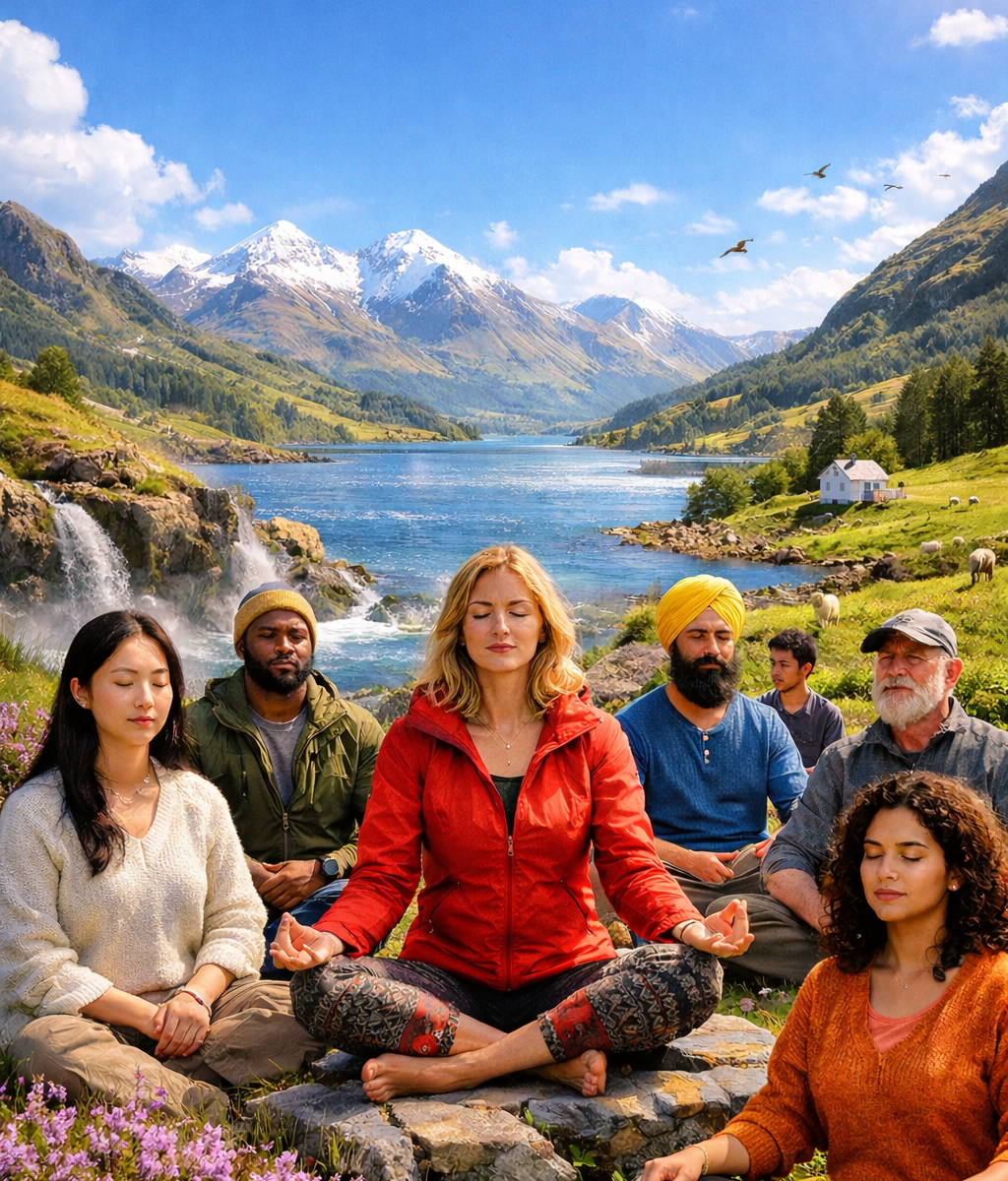
Why Scotland Is a Natural Sanctuary for Sensory-Rich Meditation

 (Especially for ADHD Minds)

When people imagine meditation, they often picture stillness, silence, and long periods of inward focus. While this traditional approach works well for some, it can feel inaccessible—or even uncomfortable—for those with ADHD. Fortunately, meditation does not have to mean sitting perfectly still with a quiet mind. In fact, one of the most effective forms of meditation for ADHD is grounding, sensory-rich practice. Few places in the world support this style of meditation as effortlessly and beautifully as Scotland.

The Power of Sensory-Grounded Meditation

ADHD brains are often wired for stimulation, novelty, and movement. Rather than fighting this natural tendency, grounding meditation works with it. Sensory-rich meditation anchors awareness in the body and environment—engaging the senses of sight, sound, touch, and even smell. This approach reduces cognitive overload by giving the mind something tangible to focus on, creating calm through presence rather than forced stillness.

Scotland’s landscapes are inherently grounding. The environment invites awareness without demanding it, offering a natural rhythm that makes meditation feel intuitive rather than effortful.

A Landscape That Supports Presence

From mist-covered Highlands to rugged coastlines and ancient forests, Scotland provides an abundance of sensory input that is soothing rather than overwhelming. The rolling terrain naturally slows movement and breath. Wide-open spaces encourage expansive thinking while simultaneously grounding the body through scale and perspective.

For those with ADHD, this balance is crucial. Scotland’s landscapes are rich, but not chaotic. The muted greens, greys, and blues typical of the Scottish environment are calming, offering visual interest without excessive stimulation.

Soundscapes That Calm Rather Than Distract

Sound is one of the most powerful tools in sensory grounding, and Scotland excels here. The rhythmic crash of waves along the coastline, wind moving through tall grass, rainfall on stone paths, distant calls of seabirds, or the steady flow of a river all create natural soundscapes that support meditative awareness.

Unlike silence—which can sometimes amplify internal noise—the layered sounds of nature provide gentle, external focus. This makes it easier for ADHD minds to remain present without drifting into overthinking.

Connection Through Movement

Meditation in Scotland often happens through movement rather than stillness. Walking meditations along lochs, mindful hikes through glens, or slow exploration of forest paths allow the body to participate fully in the meditative process.

This embodied approach is particularly beneficial for ADHD individuals who may struggle with traditional seated meditation. Walking across uneven terrain, feeling the ground beneath each step, noticing shifts in temperature and light—all naturally draw attention into the here and now.

Weather as a Teacher of Awareness

Scotland’s weather is famously dynamic, and this variability is a gift for mindfulness practice. Shifting clouds, changing light, sudden rain, and fresh wind invite constant sensory check-ins. Rather than resisting discomfort, practitioners learn to notice sensations without judgment—feeling cool air on the skin, damp earth underfoot, or warmth when the sun briefly appears.

This ongoing sensory engagement helps ADHD minds stay anchored in present-moment awareness while building emotional regulation and resilience.

Ancient Energy and Psychological Safety

Many people report a unique sense of grounding in Scotland that goes beyond sensory input. The land carries a deep sense of history—ancient stone circles, ruins, castles, and sacred sites are woven into the landscape. For grounding meditation, this can foster a feeling of psychological safety and continuity, helping individuals feel supported and held by something larger than themselves.

For ADHD minds, which can be prone to racing thoughts or emotional intensity, this sense of rootedness can be profoundly calming.

 A Place Where Meditation Feels Natural

Perhaps the greatest gift Scotland offers is permission. Permission to meditate without rigid rules. Permission to move, to observe, to feel, and to engage fully with the environment. Meditation here does not feel like an obligation or performance; it feels like a natural response to the land.

Whether standing quietly beside a loch, breathing in salt air on a coastal path, or walking mindfully through rain-soaked hills, Scotland invites a form of meditation that is alive, sensory, and accessible.

Frequently Asked Questions: Sensory-Rich Meditation & ADHD

1. Why is sensory-rich meditation often easier for people with ADHD?

ADHD minds tend to seek stimulation and novelty. Sensory-rich meditation works with this natural wiring by anchoring attention in sound, movement, texture, and environment rather than forcing sustained internal focus or silence.

2. Is this still considered “real” meditation?

Yes. Meditation is defined by present-moment awareness, not by posture or stillness. Walking, observing nature, and engaging the senses mindfully are all recognised forms of meditative practice.

3. Do I need to be in Scotland for this type of meditation to work?

Scotland offers an ideal environment, but the principles of sensory-rich meditation can be practised anywhere. The key elements are movement, sensory awareness, and environmental engagement—not a specific location.

4. How long should sensory-based meditation sessions last?

Short sessions are often most effective. Even 5–15 minutes of mindful walking or sensory awareness can provide regulation and calm, especially for ADHD minds.

5. What if I struggle with traditional seated or silent meditation?

That’s very common. Sensory-rich meditation is a supportive alternative that removes pressure to sit still or quiet the mind, making meditation feel accessible rather than frustrating.

6. Can sensory-rich meditation help with emotional regulation?

Yes. By grounding attention in physical sensation and environment, this approach supports nervous system regulation and can reduce overwhelm, restlessness, and emotional intensity over time.

7. Is movement-based meditation suitable for beginners?

Absolutely. Many beginners find this style more intuitive because it mirrors how attention naturally moves and responds to sensory input.

8. Can this type of meditation be practised indoors?

Yes. While nature is especially supportive, sensory-rich meditation can be adapted indoors using gentle sound, mindful movement, breath awareness, and tactile grounding.

9. Is sensory-rich meditation suitable for neurodivergent adults and children?

This approach is often particularly supportive for neurodivergent individuals because it respects individual sensory needs and attention patterns rather than enforcing rigid techniques.

10. How often should I practise sensory-rich meditation?

Consistency matters more than duration. Regular short practices—several times a week or even daily—can be more beneficial than occasional long sessions.

11. Do I need special equipment or tools?

No. Sensory-rich meditation begins with awareness, not equipment. Some people later choose simple supports for comfort or focus, but these are optional rather than required.

12. What mindset is most helpful when practising this type of meditation?

Gentleness and curiosity. The goal is not to control attention but to notice sensations as they arise, allowing the practice to feel supportive rather than effortful.

 Final Thoughts

For those with ADHD, meditation works best when it meets the mind where it is rather than asking it to change. Scotland, with its rich sensory landscapes and grounding presence, offers an ideal environment for this approach. It transforms meditation from something to “do” into something to experience—fully, openly, and without strain.

In Scotland, mindfulness is not confined to a cushion. It lives in the land itself.

This page exists to support comfort and regulation for those who find practical structure helpful.Yoga947 Resources
Free tools and gentle companions to support mindful living

🟢 

At Yoga947, meditation is not about perfection or pressure.
It is about meeting yourself where you are — with awareness, gentleness, and practical support.

This page gathers free Yoga947 resources designed to support grounding, calm, and nervous system regulation. Each tool is optional and can be used in your own way, at your own pace.


🟢 Sensory & ADHD-Friendly Meditation

Sensory-Rich Meditation Checklist

A gentle companion for grounding, movement, and calm — especially supportive for ADHD minds.

This free checklist supports sensory-based meditation through movement, sound awareness, and environmental grounding. Designed to reduce overwhelm and encourage presence without rigid rules.

👉 View the Sensory-Rich Meditation Checklist


🟢  Nature-Based & Movement Practices

More Yoga947 grounding tools and meditation companions will be added here.


🟢  How to Use These Resources

  • You do not need to use every resource
  • Short practices are enough
  • Tools are optional, not required
  • Consistency matters more than intensity

Choose what feels supportive today.

Yoga947.com
Grounded meditation • Gentle awareness • Practical calm

Transform Relationships with Insight Dialogue Meditation

Introduction

When most people think of meditation, they imagine a solitary practice: sitting silently, eyes closed, focusing inward. Yet, some of the deepest moments of awareness and transformation can arise in relationships with others. This is the essence of Insight Dialogue Meditation—a unique, interpersonal meditation practice that brings mindfulness into dialogue and human connection.


What Is Insight Dialogue Meditation?

Insight Dialogue (ID) is a form of relational meditation developed by Buddhist teacher Gregory Kramer in the 1990s. Unlike silent meditation, where awareness is directed inward, Insight Dialogue involves two or more people engaging in structured dialogue while practicing mindfulness.

At its core, Insight Dialogue weaves together three elements:

  1. Meditation – grounding in present-moment awareness.
  2. Dialogue – speaking and listening mindfully with others.
  3. Wisdom traditions – drawing from Buddhist teachings of insight and compassion.

Participants are guided by principles such as:

  • Pause – stopping before reacting.
  • Relax – softening tension in the body and mind.
  • Open – making space for deeper presence.
  • Attune to emergence – staying present with what unfolds in dialogue.
  • Listen deeply – hearing without judgment.
  • Speak the truth – sharing authentically from the heart.

This combination allows meditators to not only deepen individual mindfulness but also transform the way they relate to others.


The Origins of Insight Dialogue

Insight Dialogue draws from two main streams:

  1. Buddhist Vipassanā (Insight) Meditation
    Rooted in Theravāda Buddhism, Vipassanā practice emphasizes seeing clearly into the nature of experience—impermanence, suffering, and non-self. Gregory Kramer extended these principles beyond the meditation cushion into conversation.
  2. Contemplative Dialogue & Relational Practices
    Dialogue as a spiritual tool has existed in many traditions—think of Socratic dialogues in ancient Greece, or Quaker meetings that emphasize listening in silence. Insight Dialogue integrates mindfulness and compassion into this relational field.

Since the 1990s, the practice has spread globally, taught in Buddhist retreat centers, mindfulness communities, and even professional healthcare and leadership settings.


Benefits of Insight Dialogue Meditation

  1. Deepened Mindfulness in Relationships
    Practitioners learn to stay present not only with themselves but also with others—fostering compassion and less reactivity in daily life.
  2. Healing Through Authentic Communication
    By speaking truthfully and listening deeply, many participants experience emotional release, healing from past wounds, and increased empathy.
  3. Reduced Stress and Anxiety
    Research has shown that practicing Insight Dialogue lowers stress markers, similar to other forms of meditation, while also strengthening interpersonal resilience.
  4. Conflict Transformation
    Because the practice teaches pausing, relaxing, and attuning, it has been applied in group conflict resolution and peace-building efforts.
  5. Spiritual Growth
    For those practicing within a Buddhist framework, ID supports insight into impermanence and interconnectedness—not just intellectually, but experientially in real relationships.

Case Studies & Research

1. Mindfulness in Healthcare Teams (2018 Study)
A study published in the Journal of Compassionate Health Care introduced Insight Dialogue to nurses and physicians. Participants reported improved empathy toward patients and better communication with colleagues, reducing workplace burnout.

2. Peace-Building in Thailand (Gregory Kramer, 2006)
Kramer documented using Insight Dialogue in Buddhist communities in Thailand. Monastics and laypeople practiced speaking and listening deeply across social divides, leading to more compassionate community discussions.

3. Trauma Healing Circles (Nonprofit Applications, 2015–present)
Nonprofits in the U.S. have used Insight Dialogue with trauma survivors. By practicing “Pause, Relax, Open,” participants were able to share their stories with less fear and more grounding, leading to reports of reduced PTSD symptoms.

4. Leadership & Corporate Training
Some organizations have adapted Insight Dialogue for leadership development. Case reports suggest increased emotional intelligence and reduced conflicts in teams where mindful dialogue was introduced.


Conclusion

Insight Dialogue Meditation is more than a practice of mindfulness—it is a way of transforming how we relate to ourselves, others, and the world. By merging meditative awareness with authentic dialogue, it offers a powerful path for healing, empathy, and wisdom.

For anyone seeking to bring mindfulness into relationships, whether in family life, professional settings, or spiritual communities, Insight Dialogue offers a refreshing alternative to solitary meditation.


Next Step for Readers
Consider starting with a simple practice: pause before speaking, breathe, and listen fully. Even small steps of mindful dialogue can ripple into deeper presence and compassion in your daily life.

Discover Acupuncture Meditation for Stress Relief

Introduction

It’s a modern umbrella term for pairing needle (or acupressure/ear seeds) sessions with a meditative state—breathwork, body-scan, mantra, or Daoist/Chan (Zen) styles. Historically, acupuncture and meditation evolved side-by-side in China; today, clinics often blend them to calm the nervous system, ease pain/anxiety, and deepen interoceptive awareness.

Across centuries, humans have searched for ways to calm the body and still the mind. In traditional Chinese medicine (TCM), two such paths developed side by side: acupuncture—the art of guiding qi (vital energy) through fine needles—and meditation, the practice of focusing awareness inward. Today, practitioners and researchers are re-discovering how these two traditions harmonize. The blend, sometimes called acupuncture meditation, pairs mindful awareness with the physiological reset of acupuncture or acupressure.


Where It All Began

  • Early Breath Training: Texts like the Neiye (4th–2nd c. BCE) describe how breath circulates qi to calm the mind. This laid the groundwork for meditative awareness in Chinese healing traditions.
  • Meridian Pathways: Excavated Han-era manuscripts (Mawangdui, ~168 BCE) outlined channels through which qi flows—precursors to today’s acupuncture meridians.
  • Huangdi Neijing (Inner Canon): By the 1st–2nd c. CE, the Lingshu chapter codified acupuncture points, techniques, and the role of shen (spirit/mind) in health.
  • Daoist & Buddhist Influence: From the 3rd–6th centuries CE, visualization and mindfulness practices deepened the physician’s view of body–mind integration. Acupuncture was never just “physical”; it was always linked to the spirit.

What Science Sees Today

  • Pain & Headaches: The UK’s NICE guidelines note acupuncture can be considered for chronic tension-type headaches and migraine prevention.
  • Anxiety & Sleep: Points such as Yintang (between the eyebrows) and HT7 (at the wrist) have been studied for reducing pre-operative anxiety and calming the nervous system.
  • Brain & Body Effects: fMRI scans and heart-rate variability studies show acupuncture can quiet the default-mode network and shift the body toward parasympathetic calm—the same physiological direction meditation moves us toward.
  • Emerging Synergy: Trials combining mindfulness with acupuncture or auricular acupressure report benefits for stress, PTSD, and weight management, though research is still developing.

The Synergy of Acupuncture and Meditation

Integrating acupuncture with meditation creates a synergistic effect that addresses both the body and mind. Acupuncture stimulates the body’s natural healing mechanisms, while meditation calms the mind, reduces stress, and enhances emotional well-being. Together, they promote a holistic sense of balance and health.


Scientific Insights into Acupuncture Meditation

Neurochemical Effects

Research indicates that acupuncture stimulates the release of neurochemicals such as endorphins, serotonin, and GABA, which play roles in pain relief, mood regulation, and relaxation. Meditation practices, particularly mindfulness, have been shown to reduce symptoms of anxiety and depression, improve mood, and enhance stress resilience.

Clinical Evidence

A 2018 clinical trial funded by the U.S. Department of Defense found that meditation was as effective as prolonged exposure therapy in reducing PTSD symptoms and depression among veterans. Similarly, acupuncture has been found to alleviate chronic pain conditions, such as low back pain and knee osteoarthritis.


Real-World Applications and Case Studies

Case Study 1: Stress and Anxiety Reduction

A 35-year-old marketing executive reported high levels of stress and anxiety. After combining acupuncture and Zen meditation, she experienced a significant reduction in stress and anxiety, along with improved mental clarity and focus.

Case Study 2: Chronic Pain Management

A 50-year-old woman with chronic back pain found significant relief after integrating acupuncture and meditation into her routine. She reported reduced pain levels and enhanced overall quality of life.

How to Try an “Acupuncture Meditation” Flow

(Can be done in a clinic, or at home with safe acupressure instead of needles)

Step 1 — Arrival (2 minutes): Sit or lie comfortably. Close your eyes. Take three slow breaths, lengthening each exhale.

Step 2 — Intention (1 minute): Whisper inwardly: “Soften, notice, allow.”

Step 3 — Gentle Acupressure (3–5 minutes):

  • Yintang (EX-HN3): Between the eyebrows — relieves restlessness.
  • HT7 (Shenmen): At the wrist crease on the little-finger side — soothes the spirit.
  • PC6 (Neiguan): Inner forearm, 3 fingerbreadths from the wrist — eases anxiety, steadies breath.
    Press gently with a fingertip for 60–90 seconds each, breathing slowly. Stop if sore or uncomfortable.

Step 4 — Meditation Anchor (5 minutes): Focus on breath or silently repeat a calming phrase. Notice sensations at the points without judgment.

Step 5 — Close (2 minutes): Place palms over your lower abdomen. Take five relaxed breaths. Open your eyes slowly, carrying the calm with you.


Safety Notes for Readers

  • In the UK, acupuncture is not statutorily regulated; choose practitioners registered with a PSA-accredited body (e.g., British Acupuncture Council).
  • Acupressure is generally safe, but avoid it if pregnant (unless guided), or if you have bleeding disorders, are on anticoagulants, or have implanted devices (with electro-acupuncture).
  • Side effects of acupuncture are usually mild (temporary soreness or bruising).

Key Takeaways

  • Meditation and acupuncture evolved together in Chinese culture.
  • Both calm the nervous system and guide awareness inward.
  • Modern studies suggest pairing them enhances relaxation and emotional balance.
  • Safe self-practice is possible with gentle acupressure, but professional guidance deepens the experience.

References & Further Reading

  • Huangdi Neijing (Inner Canon) — foundational acupuncture text.
  • Neiye (Inward Training) — early Chinese meditation manual.
  • NICE Guidance: Headaches in over 12s (UK).
  • NCCIH (US): Acupuncture and Integrative Practices Evidence Maps.
  • Academic reviews on acupuncture, brain networks, and meditation overlap (fMRI + HRV studies).

Conclusion

Acupuncture meditation represents a holistic approach to healing, addressing both physical ailments and mental well-being. By integrating these practices into daily life, individuals can cultivate a balanced and harmonious existence. Embarking on this journey requires dedication, openness, and a willingness to explore the interconnectedness of body and mind.


Affiliate Disclaimer

Yoga947 may contain affiliate links to products, services, or resources we personally find valuable in the areas of health, wellbeing, and lifestyle. This means that if you click on an affiliate link and make a purchase, we may receive a small commission at no extra cost to you.

Please note: The information shared on this blog is for educational and inspirational purposes only. It should not be taken as medical advice, diagnosis, or treatment. Every person’s body and circumstances are unique, and what works for one individual may not be suitable for another.

We strongly recommend that you consult with a qualified healthcare professional before making any decisions related to your health, diet, or wellbeing practices.

By using this site, you acknowledge and agree that Yoga947 is not responsible for any outcomes that may result from applying the information, resources, or products mentioned. Your health and safety always come first.

Embark on your journey to balance and healing with acupuncture meditation today. Whether you’re new to these practices or looking to deepen your experience, connect with experienced acupuncturists and meditation guides to begin your transformative journey. Ready to get started?

Start healing from within—your path to wellness begins now.

Discovering Self-Inquiry Meditation Techniques

Introduction

In the fast-paced world we live in, people are constantly searching for peace, clarity, and purpose. While various meditation techniques promise to calm the mind, self-inquiry meditation goes a step further. It doesn’t just calm the surface of the mind; it dives deep into the essence of who we truly are. Rooted in the teachings of Ramana Maharshi, self-inquiry meditation is an introspective practice. It leads one beyond thought, beyond identity, and into the truth of being. But what exactly is self-inquiry meditation? How does one practice it, and what are its benefits? This blog will explore this profound practice thoroughly. It will provide insights into how you can embark on a transformative journey of self-discovery.

Understanding Self-Inquiry Meditation

Self-inquiry, or Atma Vichara, is a meditation technique that involves turning inward to question the nature of the self. Other meditative practices focus on the breath, a mantra, or external objects. However, self-inquiry asks the fundamental question: Who am I?

At its core, self-inquiry is not about arriving at an intellectual answer. Instead, it involves peeling away layers of false identification with the body, mind, and emotions. This unveils the true essence of being—pure awareness. The process is not about seeking knowledge externally but recognizing the presence that has always been within.

The Origins of Self-Inquiry Meditation

Self-inquiry meditation originates from Advaita Vedanta. This is a non-dualistic school of Hindu philosophy. It emphasizes the unity of all existence. This method of self-exploration dates back thousands of years. It is closely linked to ancient Upanishadic teachings. These teachings emphasize direct self-examination as the key to understanding one’s true nature.

One of the earliest references to self-inquiry is in the Mandukya Upanishad. It discusses consciousness beyond waking, dreaming, and deep sleep states. This leads to ultimate self-realization. Sri Ramana Maharshi was a revered Indian sage of the 20th century. He brought self-inquiry into the modern spiritual landscape.

At the age of sixteen, Ramana Maharshi experienced a profound spiritual awakening when he faced an intense fear of death. Instead of succumbing to panic, he turned his awareness inward, asking himself, Who am I? In doing so, he transcended his identification with the body and mind, realizing his true nature as pure awareness. From then on, he dedicated his life to teaching self-inquiry as the most direct path to self-realization.

Unlike many traditional spiritual practices that involve rituals, dogmas, or lengthy philosophical discourses, Ramana Maharshi emphasized simplicity. He insisted that one could break free from egoic illusions by persistently inquiring into the nature of the self. This enables a direct experience of the infinite awareness that underlies all existence. His teachings continue to inspire seekers worldwide, influencing both Eastern and Western spiritual traditions.

How to Practice Self-Inquiry Meditation

Practicing self-inquiry meditation requires sincerity, patience, and a willingness to question deeply held beliefs about oneself. Here’s a step-by-step guide to getting started:

1. Find a Quiet Space

Choose a place where you can sit undisturbed. A quiet environment minimizes distractions and allows you to turn inward more easily.

2. Settle into Stillness

Sit comfortably, either on a cushion or chair, with your spine erect. Close your eyes and take a few deep breaths to relax your body and mind.

3. Ask the Question: Who Am I?

Gently bring your attention to the question: Who am I? Observe where this question leads you. It is not about finding a verbal answer but about turning awareness inward.

4. Notice Thoughts and Feelings

As thoughts arise, inquire, “To whom do these thoughts arise?” The answer will always be, “To me.” Then, ask, “Who am I?” This process helps dissolve identification with transient thoughts and emotions.

5. Rest in Awareness

As inquiry deepens, the mind begins to dissolve into silent awareness. Stay present with this stillness. The more you rest in pure awareness, the more the illusion of the separate self dissolves.

6. Repeat the Process

Whenever distractions arise, gently return to self-inquiry. Over time, the practice shifts from an intellectual exercise to an experiential recognition of your true nature.

The Benefits of Self-Inquiry Meditation

Self-inquiry meditation offers profound benefits for the mind, body, and spirit. Some of these include:

1. Inner Peace and Stillness

By disidentifying from thoughts and emotions, self-inquiry helps cultivate deep inner peace. The incessant mental chatter diminishes, revealing a state of natural stillness.

2. Freedom from Egoic Suffering

The root of suffering lies in the false identification with the ego. Self-inquiry dismantles the ego’s illusions, leading to a sense of freedom and clarity.

3. Heightened Awareness

As one deepens in self-inquiry, awareness expands. There is a shift from being lost in thoughts to being the silent witness of all experiences.

4. Increased Presence and Mindfulness

Self-inquiry naturally enhances mindfulness. Instead of reacting habitually, one begins to respond from a place of awareness and wisdom.

5. Realization of True Self

The ultimate goal of self-inquiry is self-realization. This means directly recognizing that one is not the mind, body, or personality. Instead, one is the unchanging presence of awareness.

Common Challenges in Self-Inquiry and How to Overcome Them

Self-inquiry meditation, though simple in its approach, can present challenges. Here’s how to navigate them:

1. Mental Resistance

The mind often resists inquiry by distracting itself with thoughts, doubts, and emotions. When resistance arises, simply observe it and return to the question, Who am I?

2. Seeking Intellectual Answers

It is easy to fall into the trap of trying to “think” your way to an answer. Remember, self-inquiry is not about concepts but about direct experience.

3. Impatience

Transformation through self-inquiry is not always immediate. Be patient with the process and trust that each moment of inquiry brings you closer to self-realization.

4. Fear of Losing Identity

The ego may resist because self-inquiry threatens its existence. Recognize that what is being “lost” is an illusion, and what remains is your true, infinite self.

Integrating Self-Inquiry into Daily Life

Self-inquiry does not have to be limited to meditation sessions. Here’s how to incorporate it into daily life:

  • During Conversations: When emotions arise, pause and ask, Who is feeling this?
  • In Challenging Situations: Instead of reacting impulsively, inquire, Who is experiencing this difficulty?
  • Throughout the Day: Remind yourself periodically, Am I aware of my presence right now?

Conclusion

Self-inquiry meditation is a direct and profound path to self-discovery. By consistently questioning the nature of the self, one can move beyond the illusions of the mind. This process allows one to experience the boundless peace of pure awareness. This practice is not just about understanding who we are—it is about being who we truly are. Whether you are a beginner or an experienced meditator, self-inquiry offers a transformative journey into the depths of consciousness. The key is persistence, sincerity, and openness to the truth beyond the mind. Begin today, and step into the infinite presence that has always been within you.

Are you ready to embark on your journey of self-discovery? Start your self-inquiry meditation practice today! Set aside a few minutes each day to ask, Who am I? and observe where the inquiry takes you. Share your experiences and insights in the comments below—we’d love to hear about your journey toward inner awakening!


Embarking on the journey of self-inquiry meditation can be profoundly transformative. To support and deepen your practice, consider exploring the following resources:

1. Online Meditation Platforms

  • Insight Timer: This free meditation app offers a variety of guided meditations. These meditations focus on self-inquiry. They allow you to explore different approaches and techniques.
    insighttimer.com

2. Articles and Guides

  • “Discover Your True Nature: Self-Inquiry Meditation” by Yoga Journal: This article provides insights into the practice of turning inward. It describes embarking on the path of self-inquiry. The article offers a simple yet powerful method of meditation.
    yogajournal.com
  • “The Practice of Self-Inquiry – ‘Who Am I?'” by Ram Dass: This piece delves into understanding self-inquiry. It discusses the mind’s activities and how to not take them too seriously. The piece also provides guidance on the practice.
    ramdass.org

3. Guided Meditations

  • “Self-Inquiry — I AM (Guided Meditation)”: This YouTube video offers a guided meditation session. It helps you connect with your true self through the practice of self-inquiry.
    youtube.com

4. Community Discussions

  • Reddit’s r/nonduality: Engage with a community of practitioners discussing self-inquiry techniques, challenges, and experiences. Participating in such forums can provide diverse perspectives and support.
    reddit.com

5. Local Resources in London

  • Meditatio Centre London: Offers resources and courses on meditation practices, including self-inquiry. Exploring their offerings can provide structured guidance and community support.
  • Mindfulness Contacts by Mind: Provides useful contacts and resources related to mindfulness practices, which can complement your self-inquiry journey.

6. Books

“The Path of Sri Ramana Part One” by Sri Sadhu Om: This book delves into the practice of self-inquiry. It is as taught by Ramana Maharshi. It provides practical guidance for aspirants.

“Be As You Are: The Teachings of Sri Ramana Maharshi” by David Godman: This compilation presents dialogues with Ramana Maharshi. It offers profound insights into self-inquiry and realization.