Vagus Nerve Humming Meditation

A Science-Supported Practice for Nervous System Balance & Emotional Calm

In a culture where the nervous system is constantly overstimulated, many people are searching for gentle, body-based practices that restore balance without effort or overwhelm. Vagus Nerve Humming Meditation offers a simple yet powerful approach — using breath, sound, and vibration to support the body’s natural calming mechanisms.

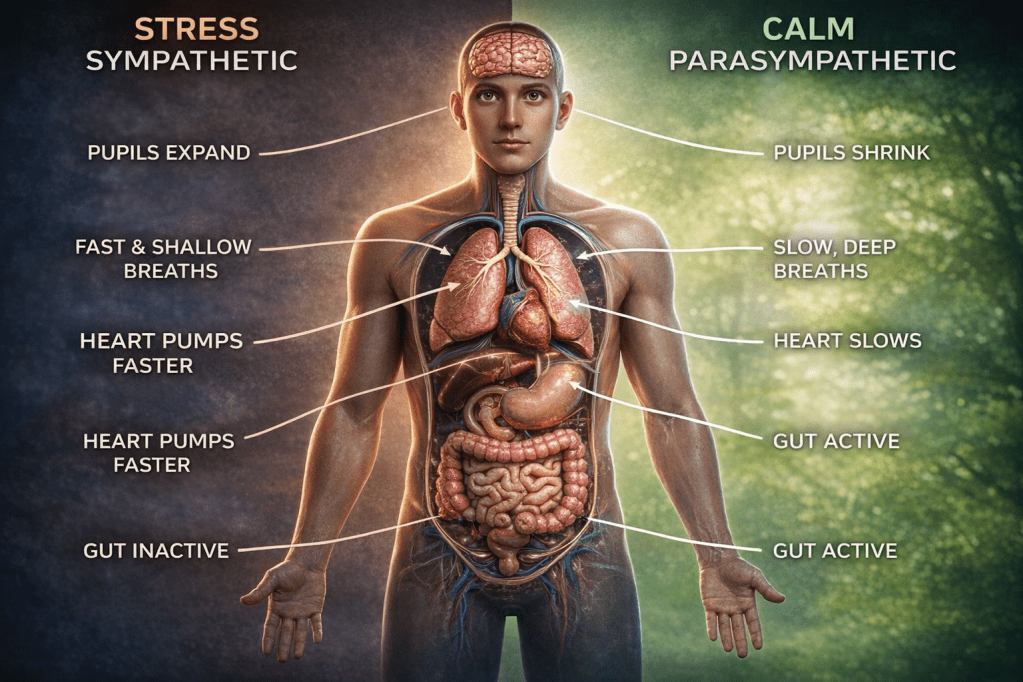
Rooted in ancient yogic wisdom and increasingly supported by modern neuroscience, this practice helps activate the parasympathetic nervous system — the part of the body responsible for rest, digestion, emotional regulation, and recovery.

At Yoga947, we focus on practices that are accessible, grounded, and supportive of real-life nervous system challenges. Vagus nerve humming meditation aligns perfectly with this approach.
 Understanding the Vagus Nerve

The vagus nerve is the longest cranial nerve in the human body, extending from the brainstem through the throat, heart, lungs, and digestive organs. It plays a key role in:

  • Regulating heart rate and blood pressure
  • Supporting digestion and gut–brain communication
  • Influencing mood, anxiety, and emotional resilience
  • Activating the parasympathetic (“rest & digest”) response

When the vagus nerve is stimulated, the body receives a signal of safety — allowing stress hormones to decrease and calm to emerge naturally.

🕉️ Historical Origins of Humming Meditation
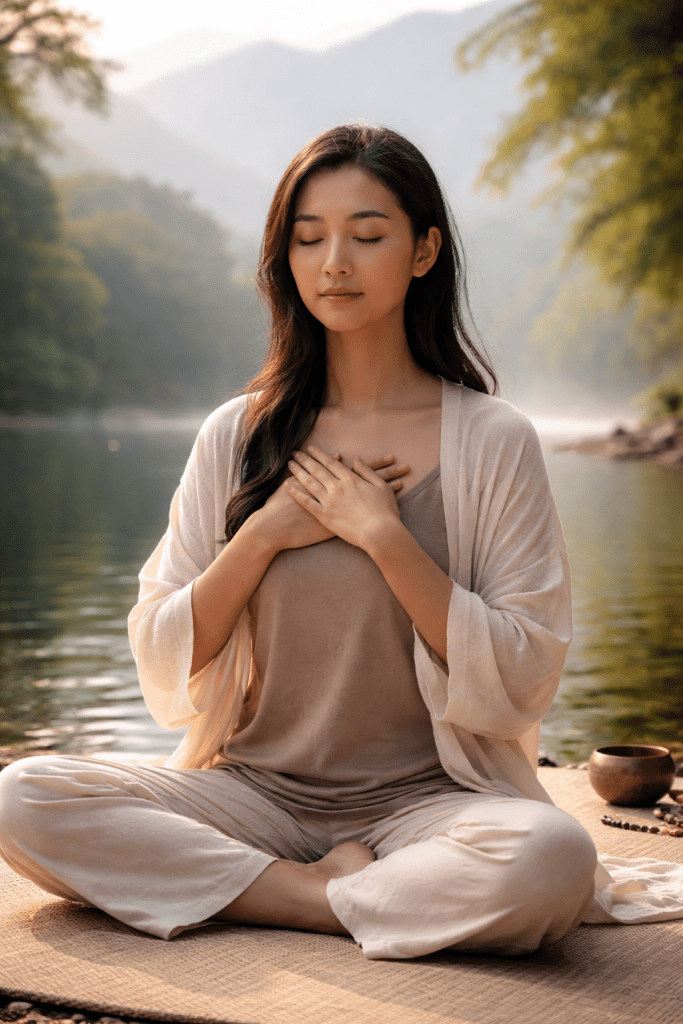
Humming as a meditative and healing practice appears across multiple ancient traditions:

 Yogic & Eastern Roots

  • Bhramari Pranayama (the “humming bee breath”) has been practiced in yoga for centuries to calm the mind and regulate breath.
  • Chanting sounds such as OM were used to create vibrational resonance believed to balance the nervous system.
  • Taoist and Buddhist practices also used vocal tones to stabilize awareness and energy.

 Transition to Modern Therapeutic Use

Today, humming techniques are used in:

  • Trauma-informed yoga
  • Polyvagal-informed therapy
  • Somatic nervous system regulation practices

Modern science now explains why these ancient practices work.

 Science-Based Evidence Supporting Humming Meditation

Research increasingly supports the connection between slow breathing, vocal vibration, and vagal tone.

 Key Findings from Research

  • Humming (Bhramari pranayama) has been shown to significantly increase parasympathetic nervous system activity, measured through heart rate variability (HRV)
  • Increased HRV is associated with better stress resilience and emotional regulation
  • Vocal vibration stimulates the vagus nerve via the larynx and breath pathways

🔗 Peer-Reviewed & Medical Sources

You can reference these directly in your blog:

These studies suggest that slow breathing combined with sound vibration may support autonomic balance, reduce stress markers, and promote relaxation.

 Benefits of Vagus Nerve Humming Meditation

 Emotional & Mental Benefits

  • Reduced anxiety and emotional overwhelm
  • Improved mood and emotional regulation
  • Greater sense of safety and grounding
  • Enhanced mental clarity

 Physical Benefits

  • Lower heart rate and blood pressure
  • Improved digestion and gut comfort
  • Reduced tension in the jaw, throat, and chest
  • Support for deeper, more restful sleep

 Somatic & Nervous System Benefits

  • Increased vagal tone
  • Gentle release of stored stress
  • Improved mind–body awareness
  • Safe, non-invasive nervous system support

 How to Practice Vagus Nerve Humming Meditation

Beginner Practice (5–10 Minutes)

  1. Sit comfortably or lie down in a quiet space
  2. Inhale slowly through the nose
  3. Exhale with a gentle hum (mmm or om)
  4. Feel vibration in the throat, chest, or face
  5. Continue slowly for 5–10 minutes

 Placing one hand on the chest or abdomen can deepen awareness.

 Supportive Tools to Enhance the Practice

To help your audience build consistency, you can recommend supportive tools alongside this meditation.

 Recommended Supports

  • Noise-reducing headphones
  • Soft meditation cushions or bolsters
  • Weighted blankets (for calming sensory input)
  • Journals for nervous system tracking
  • Eye pillows or grounding mats

👉 Explore supportive tools here:
🔗 https://yogatrustedsite-space.trustedsite.space/

 Support Your Nervous System Naturally

“Peace begins within — one breath, one vibration at a time.”
— Yoga947

Discover the Power of Laughter Meditation

At Yoga947, we believe that healing comes in many forms—through stillness, sound, crystals, and sometimes… laughter. Yes, you read that right. Today, we’re diving into laughter meditation. It is a playful yet powerful practice. It invites you to reconnect with joy. It helps you release stress and return to the present moment.

 A Brief History: Where It All Began

While laughter is as old as humanity, laughter meditation is a relatively new practice rooted in ancient wellness wisdom. It emerged in the 1990s, thanks to Dr. Madan Kataria, a medical doctor in Mumbai, India. He founded the first “Laughter Club” in 1995. He realized that intentional laughter—even when simulated—offers deep emotional benefits. It also provides physical benefits.

Dr. Kataria’s revolutionary idea? The body doesn’t know the difference between real and fake laughter. The result is the same: more endorphins, reduced stress, and a lighter heart.

This joyful form of meditation started in a public park in India. It has now reached yoga studios, corporate offices, healing circles, and wellness communities all over the world. It is also included here at Yoga947.


 What is Laughter Meditation?

Laughter meditation is a mind-body practice that encourages unstructured, intentional laughter followed by moments of calm awareness. Unlike laughter yoga, which involves specific poses and cues, laughter meditation is more organic.

A Typical Session Includes:

  1.  Gentle breathwork and light movement to ease into the moment
  2.  Voluntary laughter that becomes natural and contagious
  3.  A short silent meditation or grounding session to integrate the experience

 The Benefits of Laughter Meditation

Just a few minutes of laughter can bring powerful shifts. Here’s how:

 Emotional & Mental Health

  • Reduces stress, anxiety, and depression
  • Increases serotonin and dopamine (feel-good chemicals)
  • Enhances resilience and boosts your mood naturally

 Physical Well-being

  • Boosts the immune system
  • Improves oxygen intake and heart health
  • Acts as a light cardio workout

 Social Connection

  • Builds trust and empathy
  • Helps break down barriers in group settings
  • Strengthens relationships through shared joy

 Mindfulness

  • Brings you fully into the present moment
  • Heightens awareness and calm after laughter fades
  • Offers clarity similar to deep meditation or breathwork

 Real-Life Case Studies: How Laughter Heals

 Healing After Trauma

In a Los Angeles recovery center, laughter meditation helped women reclaim joy after domestic abuse. One woman shared, “For the first time in months, I remembered how it feels to laugh without guilt.”

 Battling Burnout at Work

A UK-based tech company added laughter meditation to its wellness program. After six months, employees reported 20% less stress, and many called the sessions “a weekly emotional reset.”

 Living with Chronic Pain

A small group of individuals with fibromyalgia and lupus practiced laughter meditation twice a week. Many noticed reduced pain and a renewed sense of hope. One participant said, “Laughter didn’t cure my pain, but it gave me back control and joy.”


 Is Laughter Meditation Really Taken Seriously?

At first glance, laughter meditation seems silly. It even feels uncomfortable. However, it’s backed by science and supported by holistic health professionals. Organizations like the Mayo Clinic and Harvard Medical School recognize the therapeutic power of laughter.

Today, it’s used in:

  • Hospitals and rehab centers
  • Mental health programs
  • Yoga and spiritual communities
  • Corporate wellness retreats

Here at Yoga947, we take healing seriously—but we also know that healing doesn’t always have to be serious.


 Conclusion

Laughter meditation is a powerful reminder that joy is sacred. In a world that feels heavy at times, laughter brings us back to lightness, presence, and connection.

So the next time you feel tension building, try this:
Breathe. Laugh. Be still.

You don’t have to feel like laughing—just allow yourself to. The body knows what to do, and the spirit will follow.


 Trusted Sources for Laughter Meditation Support

 Research & Scientific Insight

  1. PubMed & Google Scholar
    Search for terms like “laughter therapy,” “laughter meditation,” or “laughter yoga” to find peer-reviewed studies. These studies focus on its health benefits.
    • Mayo Clinic – Health articles referencing the psychological and physical benefits of laughter.
    • Harvard Health Publishing – Articles about laughter and stress reduction.

    Apps & Tools for Daily Practice

    1. Insight Timer – Free app with guided laughter meditations by various teachers.
    2. YouTube Channels
    3. Meetup.com
      Search for “laughter clubs” or “laughter meditation groups” in your area or virtually.

    Books & Reading

    • “Laugh for No Reason” by Dr. Madan Kataria – A foundational book on the philosophy and science behind laughter yoga/meditation.
    • “Anatomy of an Illness” by Norman Cousins – A classic personal account of how laughter contributed to healing chronic illness.

    “The Healing Power of Humor” by Allen Klein – Explores humor and laughter as therapeutic tools.

    Don’t forget to subscribe to Yoga947.com

    The cause of Transcendental Meditation

    Transcendental Meditation.

    Origins of Transcendental Meditation (TM) and Maharishi Mahesh Yogi’s Role:

    The 1960s was a decade of profound cultural and social transformation, marked by a surge in interest in spirituality, alternative lifestyles, and Eastern philosophies. One of the most notable phenomena of this era was the rapid rise in popularity of Transcendental Meditation (TM), a meditation technique developed by Maharishi Mahesh Yogi. This surge in interest can be attributed to a variety of factors, including the charismatic appeal of Maharishi, the promise of personal transformation, and the endorsement of TM by several high-profile celebrities. To understand why TM became a cultural phenomenon in the 1960s, it’s essential to delve into its origins and the unique qualities that made it so appealing to a generation seeking new avenues of self-discovery.

    The Mentor of Maharishi Mahesh Yogi in the 1950s:

    Maharishi Mahesh Yogi’s spiritual journey was greatly influenced by his mentor, Swami Brahmananda Saraswati, also known as Guru Dev. In the 1950s, Guru Dev was a revered spiritual leader in India, known for his deep knowledge of Vedic teachings and meditation practices. Maharishi became Guru Dev’s disciple and spent several years studying under his guidance.

    It was Guru Dev who imparted to Maharishi the ancient Vedic knowledge and meditation techniques that would eventually form the foundation of Transcendental Meditation (TM). Maharishi’s mission was to make these teachings accessible to people worldwide, and he set out to achieve this goal after the passing of Guru Dev.

    The teachings of Guru Dev emphasized the importance of inner exploration, self-realization, and the attainment of higher states of consciousness through meditation. Maharishi Mahesh Yogi, inspired by his mentor’s wisdom, sought to create a simple and effective meditation technique that could be practiced by anyone, regardless of their background or spiritual beliefs.

    The guidance and inspiration Maharishi received from Guru Dev played a crucial role in the development of Transcendental Meditation, and it was with these teachings in mind that he embarked on his journey to bring meditation to the West and the rest of the world. This spiritual lineage and connection to an esteemed mentor lent credibility and authenticity to Maharishi’s teachings, making them all the more attractive to those seeking spiritual and personal growth in the 1960s.

    Transcendental Meditation (TM) was developed by Maharishi Mahesh Yogi, an Indian spiritual teacher, in the 1950s. Maharishi was a disciple of Swami Brahmananda Saraswati, also known as Guru Dev, who was a prominent spiritual leader in India. Maharishi’s mission was to bring the ancient Vedic tradition of meditation to the modern world in a simple and accessible way.

    Maharishi developed TM as a specific meditation technique that could be easily taught and practiced by people from all walks of life. He believed that by transcending ordinary thought and experiencing a unique state of restful awareness, individuals could tap into their inner potential and experience profound personal growth and transformation.

    Transcendental Meditation Technique:

    • 1.Mantra: TM involves the use of a specific mantra, which is a word or sound that is repeated silently in the mind during meditation. This mantra is chosen for you by a trained TM teacher and is kept secret. The mantra is a key element of TM and is used as a focal point for meditation.
    • 2.Sitting Comfortably: TM is typically practiced while sitting comfortably with your eyes closed. It is recommended to sit in a quiet place where you won’t be disturbed.
    • 3.Repetition of Mantra: During the meditation session, you repeat the mantra in your mind. Unlike other meditation techniques where you may focus on your breath or observe your thoughts, in TM, the repetition of the mantra is the primary activity.
    • 4.Effortlessness: One of the core principles of TM is effortlessness. You’re encouraged to allow thoughts to come and go without trying to control or manipulate them. The mantra is used as a means to transcend ordinary thought and reach a state of deep restful awareness.
    • 5.Duration: A typical TM session lasts for about 20 minutes and is usually practiced twice a day, once in the morning and once in the evening.

    Benefits of Transcendental Meditation:

    • 1.Stress Reduction: TM is well-known for its ability to reduce stress and promote relaxation. Regular practice can help lower cortisol levels (a stress hormone) and lead to a greater sense of calm and well-being.
    • 2.Improved Focus and Concentration: TM can enhance your ability to concentrate and focus on tasks. This can be particularly beneficial for students and professionals who need to perform well in their studies or jobs.
    • 3.Enhanced Creativity: Some practitioners report increased creativity and problem-solving abilities as a result of TM. This may be due to the relaxed and clear mental state achieved during meditation.
    • 4.Better Sleep: TM can improve the quality of sleep by reducing insomnia and promoting deeper, more restful sleep.
    • 5.Reduced Anxiety: Many people find that TM helps reduce symptoms of anxiety and may even be helpful in managing anxiety disorders.
    • 6.Improved Cardiovascular Health: Research suggests that TM may have a positive impact on cardiovascular health by reducing blood pressure and the risk of heart disease.
    • 7.Increased Self-Awareness: TM can lead to a greater sense of self-awareness and self-realization, helping individuals connect with their inner selves and gain clarity about their life goals and purpose.
    • 8.Enhanced Emotional Well-being: Regular TM practice is associated with improved emotional stability and a greater sense of overall well-being.

    For men and women who are interested in practicing Transcendental Meditation (TM) today, there are several options available for learning the technique, whether in-person or online. Here’s a guide on how to get started:

    1. Find a Certified TM Teacher:

    One of the most recommended ways to learn TM is through a certified TM teacher. These teachers have undergone extensive training and can provide personalized instruction and support. To find a TM teacher near you, you can visit the official website of the Transcendental Meditation program (TM.org) and use their search feature to locate a teacher in your area.

    2. TM Centers and Retreats:

    The Transcendental Meditation organization operates TM centers and retreats in many countries around the world. These centers offer introductory lectures, courses, and group meditations. Attending an introductory lecture is often the first step in learning TM. You can inquire about upcoming events and classes at your nearest TM center through their website or by contacting them directly.

    3. Online TM Courses:

    In recent years, the availability of online TM courses has expanded. This option allows you to learn TM from the comfort of your home while still receiving personalized instruction from a certified TM teacher. The official TM organization provides online courses, which include one-on-one video conferencing sessions with a teacher. Check the TM.org website for details on online course offerings.

    4. Research and Resources:

    To learn more about Transcendental Meditation and its benefits, you can explore various resources:

    • Books: There are several books written by Maharishi Mahesh Yogi and other authors that provide insights into TM and its practice. “The Science of Being and Art of Living” by Maharishi Mahesh Yogi is a classic introduction to TM.
    • Websites: The official TM website (TM.org) offers extensive information on the technique, research, and upcoming events. You can also find articles, videos, and testimonials related to TM.
    • Scientific Research: Numerous scientific studies have explored the effects of TM on various aspects of health and well-being. You can find research articles and summaries on reputable medical and scientific websites.
    • Online Communities: Joining online forums or social media groups dedicated to TM can be a great way to connect with others who practice TM, share experiences, and ask questions.

    5. Local TM Community and Events:

    Once you have learned TM, consider getting involved in your local TM community. Many TM centers organize group meditations, advanced courses, and events where practitioners can come together to meditate and deepen their understanding of TM.

    Remember that TM is a specific meditation technique taught by certified instructors, and it is advisable to learn it through proper channels to ensure that you are practicing it correctly and reaping its full benefits. Whether you choose to learn in-person or online, Transcendental Meditation can be a valuable tool for enhancing your well-being and promoting inner peace and clarity in your life.

    It’s important to note that TM is typically taught by certified instructors through a structured program that includes personalized instruction and follow-up sessions. This personalized instruction is one of the key elements that distinguish TM from other meditation techniques. To learn TM, it’s recommended to seek out a trained TM teacher who can provide you with proper guidance and instruction.

    Good luck with your journey to Success and Happiness.