Introduction: When the Mind Is Calm but the Body Still Holds On
Many people come to meditation hoping for peace of mind — yet even after quieting the thoughts, the body can remain tense, heavy, or restless.
Somatic Release Meditation gently shifts the focus from thinking to feeling, helping you reconnect with the body’s natural ability to release stress. Rather than analysing emotions or revisiting memories, this practice invites awareness, safety, and subtle movement — allowing stored tension to soften in its own time.
At Yoga947, we view somatic meditation as a compassionate bridge between mindfulness and embodied healing — especially for those who feel “stuck,” overwhelmed, or disconnected from their body.
What Is Somatic Release Meditation?
Somatic Release Meditation is a body-based awareness practice rooted in neuroscience, trauma-informed mindfulness, and gentle movement principles.
The word somatic comes from the Greek soma, meaning the living body. Unlike traditional seated meditation that focuses mainly on breath or thoughts, somatic meditation listens to physical sensations — warmth, tightness, tingling, heaviness — without trying to change them.
There is no force.
No performance.
Only awareness and permission.
How Stress Becomes Stored in the Body
Modern life keeps the nervous system in a near-constant state of alert. When stress isn’t fully released, the body adapts by holding it — often in places like:
- The shoulders and neck
- The jaw and face
- The chest and diaphragm
- The hips and lower back
- The stomach and pelvic area
Somatic meditation helps the body complete unfinished stress responses through gentle awareness and micro-movements, rather than mental effort.
Benefits of Somatic Release Meditation
With consistent practice, many people experience:
- Reduced chronic tension and fatigue
- Improved emotional regulation
- A deeper sense of safety and grounding
- Relief from anxiety stored in the body
- Stronger mind–body connection
- Greater ease during seated meditation practices (such as Vipassana)
This practice is especially supportive for individuals who find silent meditation difficult or emotionally overwhelming.
A Gentle Somatic Release Meditation (Beginner Practice)
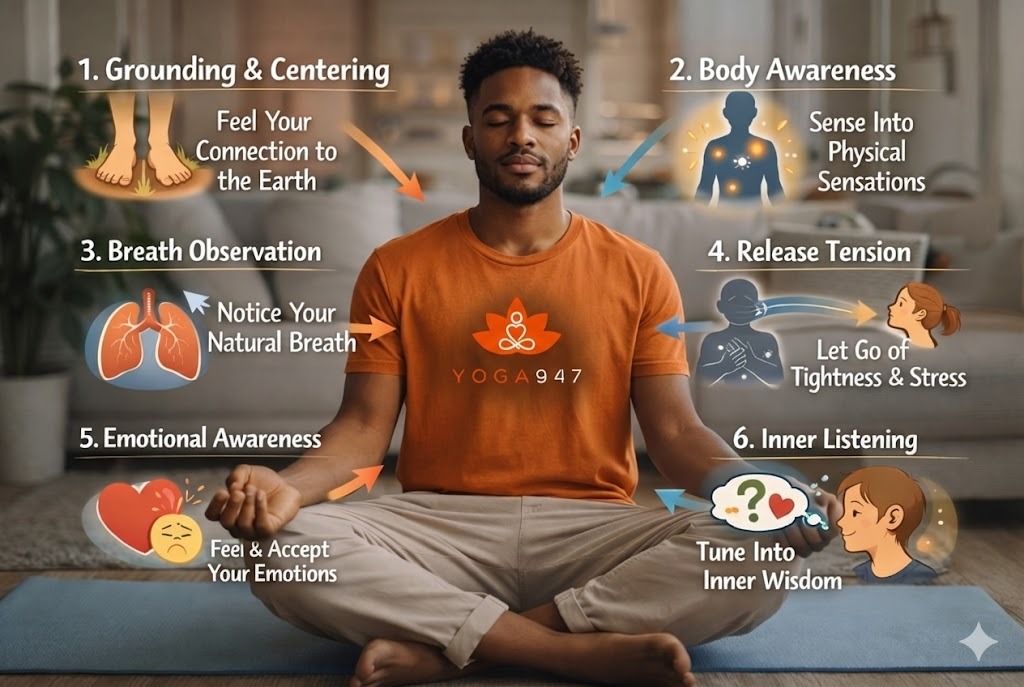
Step 1: Create a Sense of Safety
Lie down or sit comfortably.
Place one hand on your chest or abdomen — wherever feels most grounding.
Allow the body to be supported fully.
Step 2: Bring Awareness to Sensation
Without naming emotions, simply notice:
- Temperature
- Pressure
- Areas of ease
- Areas of tension
There is no right or wrong sensation.
Step 3: Allow Micro-Movement
If your body naturally wants to:
- Shift
- Stretch
- Roll the shoulders
- Adjust posture
Let it happen slowly and intuitively.
Step 4: Pause and Notice
After movement, pause.
Observe what has changed — even slightly.
Step 5: Close Gently
Take three natural breaths.
Thank your body for what it released — even if it feels subtle.
Somatic Meditation vs Traditional Meditation
| Traditional Meditation | Somatic Release Meditation |
| Focus on thoughts or breath | Focus on body sensation |
| Stillness is emphasised | Gentle movement is welcomed |
| Mind-led | Body-led |
| Observing the mind | Listening to the nervous system |
Both practices are powerful — and deeply complementary.
Who Is This Practice For?
Somatic Release Meditation is ideal for:
- People experiencing stress, burnout, or emotional overwhelm
- Beginners who struggle with silent sitting
- Those who feel “disconnected” from their body
- Practitioners wanting deeper grounding before Vipassana or mindfulness
Integrating Somatic Release into Daily Life
You don’t need long sessions. Even 5–10 minutes can make a meaningful difference.
Try:
- A short somatic check-in before seated meditation
- Gentle body awareness before sleep
- A grounding pause after emotionally intense moments
Consistency matters more than duration.
Final Thoughts: Healing Begins with Listening
The body remembers what the mind forgets.
Somatic Release Meditation reminds us that healing does not require force — only attention, patience, and kindness toward the body that carries us every day.
At Yoga947, we believe true awareness includes the wisdom of the body, not just the silence of the mind.
Continue Your Practice with Yoga947
If you found this practice helpful, you may enjoy:
- Guided somatic audio meditations
- Body-based reflection journals
- Gentle awareness practices designed for modern stress
✨ Explore more at www.Yoga947.com
Support Your Somatic Practice:
For deeper comfort and easier grounding during somatic meditation, try using a meditation bolster or cushion to support your sitting or lying posture. Gentle yoga straps can help release tight muscles and encourage slow, mindful movement — perfect companions to somatic awareness work. Explore some supportive tools here.
“The body speaks softly — but it always tells the truth.”
— Yoga947
Discover more from
Subscribe to get the latest posts sent to your email.
 yoga947com.blog